
Vandaag of morgen in huis

Kwaliteit gegarandeerd

Welkomstaanbiedingen ontgrendelen: GRATIS bezorging | Tot 80% korting | Gratis 30 dagen JoyPlus-proefperiode
Download de app
The range of dog food and dog treats in the Netherlands is extensive. You’ll find dry food, wet food, dog biscuits, chew treats for dogs and multipacks in all kinds of flavours and formats. However, eye-catching packaging says little about whether a product is right for your dog.
As a Joybuy Product Recommendation Officer, I filter product information based on practical criteria: which dog is it intended for, what does the composition contain and how should it be used safely? This helps you avoid paying too much for a treat that does not suit your dog’s size, age or daily feeding routine.
Not every product with “food” in its name is complete dog food. Many dog treats, training treats and soft sticks are complementary pet food. They are intended as rewards, snacks or toppers and should not replace a complete meal.
Always check whether the packaging states that the product is “complete” food. INABA Churu and various INABA Fun Bites products, for example, are described as complementary food.
A flavour description does not automatically indicate how much chicken or how many animal-derived ingredients a product contains. CESAR Classic Wet Dog Food Chicken, for example, states that the product contains 60% meat and animal derivatives, of which 4% is chicken. The full ingredients list therefore provides more information than the front of the packaging.
Grain-free dog food is not automatically suitable for every dog either. According to the product information, Farmina N&D Premium Chicken Adult Small contains chicken, fish, egg, peas and chickpeas, among other ingredients, without grains. Always compare this with your dog’s nutritional needs and consult a vet if your dog has a food sensitivity.
A 15 kg bag may appear cost-effective, but it is less practical if your dog is small or eats slowly. Check the recommended daily amount, the shelf life after opening and your storage options. For treats, a dog treat multipack is useful for adding variety, but distribute the portions across several training sessions.
Choose dog food that matches your dog’s age and size. There is a difference between:
Eukanuba Life Care, for example, offers separate varieties for small, medium-sized and large adult dogs. The product information also specifies age ranges. The large adult dog variety is intended for dogs from approximately 18 months to 6 years, while the mature large variety is designed for a later life stage. Check the packaging, as age limits may vary depending on breed and size.
Don’t look only at the protein percentage. Compare fat, fibre, moisture and ash as well. Dry dog food generally has a lower moisture content than wet dog food. This means that percentages cannot be compared directly without taking the product format into account.
Farmina N&D Premium Chicken Adult Small, for example, lists 34% crude protein, 18% fat and 9% moisture. According to the product information, INABA Bites Dog Multipack contains 14% protein, 3% fat and 82% moisture. These are different types of products with different purposes: a meal versus a complementary treat.
For training, small, soft pieces are often easier to portion than large chews. Chews require different considerations. Give a chew treat only under supervision and choose a size suited to your dog. The g'woon Dog Chew Bones Box 500 g, for example, states that supervision is required while chewing.
Also pay attention to storage instructions. Some moist treats must be refrigerated after opening and used within 24 hours. According to the product description, INABA Churu recommends refrigerating opened tubes and consuming them within 24 hours. INABA Bites specifies a three-day period after opening.
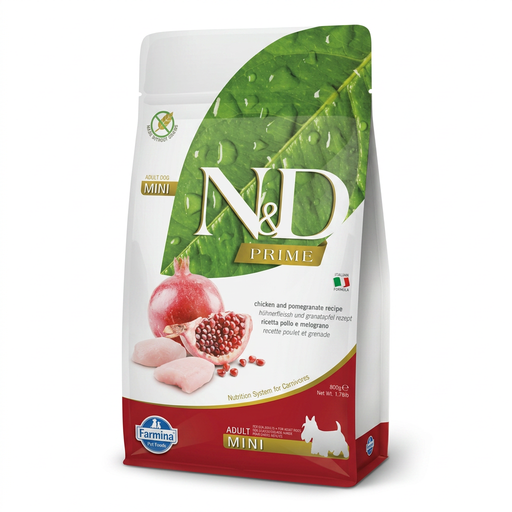
Why This Fits Their Persona: A compact pack and a formula designed for small adult dogs suit owners who want precise control over portions and ingredients.
The product information clearly states that this is complete food for small adult dogs. The feeding guideline ranges from 30 to 150 grams per day, depending on weight.
Chicken as a key ingredient; 800 g pack; described as grain-free according to the product information.
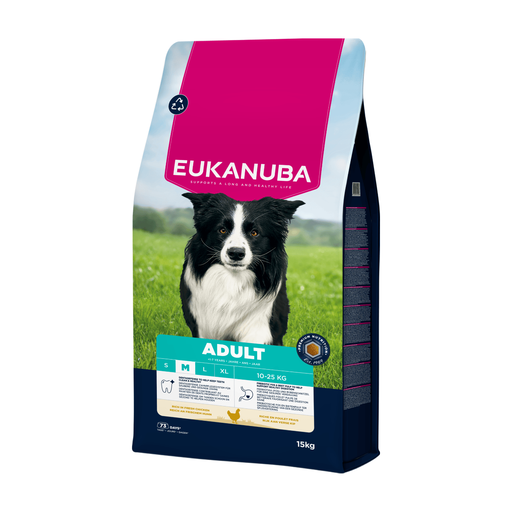
Why This Fits Their Persona: A practical choice for anyone who wants to order dry dog food in a larger pack for a medium-sized adult dog.
The packaging and target group are clearly specified: 15 kg for medium-sized adult dogs approximately 1 to 7 years old. This makes comparison easier than choosing based on flavour alone.
Dry food with chicken; FOS and beet pulp are listed in the product description as part of the fibre blend.
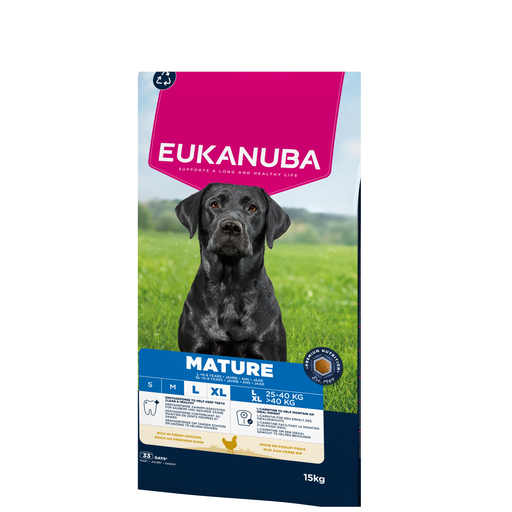
Why This Fits Their Persona: A focused option for owners looking for senior dog food for a large dog in a later life stage.
This variety is not simply labelled “for large dogs”; it specifically identifies mature dogs of approximately 6 to 9 years, depending on breed size.
15 kg of dry food; chicken as the stated base; the manufacturer lists glucosamine, calcium and FOS in the formula.

Why This Fits Their Persona: Ideal for training sessions, between-meal rewards or as a topper when you want to rotate between four chicken varieties.
The product information clearly states the format, number of pieces and intended use as a treat. This makes portion planning easier.
Four chicken varieties; 16 portions; 14% crude protein and 3% crude fat according to the supplied product specifications.
Browse a current selection of products and compare features, formats and intended uses before placing your order.
Dry dog food generally contains less moisture and is often easier to store for longer after opening. Wet dog food has a higher moisture content and is usually sold in portions. Compare the nutritional values for each product and follow the recommended amount on the packaging.
This depends on your dog’s weight, age, activity level and the calories per treat. Use the feeding guideline on the packaging and generally keep treats within 10% of your dog’s daily calorie intake. Give fewer treats if your dog also receives chew sticks or other rewards.
Not necessarily. Check the full composition and look for other animal-derived ingredients, grains, fish, egg or plant-based ingredients. If your dog has a known allergy, persistent symptoms or requires a special diet, consulting a vet is advisable.
