
Vandaag of morgen in huis

Kwaliteit gegarandeerd

Welkomstaanbiedingen ontgrendelen: GRATIS bezorging | Tot 80% korting | Gratis 30 dagen JoyPlus-proefperiode
Download de app
Finding the right combination of dog food and dog treats might seem straightforward – until you start comparing labels, portions and product claims side by side. An appealing flavour doesn't tell you much about whether it's suitable for your dog. Terms like "grain-free", "for dental care" or "high in meat" can also be misleading without context.
Three common pitfalls deserve extra attention:
Start with the legal description on the packaging. Complete pet food is intended as daily nutrition within the stated guidelines. Complementary pet food is suitable as a reward, topper or occasional treat, but should not replace the main meal.
The INABA Churu Dog Multipack, for example, is described as a complementary food for dogs. The tubes contain at least 90% moisture and can be given straight from the pack, mixed into dry food or used during training. The recommended amount is 1 to 2 tubes per day, depending on size, weight and body condition. Once opened, a tube must be kept refrigerated and used within 24 hours.
Puppy and adult dog foods don't have the same nutritional goals. So look for the label "puppy", "adult" or "all life stages". The size of the kibble or treat also matters. A small dog often does better with a smaller kibble or a treat that can be broken into portions. For large dogs, there are packs and sizes that better match their daily amount.
A useful portion control guide:
Alongside the flavour, check the ingredient order and analytical constituents. For dry dog food, protein, fat, fibre and ash are particularly relevant. For wet dog food, the moisture content is often high, so the daily amount may differ from that of kibble.
Also look out for:
Grain-free dog food isn't automatically necessary for every dog. A product like EUKANUBA Grain Free Adult with venison lists alternative carbohydrate sources, including peas and gluten-free sweet potato. According to the product information, it's intended for adult dogs of all breeds. If you suspect a food sensitivity, always check the full ingredients list and ask your vet for advice if needed.
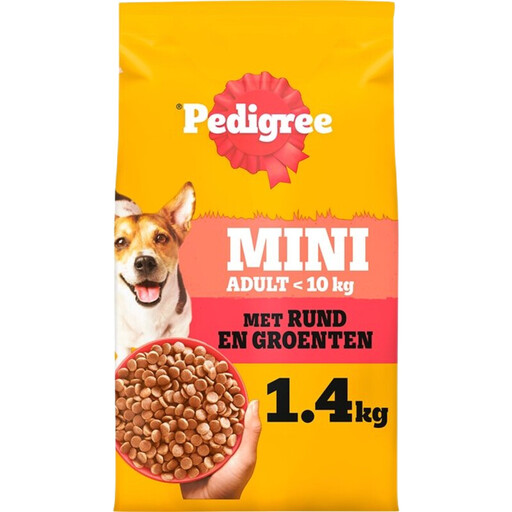
Why this fits the profile: This bag of dry dog food is designed for small adult dogs up to 10 kg and includes a feeding guide for different weights.
The packaging lists protein, fat, fibre, weight categories and daily gram amounts. So you don't have to rely solely on the flavour name.
1.4 kg pack, beef and vegetable flavour, kibble size for small adult dogs and a clear feeding guide.
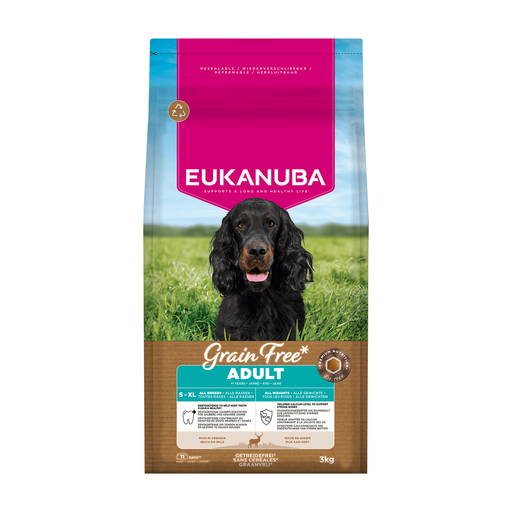
Why this fits the profile: An option for owners who deliberately seek a grain-free recipe and venison as the animal protein source for an adult dog.
The product information mentions the alternative carbohydrate sources and the target group. Always check whether the full ingredients list suits your dog.
3 kg pack, adult dogs of all sizes, venison as the stated protein source and a grain-free recipe according to the product description.
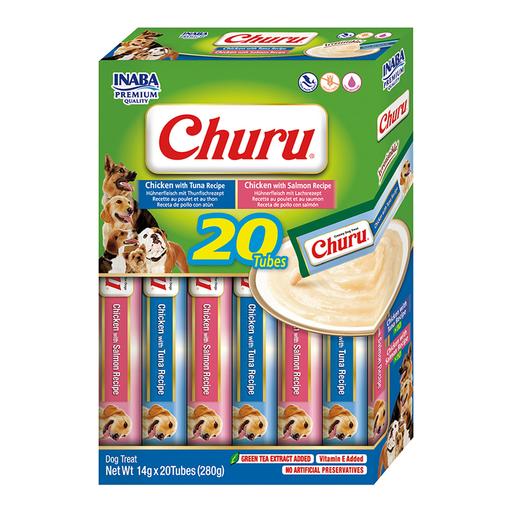
Why this fits the profile: Handy for training, as a topper or for dogs that prefer soft textures over ordinary dog biscuits.
The multipack contains two flavour varieties and 20 individual tubes. The packaging clearly states that it's a treat, not a complete meal.
240 g total weight, at least 90% moisture according to the product information and suitable for feeding straight or mixing in.

Why this fits the profile: These dental treats for dogs are designed as a snack for medium-sized dogs and fit into a regular daily chew routine.
The target group and ingredients are stated: medium-sized dogs, and the recipe includes cereals, vegetable protein extracts and 1% sodium hexametaphosphate.
180 g pack, one stick per day as a guideline and a recipe containing 1% sodium hexametaphosphate according to the product information.
We've put together a full, up-to-date list of products that fully meet these strict selection criteria and comply with current European safety regulations.
Wet dog food usually contains more moisture and has a softer texture. Dry food is more concentrated and easy to weigh and store. You can combine both, as long as the total amount suits your dog's weight, activity level and body condition. Always check whether the product is a complete or complementary food.
This varies by product. Some soft treats need to be refrigerated after opening and used quickly. INABA Churu, for example, recommends use within 24 hours of opening. Other products, such as certain strips or chews, give 14 days as a guideline. Always follow the packaging and seal the bag or pack properly.
No. Chews are mainly intended as an activity or reward. Dental treats are shaped and formulated with dental care as the product goal. According to some brands' own research, they may help reduce plaque or tartar, but results vary from dog to dog. Supervise your dog while chewing and never let treats replace daily dental care or check-ups.
