
Vandaag of morgen in huis

Kwaliteit gegarandeerd

Welkomstaanbiedingen ontgrendelen: GRATIS bezorging | Tot 80% korting | Gratis 30 dagen JoyPlus-proefperiode
Download de app
A bag of dry food with a striking picture of meat, a treat labelled “dental care” on the packaging, or a grain-free recipe: the range of dog food and dog treats is vast. Yet an attractive packet doesn’t automatically mean the product is right for your dog.
The key questions are practical ones: is the food complete or complementary, does the composition suit your dog’s age and size, and can you easily adjust the portions? Below, as Joybuy Product Recommendation Officer, I’ve set out the most important checks to make. This way, you can compare products on their specifications rather than on marketing claims.
Not every product labelled “dog food” is suitable as a main meal. For example, INABA Fun Bites Dog Chicken Wraps Chicken with Sweet Potato is listed as complementary pet food. The product contains 82% moisture and is intended as a reward or snack, not as a replacement for complete dog food.
Chew sticks, dog biscuits and dental care treats for dogs are also typically complementary foods. Stick to the recommended amount and factor treats into your dog’s daily calorie intake. For instance, the g’woon Dog Chew Bones state that treats should provide no more than 10% of daily calories.
“Dog food with chicken”, “dog food with lamb” or “dog food with duck” doesn’t tell you how much of that ingredient is actually present. Check the ingredients list and the percentages. BUDDY Free-range Duck Dog Food, for example, lists 44% duck and 26% fresh duck. With Eukanuba Life Care Adult Small/Medium Lamb & Rice, lamb is a key protein source, but chicken is also mentioned as an additional protein source.
That distinction matters if your dog needs to avoid certain animal proteins. If you suspect a food sensitivity, it’s wise to consult a vet first. Marketing terms like “for sensitive dogs” are no medical guarantee.
Grain-free dog food contains no grains, but it usually includes other carbohydrate sources such as peas, lentils, potato or sweet potato. So look at the full composition and the analytical constituents. A grain-free recipe isn’t necessarily needed for every dog.
Examples include BUDDY Wild Reindeer Meat Dog Food, BUDDY Free-range Duck Dog Food and Farmina N&D Pumpkin Lamb Adult Small Dog Food. These products list no grains, but they differ in protein source, size, life stage and nutritional profile.
Look for complete pet food on the label when you’re after a main meal. This means the product is intended as daily nutrition when used according to the instructions. “Complementary pet food” is suitable as a treat, reward or addition, but not as the sole source of nutrition.
Check this for wet dog food too. g’woon Chunks in Jelly With Chicken 415 g is described as complete wet food for adult dogs. Cesar Adult Wet Dog Food is a multipack with 150 g portions and is also described as complete food for adult dogs. Once opened, any leftover wet food should be kept refrigerated and used within the time stated on the label.
Puppy food is tailored for growth and differs from dog food for adult dogs. Eukanuba Life Care Dog Puppy Medium Chicken is intended for medium-breed puppies from 1 to 12 months old. Orijen Puppy Formula is, according to the product information, suitable for puppies of various breeds, with a recommended feeding period that can vary by breed size.
For adult dogs, portion size and energy requirements depend on weight, age and activity level. Eukanuba Life Care Adult Medium Chicken 15 kg is aimed at adult dogs of medium breeds. For small dogs, Farmina N&D Pumpkin Series Lamb Adult Small Dog Food is designed for dogs weighing roughly 4 to 14 kg.
Compare crude protein, crude fat, fibre and moisture when these values are available. A high protein percentage isn’t automatically the right choice; the overall formula and your dog’s nutritional needs also count.
With treats, also pay attention to shape and size. Pedigree Jumbone Mini Chicken & Lamb is intended for small adult dogs up to 15 kg. The manufacturer states that the product is not suitable for puppies under 9 months old and advises a maximum of one piece per week for dogs weighing 4 to 10 kg. Supervision is important with chew products, especially if your dog tries to swallow large pieces.
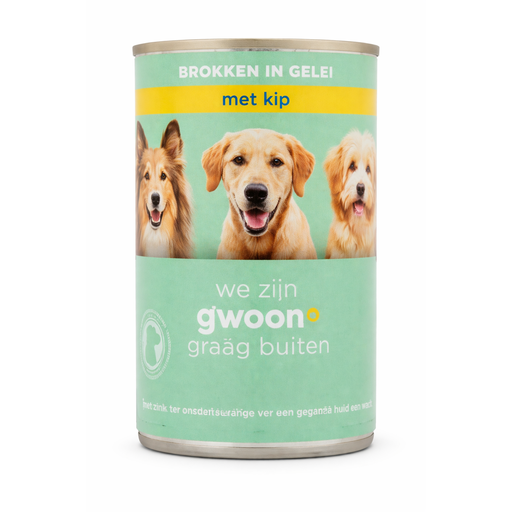
Why this fits: A portion of wet food for adult dogs in a 415 g tin, handy when you want simple portioning.
The product information states that this is complete wet food for adult dogs, making it easier to distinguish from a complementary treat.
Chicken in jelly, 415 g portion pack and clear storage advice after opening.
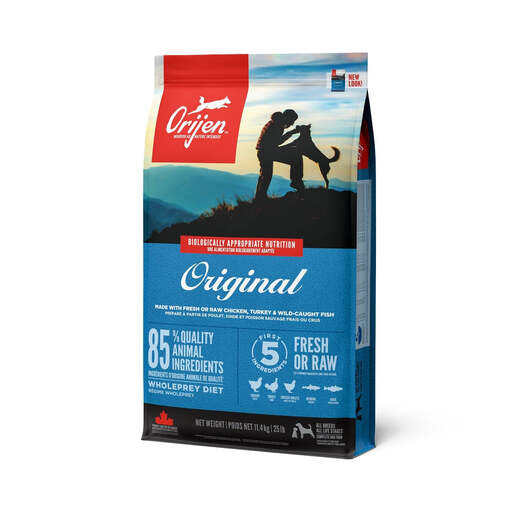
Why this fits: For dog owners looking for a large bag of dry food with multiple animal protein sources and a detailed composition.
The product information lists percentages, analytical values and the distinction between complete food and treats.
38% crude protein, 18% crude fat and a stated bag weight of 11.4 kg. The recipe is grain-free according to the product description.
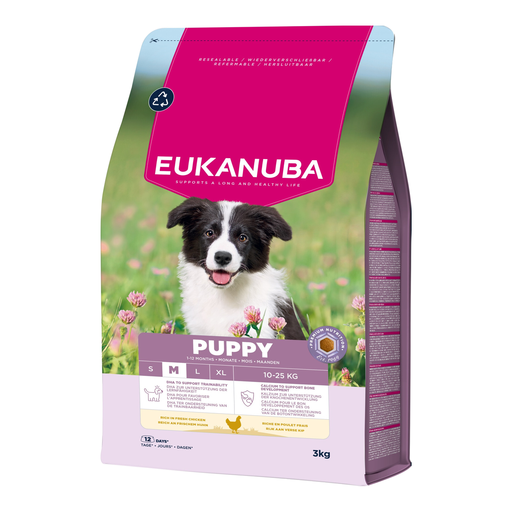
Why this fits: Designed for medium-breed puppies from 1 to 12 months old, with a size that works well as a first food choice.
The life stage and breed size are stated in the product description. Check this before buying puppy food.
Dry food with chicken, DHA and a dietary fibre mix including FOS, MOS and beet pulp according to the brand description.
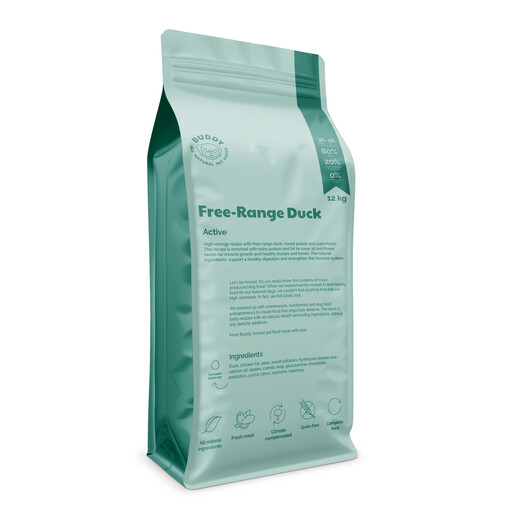
Why this fits: A large bag of dry food for households with an active dog or multiple dogs, where size and stock matter.
The packaging states the ratio of animal ingredients to plant ingredients. That gives more context than just the term “premium”.
12 kg content, duck as the stated animal ingredient and kibble measuring approximately 1.2 to 1.6 cm according to the product information.
Browse a current selection of affordable dog supplies and compare dog food, dog treats and chew products by size, composition and use.
That depends on the energy content, portion size and packaging. Dry food is often easier to store in bulk. Wet food typically contains a lot of moisture and is sold per tin or tray. So don’t just compare the price per pack, but also the recommended daily amount.
Follow the guideline on the label and, ideally, let treats make up no more than about 10% of daily calorie intake. Reduce the main meal if necessary. With chew sticks and dental care treats for dogs, you should also pay attention to the right size and supervise while chewing.
Gradually mix the new food with the current food, usually over about seven days. Start with a small amount of the new food and increase it step by step. Monitor the stools, appetite and body condition. If problems persist or you suspect an allergy, it’s best to consult a vet.
