
Vandaag of morgen in huis

Kwaliteit gegarandeerd

Welkomstaanbiedingen ontgrendelen: GRATIS bezorging | Tot 80% korting | Gratis 30 dagen JoyPlus-proefperiode
Download de app
Choosing a new bag of dog food can seem straightforward. But products vary considerably in their ingredients, life-stage suitability, feeding guidance and intended use. Attractive packaging with words such as “natural”, “premium” or “grain-free” doesn’t tell you enough on its own. Your dog’s age, adult weight, activity level and the full ingredients list are what matter most.
Also, check whether a product is labelled as complete pet food or complementary food. A treat, topper or supplement can be useful as part of your dog’s daily feeding routine, but it won’t replace a complete meal.
Grain-free dog food contains no grains, but that doesn’t automatically make it more suitable for every dog. Grains are often replaced with peas, chickpeas, potatoes or sweet potatoes. So check the full composition and the analytical constituents, including protein, fat and fibre.
A grain-free formula may suit a particular preference or dietary choice, but don’t use the term as your only reason for buying a product.
Brands sometimes highlight a high proportion of meat or protein. Check whether the percentage refers to the whole recipe, the ingredients before processing or just certain components. According to Orijen’s product description, Puppy Formula contains 85% animal ingredients. This is a product specification from the brand; you should also check the full composition and feeding guidelines.
Farmina N&D Pumpkin Lamb Puppy Medi/Maxi is described in the product information as containing 96% protein of animal origin. The ingredients include fresh and dehydrated lamb, herring, pumpkin, peas and chickpeas. So always read the claim alongside the ingredients list.
Dog treats, dog chews and liquid toppers are complementary products. According to the product information, INABA Churu Dog is complementary food and contains at least 90% moisture. It can be used as a reward or topper, but it doesn’t replace complete and balanced dog food.
The same applies to dog supplements. TRM Myozol is intended to be mixed into your dog’s daily food. Use supplements according to the label and ask a vet for advice if you’re unsure, especially if your dog is already on a special diet.
Puppy food has a different composition from food for adult dogs. Puppies grow quickly and need a feeding plan suited to their age, weight and expected adult size. Portion control is especially important for large-breed dogs, as overfeeding during growth can be undesirable.
Check the packaging for:
Examples include Eukanuba Life Care Puppy Medium, intended for medium-breed puppies, and Acana Puppy Large Breed, intended for puppies expected to weigh at least 30 kg as adults. Suitability therefore depends not only on the brand, but also on your dog’s growth stage and body weight.
The ingredients list shows which raw materials are used. The analytical constituents provide information about protein, fat, fibre, ash and moisture, among other things. Dog wet food naturally has a higher moisture content than dry dog food. So don’t compare the percentages on the label without taking the type of food into account.
A product listing a single protein source, such as Ziwi PEAK Dog Cans Venison, may appeal to owners who want to keep the ingredients simple. The product description lists venison as the only animal protein source and says it contains 92% venison, organs and bones. Always check the current label, and discuss an elimination or special diet with a vet.
A large bag of dry dog food may seem like good value, but only if your dog tolerates it well and you use it within the recommended period. Store dry food in a cool, dry place and seal the packaging tightly. According to the product information for the products mentioned, opened wet food should be refrigerated and used within the stated period.
Treat quantities count towards your dog’s daily allowance. For example, give Dentastix or other dog dental care products according to the size and weight they’re intended for. A chew is also no substitute for regular toothbrushing or dental check-ups.
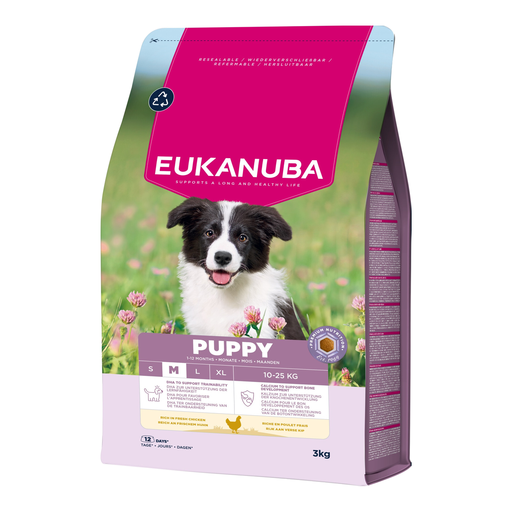
Why it suits this profile: A straightforward choice for owners of medium-breed puppies looking for a complete dry food with a clearly defined target group.
The product description specifically mentions medium-breed puppies. This helps you avoid choosing a general adult food without taking your puppy’s growth stage into account.
3 kg pack; according to the product information, complete and balanced for medium-breed puppies, with chicken, DHA and a fibre blend.
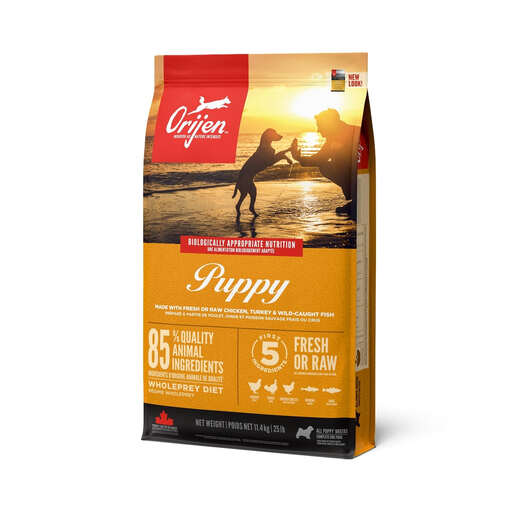
Why it suits this profile: Suitable for owners considering a grain-free puppy formula with a high proportion of animal ingredients.
The product information specifies a grain-free formula and provides a full ingredients list. This lets you weigh up the marketing claim against specific composition details.
11.4 kg pack; according to the product description, at least 38% crude protein and 18% fat, with chicken, turkey, eggs and fish.
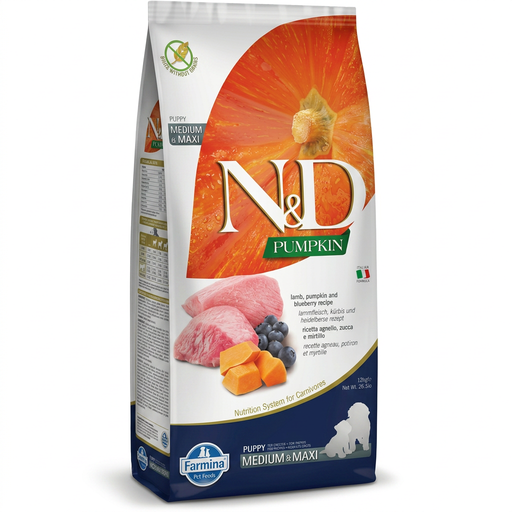
Why it suits this profile: A practical choice for owners of medium- or large-breed puppies looking for a grain-free puppy food with lamb in a large pack.
The label specifies medium- and large-breed puppies and gives portion guidance by weight range. This helps you tailor your dog’s food more accurately than using a general portion size.
12 kg pack; according to the product description, complete puppy food with lamb, pumpkin and a grain-free formula.
We’ve put together a full, up-to-date list of products that meet these strict selection criteria and the applicable European safety regulations.
Gradually mix the new food with the old, usually over around seven to ten days. Start with a small proportion of the new food and increase it step by step. Keep an eye on your dog’s stools, appetite and body condition. Ideally, follow the transition advice on the packaging.
It depends on your dog’s weight, age, breed size, activity level and body condition. Use the feeding chart on the packaging as a starting point and divide the daily amount into the recommended meals. Treats and toppers count towards the total daily allowance.
Not necessarily. Wet food generally contains more moisture and may be more appealing to some dogs. Dry dog food is easy to store and measure out. You can also combine the two, as long as the total amount meets your dog’s energy needs and the product is suitable as a complete food.
