
Vandaag of morgen in huis

Kwaliteit gegarandeerd

Welkomstaanbiedingen ontgrendelen: GRATIS bezorging | Tot 80% korting | Gratis 30 dagen JoyPlus-proefperiode
Download de app
A bag of dog food featuring terms such as “natural”, “grain-free” or “with extra protein” can quickly catch your eye. However, the front of the pack does not always tell you whether it is suitable for your dog. A small dog, active working dog, puppy and senior dog do not automatically have the same nutritional needs.
As a Joybuy Product Recommendation Officer, I filter product information based on verifiable details. Below, you’ll find what to look for when choosing dog food, wet dog food, puppy food and dog treats, without treating brand claims as established health facts.
“Dog food with chicken”, lamb or fish can contain varying amounts of those ingredients. That’s why you should check the ingredients list and see where the named animal ingredient appears. For example, CESAR Classic Chicken states that the product contains 60% meat and animal derivatives, of which 4% is chicken. The flavour name therefore does not mean that the food consists entirely of chicken.
Grain-free dog food may suit a particular preference or dietary situation, but being grain-free alone does not prove that a product is better suited to your dog. Also consider the sources of carbohydrates, the protein and fat content, and the life stage the food is intended for. For example, Eukanuba Grain Free uses peas and sweet potato as alternative sources, while Orijen Puppy contains lentils, chickpeas and peas, among other ingredients.
Soft dog treats, tubes and training treats are usually complementary pet food. They are not a replacement for a complete meal. According to the product information, INABA Churu and INABA Fun Bites are intended as rewards or toppings. Keep the quantity limited and include treats in your dog’s daily energy intake. INABA Fun Bites advises that treats should account for no more than 10% of the daily calorie intake.
Choose dog food based on your dog’s life stage and size:
Packaging labelled complete and balanced dog food is intended as complete nutrition for the stated animal species and life stage. Always check the legal product name and feeding guidelines on the packaging.
The analytical constituents provide more useful information than marketing terms. Pay particular attention to:
Do not compare dry and wet food solely by the protein percentage shown on the label. Because of its higher moisture content, wet food may appear to have a lower protein percentage, while the nutritional basis is calculated differently.
A large bag is only economical if your dog tolerates the food well and finishes it before its shelf life expires. Store dry food in a sealed container in a cool place. According to the product information for various items, opened wet food should be covered, refrigerated and used within 24 to 48 hours.
When changing food, make the transition gradually, usually over around 7 to 10 days. Follow the guidance on the packaging and adjust the portion if your dog’s weight or body condition changes. If symptoms persist, or if your dog has allergies or a medical condition, it is wise to consult a vet.
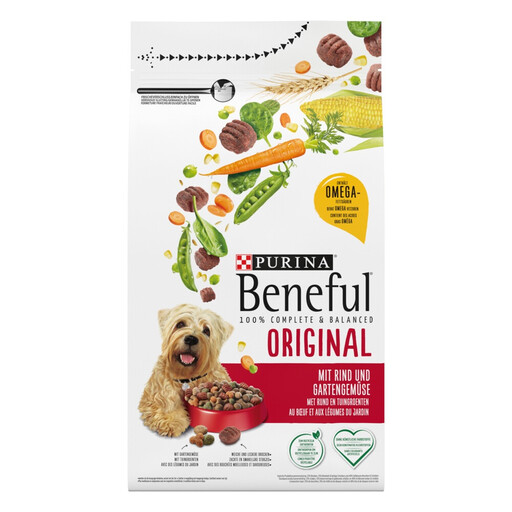
Why it suits this profile: An accessible dry food option for adult dogs of different weights, with feeding guidance for dogs weighing 5 to 30 kg.
The product information lists 15% protein, 8% fat and 12% moisture. This allows you to compare its composition with other dry foods instead of relying solely on the flavour name.
1.4 kg pack; suitable for adult dogs of all weights; according to the product information, contains wholegrains and no added artificial colourings.
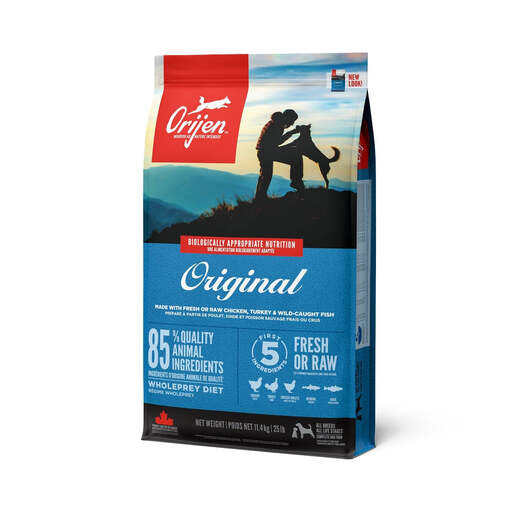
Why it suits this profile: For dog owners looking for a complete dry food with several animal ingredients and a large bulk pack.
The ingredients and analytical values are listed in detail: 38% crude protein, 18% fat and 12% moisture. However, check that this high-energy formula is suitable for your dog.
11.4 kg pack; the product information names chicken, turkey, herring, cod and egg; described as complete food for all life stages, except Great Dane puppies younger than 14 weeks.
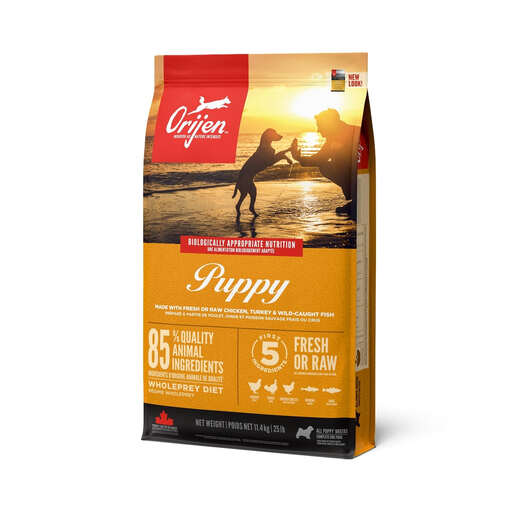
Why it suits this profile: For puppy owners looking for a large bag of puppy food for all breeds and wanting to monitor the transition, portions and growth closely.
The packaging clearly describes it as puppy food and advises a gradual transition over 7 to 10 days. Grain-free does not mean ingredient-free: the formula contains lentils, chickpeas and peas, among other ingredients.
11.4 kg pack; according to the product information, 38% crude protein and 18% fat; intended for puppies of all breeds from weaning to approximately 12–18 months, depending on breed size.
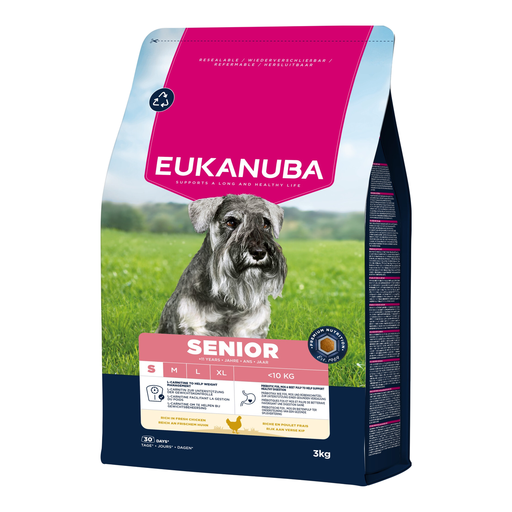
Why it suits this profile: A targeted choice for small senior dogs aged 11 and over that need small kibbles and life-stage-specific nutrition.
The age range and breed size are clearly stated alongside the product. According to Eukanuba’s own product information, the formula contains fibre, glucosamine and chondroitin, among other ingredients; these are product specifications, not a guarantee of a medical effect.
3 kg pack; dry food for small senior dogs; the product information mentions a fibre blend, calcium, and omega-6 and omega-3 fatty acids.
We’ve put together a complete, up-to-date list of products that fully meet these strict selection criteria and the applicable European safety regulations.
It depends on your dog’s preferences, nutritional needs and your practical circumstances. Dry food is easy to portion and store. Wet food generally contains more moisture and may appeal to dogs that prefer softer food. With both types, check whether the product is complete food or complementary pet food.
First, follow the feeding guidelines on the packaging and divide the daily amount into suitable meals. Puppies often need several smaller portions, while adult dogs usually have one or two meals. Adjust the amount according to weight, activity level and body condition.
Dry food generally stays usable for longer when stored in an airtight container somewhere cool and dry. Opened wet food should be covered and kept in the fridge. The products mentioned usually recommend using it within 24 to 48 hours. Always check the label, use-by date, and the food’s smell or texture.
