
Vandaag of morgen in huis

Kwaliteit gegarandeerd

Welkomstaanbiedingen ontgrendelen: GRATIS bezorging | Tot 80% korting | Gratis 30 dagen JoyPlus-proefperiode
Download de app
A bag of dog food featuring words such as “natural”, “premium” or “grain-free” quickly catches the eye. However, these terms do not always tell you enough about whether the food is suitable for your dog. The right choice mainly depends on your dog’s life stage, size, activity level and the food’s composition.
In this guide, you’ll learn what to look for in dry dog food, wet dog food and food for puppies, adult dogs and senior dogs. We’ll also discuss some popular options based on verifiable product information.
“Premium dog food”, “natural” and “biologically appropriate” may sound appealing, but they are no substitute for the ingredients list and analytical constituents. Always check whether the product is labelled as complete food. Complete food is intended to be given as a daily diet in accordance with the guidelines on the packaging.
Also pay attention to the order of the ingredients. If chicken, lamb or salmon appears first, it is an important part of the recipe. However, the exact percentages are more relevant than the name alone on the front of the pack.
Puppy food has different nutritional values and feeding tables from dog food for adult dogs. A large-breed puppy also has different growth needs from a small dog. So look for labels such as “puppy”, “adult”, “senior”, “mini” or “medium/maxi”.
A small kibble can be practical for a small dog, while larger kibble may be less suitable for a small mouth. Conversely, a medium or large dog may benefit from a kibble size that suits its eating habits and daily portion.
Even suitable food can cause gastrointestinal problems if you change over suddenly. It is therefore generally best to mix the new food with the old food over at least five to seven days. Follow the specific instructions on the packaging. Always provide fresh drinking water.
If symptoms persist, or if your dog has food allergies or requires a medical diet, it is sensible to consult a vet. A product description is not personalised nutritional advice.
Check the label for:
European pet food labels must provide clear information about composition and use. Claims about skin, coat, joints or digestion should be viewed as product positioning. Such properties may be mentioned based on a brand’s own research or information, but they are not a guarantee for every dog.
If you’re looking for dog food with chicken, dog food with lamb or dog food with salmon, it is worth checking the full ingredients list. For example, “with chicken” may mean that chicken makes up only a limited percentage of the animal ingredients.
For dogs with sensitive digestion, a simpler recipe may be preferable. However, “dog food for sensitive digestion” is not a universal category with the same effect for every dog. Change one factor at a time and monitor your dog’s stools, appetite and body condition.
Grain-free dog food contains no grains, but often does contain ingredients such as peas, chickpeas, potato or sweet potato. Grain-free therefore does not mean carbohydrate-free. Choose this variety only when its composition suits your dog, rather than simply because of the claims on the front of the packaging.
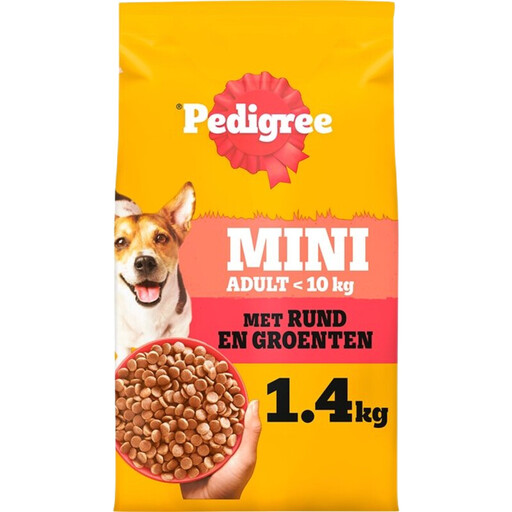
Why it suits this profile: A straightforward bag of dry food for small adult dogs, with a daily feeding table for weights from 1 to 10 kg.
The packaging states the variety, weight ranges and analytical values. This lets you compare the contents based on more than just the flavour name.
Dry food for small adult dogs; 22% crude protein, 13% fat and a portion table by body weight.
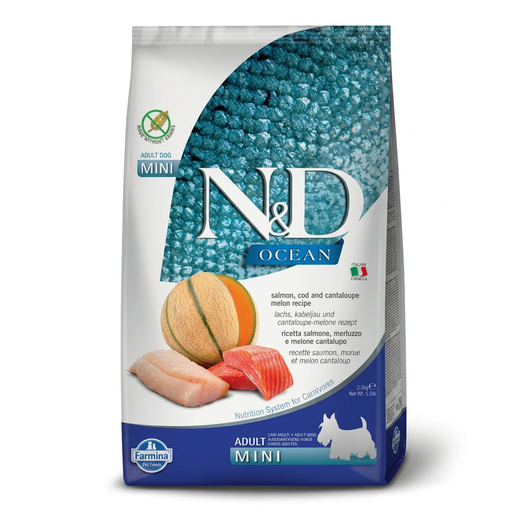
Why it suits this profile: A grain-free mini variety for small adult dogs, with a recipe containing salmon and fish ingredients.
The product information clearly states the life stage, breed size, ingredients and analytical values. This makes the choice easier to verify than a standalone claim on the front of the pack.
Salmon and dried salmon are listed in the composition; 32% crude protein, 18% fat and 2.5% crude fibre.
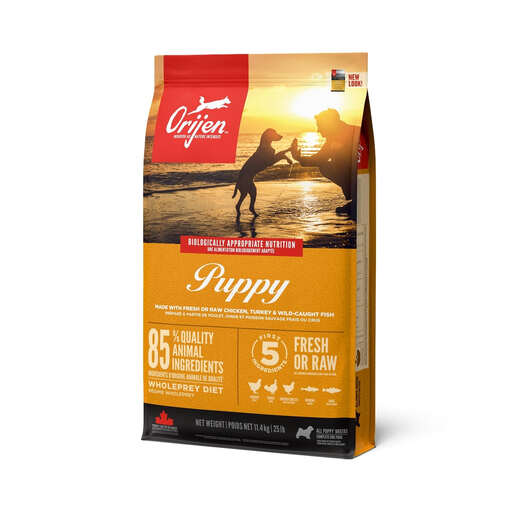
Why it suits this profile: A large pack for puppies of different breeds, multi-dog households or owners who prefer to reorder less often.
The product description specifies the puppy life stage, a food transition period of 7 to 10 days, and portion adjustments based on age, weight and breed size.
11.4 kg of dry puppy food; according to the product information, 38% crude protein and 18% fat, with chicken, turkey, egg and fish.
For dog food with lamb, options include Farmina N&D Pumpkin Lamb Adult Medi/Maxi and Farmina Quinoa Digestive Lamb. These varieties contain lamb as an important protein source and have recipes featuring pumpkin or quinoa respectively.
For medium and large adult dogs, you could consider Farmina N&D Pumpkin Series Chicken Adult Medium to Large. For senior dogs, Eukanuba Life Care Dog Senior Small Chicken is aimed at small senior dogs aged 11 and over, according to the product description.
If you want to combine wet dog food with kibble, check that it is labelled as complete food. Cesar Turkey & Veal comes in a 150-gram portion, contains 83% moisture and should be refrigerated after opening and used within a maximum of two days.
We’ve put together a complete, up-to-date list of products that fully meet these strict selection criteria and the applicable European safety regulations.
First, follow the feeding table on the packaging and divide the daily amount between the recommended meals. Puppies often need several smaller meals. Adult dogs are usually fed once or twice a day. Adjust the portion according to activity level, body condition and weight.
Store dry dog food sealed, in a cool, dry place. Use it before the best-before date and reseal the bag after every portion. Wet dog food should be kept in the fridge after opening. The exact storage time varies by product; Cesar specifies a maximum of two days.
No. The price reflects not only nutritional value, but also the brand, packaging, ingredients and distribution. Compare the price per kilogram, the recommended daily portion, the life stage and the analytical constituents. This will help you see which food suits both your dog and your budget.
