
Vandaag of morgen in huis

Kwaliteit gegarandeerd

Welkomstaanbiedingen ontgrendelen: GRATIS bezorging | Tot 80% korting | Gratis 30 dagen JoyPlus-proefperiode
Download de app
A bag of dog food can look convincing thanks to words such as “natural”, “premium” or “grain-free”. However, these terms do not always tell you whether it is suitable for your dog. The right choice mainly depends on your dog’s life stage, size, activity level, ingredients and daily portion.
If you only look at the front of the packaging, you risk paying too much for a formula that is not the right fit. Below, we explain what to check before buying dog kibble.
“Dog food with chicken” can mean different things. Check whether chicken is listed as a specific ingredient and how much of it is included in the recipe. For example, Pedigree Adult Dry Dog Food Poultry & Vegetables states that the product contains cereals and that 4% of the animal ingredients come from poultry. That is different from a recipe in which chicken or dried chicken appears high up on the ingredients list.
“With vegetables” is not a fixed nutritional standard either. Look at the complete ingredients list rather than just the product name.
Grain-free dog food contains no cereals, but it may still include potato, sweet potato, peas or other plant-based ingredients. This means grain-free food is not automatically suitable for every dog. The overall composition, calorie content and your dog’s tolerance remain important.
You should also change food gradually. Mix the new food with the old food over approximately 7 to 10 days and monitor how your dog responds.
A 12 or 15 kg pack often has a lower price per kilo, but only if your dog tolerates the food well and you use the bag within a reasonable period. Store dry dog food in a cool, dry place, seal the packaging properly and check the best-before date. For a small dog, a 1.2 to 3 kg pack may be more practical, even if the price per kilo is slightly higher.
Puppy food is formulated for growth, while adult dog food is intended for maintenance. Senior dog food is generally marketed for older dogs, but the exact age threshold varies by product. For example, Beneful Happy Adult 7+ Chicken & Vegetables is intended for dogs aged 7 and over.
Also consider your dog’s size:
Always check the official feeding table on the packaging. The recommended amount is a guideline and should be adjusted according to your dog’s weight, activity level and body condition.
The packaging usually states the percentage of crude protein, fat, crude fibre, crude ash and moisture. These figures help you compare products more objectively.
Here are a few examples from the range:
A higher protein percentage does not automatically mean the food is more suitable for your dog. Consider the life stage, activity level and recommended portion.
A product legally designated as complete dog food is intended to provide daily nutrition when fed according to the instructions on the packaging. Check that the product is intended for the correct life stage.
Some formulas contain additions such as omega 3, vitamins, probiotics, glucosamine or L-carnitine. Treat these as product specifications rather than medical claims. According to Acana’s product information, for example, the formula contains Lactobacillus acidophilus, Bifidobacterium animalis and Lactobacillus casei. Acana also lists 300 mg/kg glucosamine. According to the product information for Farmina N&D Prime Chicken Adult Mini, this product contains 1,200 mg/kg glucosamine and 900 mg/kg chondroitin sulphate.
If your dog has health problems, food sensitivities or a significantly unusual weight, it is sensible to consult a vet.
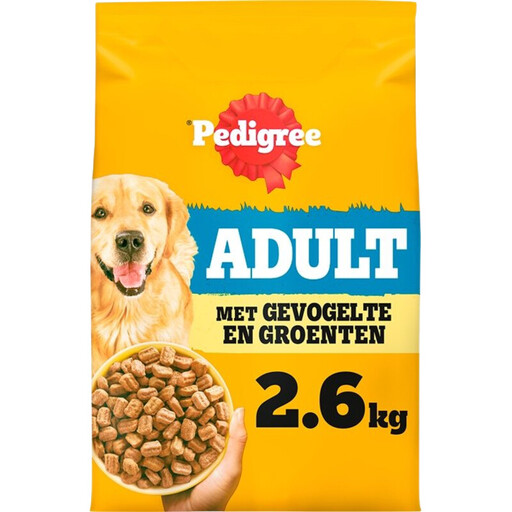
Why it suits this profile: A familiar choice for owners of adult dogs looking for an everyday dry food with clear feeding guidance.
The composition specifically lists cereals, animal by-products and 4% poultry, allowing you to compare the product name with the ingredients.
20% protein, 9% fat and a stated energy content of 353 kcal per 100 grams; available as a dry food formula for adult dogs.
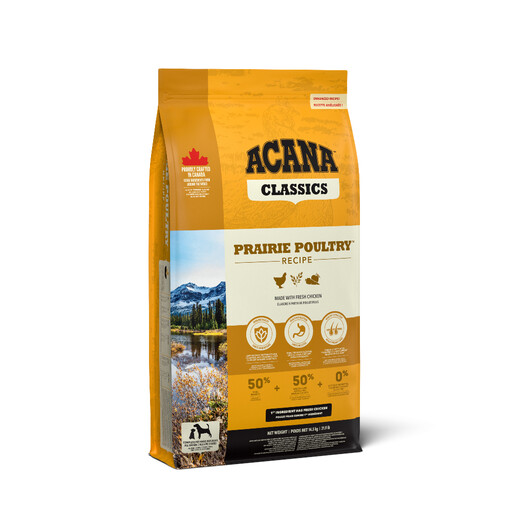
Why it suits this profile: Suits households looking for a large pack containing chicken, turkey, oats and plant-based ingredients.
The product information states 50% animal ingredients and separately lists chicken, turkey and oats. This makes the formula easier to assess than a standalone claim on the front of the pack.
27% crude protein, 16% fat, 5% fibre and 300 mg/kg glucosamine according to the product details; suitable as complete food for all life stages.
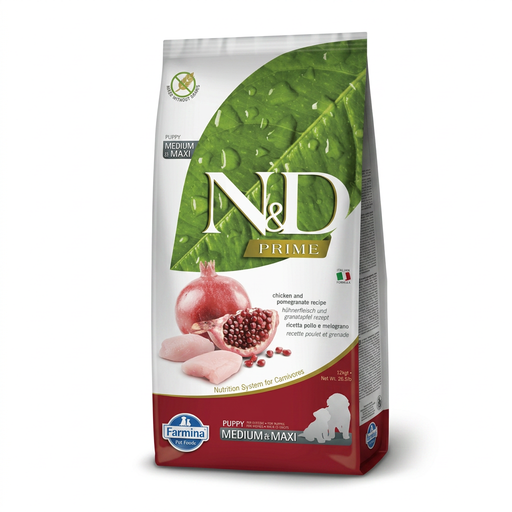
Why it suits this profile: Designed for puppies of medium-sized and large breeds, for whom the feeding table and growth stage are particularly important.
The product information includes a separate puppy feeding table and a seven-day transition schedule. Always check your puppy’s age and expected adult weight.
Grain-free composition according to the product description; lists chicken, dried chicken, calcium, phosphorus and chicken cartilage as ingredients or sources of nutrients.
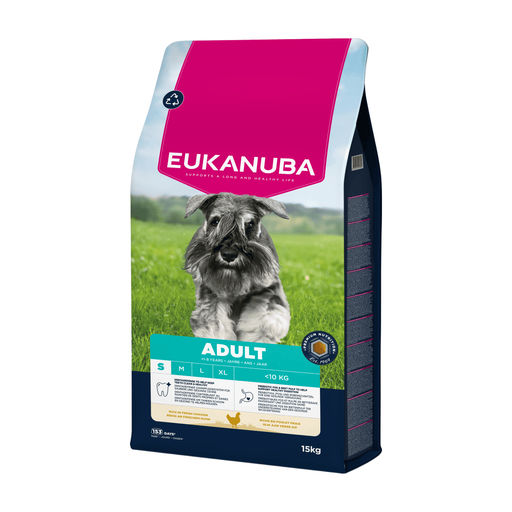
Why it suits this profile: A large pack for owners of a small adult dog who want a consistent everyday diet.
The formula is specifically labelled for small adult dogs aged 1 to 8 years. This makes its target audience clearer than that of general dog food.
According to the product description, it contains fresh chicken, L-carnitine, FOS, beet pulp and omega 3 and omega 6 fatty acids; the pack weighs 15 kg.
We have put together a complete, up-to-date list of products that fully meet these strict selection criteria and the applicable European safety regulations.
Ideally, give the daily amount split between two meals, unless the packaging advises otherwise. Snacks and table scraps count towards your dog’s total energy intake. When using weight-management dog food, such as Beneful Healthy Weight, portion control remains important; the product information recommends adjusting the amount based on activity level and body condition.
Always provide fresh drinking water. Store dog kibble in its original, securely sealed bag in a cool, dry place. If the food smells unusual, the packaging is damaged or the best-before date has passed, do not use it.
This varies by brand and packaging. Seal the bag securely after each use and follow the storage information on the label. A smaller pack may be more practical if your dog eats little.
No. Grain-free only means that the formula contains no cereals. You should also compare the protein and fat percentages, plant-based ingredients, calorie content and suitability for your dog’s life stage.
Gradually mix the new food with the old food, usually over 7 to 10 days. Step by step, increase the proportion of the new product. If problems persist, stop and ask a vet for advice.
