
Vandaag of morgen in huis

Kwaliteit gegarandeerd

Welkomstaanbiedingen ontgrendelen: GRATIS bezorging | Tot 80% korting | Gratis 30 dagen JoyPlus-proefperiode
Download de app
There is a huge choice of dog food: dry food, wet food, puppy food, senior dog food, grain-free recipes and treats in all sorts of formats. However, eye-catching packaging says little about whether a product is right for your dog. Age, size, activity level and the complete composition matter more than individual claims on the front of the pack.
When comparing products, pay particular attention to these three common pitfalls:
The packaging will usually state whether the product is complete food or complementary food. Complete dog food is intended as a daily meal when fed according to the feeding guide. Treats, toppers and some soft snacks are complementary and do not replace a complete meal.
One example is INABA Fun Bites Dog Chicken Wraps: according to the product information, this is complementary food rather than a meal. The recommended amount also depends on the dog’s size and activity level. Use this type of dog treat as a reward or training aid, and keep track of the calories within your dog’s daily food allowance.
Choose dog food that matches your dog’s life stage:
Kibble size and nutritional values may differ for small, medium and large breeds. For example, medium-breed puppy food is not automatically suitable for an adult dog of a large breed.
Check both the ingredients list and the analytical constituents. In particular, look for crude protein, fat, fibre, moisture and ash. Dog dry food usually contains less moisture than dog wet food. This means that percentages cannot be compared directly without taking the product format into account.
“Grain-free dog food” is not automatically right for every dog. Grain-free simply means that certain grains have not been used; in itself, it says nothing about the overall nutritional value or whether the food is suitable for an individual dog. Also check alternative sources of carbohydrates, such as pulses or potato, and read the full label.
If your dog has a sensitivity to an ingredient, take extra care. Packaging featuring “chicken” may still contain several animal-based ingredients. Check the full composition and, if problems persist, follow your vet’s advice.
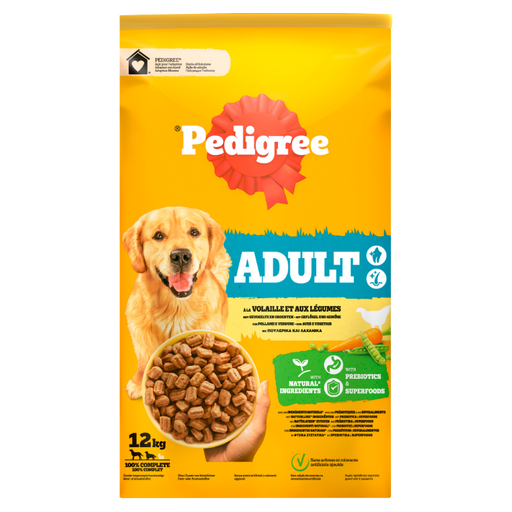
Why it suits this profile: A large pack of dry dog food for adult dogs, ideal for households that feed regularly and want to compare the price per kilogram.
The product description states that it is a complete dry meal for adult dogs. Before buying, however, check the current feeding guide on the packaging.
12 kg pack; chicken as the stated variety; kibble structure designed according to the product description.
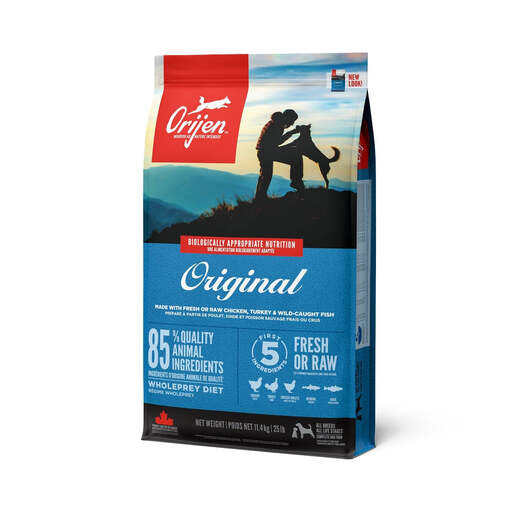
Why it suits this profile: For owners who want to compare a dry food recipe with a comprehensively detailed ingredients list and a high stated protein percentage.
The product information states 38% crude protein and 18% crude fat, alongside a full ingredients list. Always assess these values in relation to your dog’s nutritional needs.
11.4 kg pack; grain-free formula according to the product information; analytical values clearly stated.
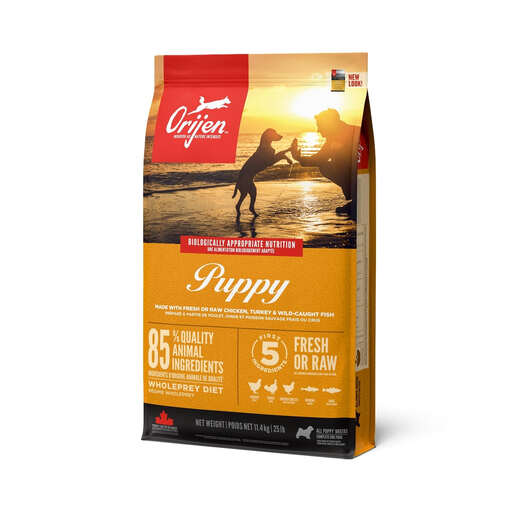
Why it suits this profile: Designed for puppies of different breeds, with feeding advice for each age and a recommended gradual transition over 7 to 10 days.
The product details specify the life stage, kibble size and serving guidance. This makes comparison easier than relying solely on the term “puppy”.
11.4 kg pack; at least 38% crude protein according to the product information; feeding advice for young dogs.
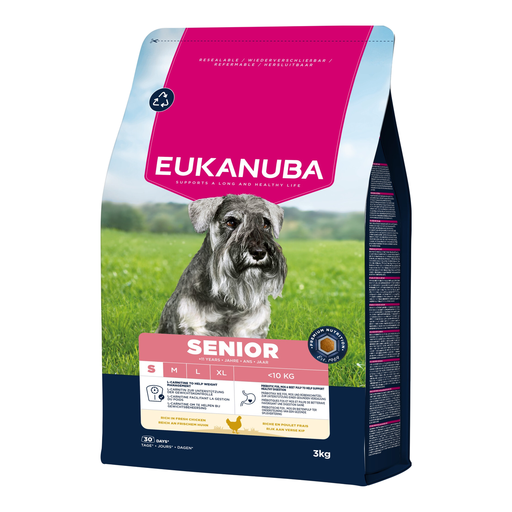
Why it suits this profile: According to the product description, this dry food is intended for small senior dogs aged 11 and over, with a serving adjusted to weight and activity level.
The life stage and breed size are specified clearly. This means you do not have to use general adult food without checking whether it is suitable for a senior dog.
3 kg pack; chicken as the stated ingredient variety; the product information describes a fibre blend and nutritional additives.
Wet dog food can be useful for portion control or if your dog prefers soft food. Check whether the product is complete. According to the product information, Rosewood Dog Pâté Chicken & Beef Flavor is offered as complete food for adult dogs. Once opened, any remaining food should be kept refrigerated and used within 48 hours.
Dog treats are intended as a supplement. According to the label, INABA Fun Bites Chicken with Sweet Potato contains 82% moisture and is recommended as a reward, not as a replacement for a meal. Even healthy dog treats count towards your dog’s daily calorie intake. Keep the amount limited and adjust the usual food portion when necessary.
If you are switching to a different dog food, mix the new food gradually with the old one. A transition lasting several days can help your dog adjust calmly to differences in composition. Monitor appetite, stools and body condition. If problems are clear or persistent, it is sensible to consult a vet.
We have put together a complete, up-to-date list of products that fully meet these strict selection criteria and the applicable European safety regulations.
Choose puppy food that states the correct life stage and, where relevant, the dog’s expected adult size. Check the feeding guide and divide the daily amount according to the advice on the packaging. Medium-breed puppy food is not automatically suitable for a puppy that will grow into a large breed.
That depends on your dog’s preferences, your practical circumstances and the composition of the food. Dry food is generally easy to store and simple to measure by the kilogram. Wet food contains more moisture and is often supplied in portions. With both types, check that the food is complete and compare the daily cost, not just the price per pack.
Store unopened dog food in a cool, dry place according to the label. Seal an opened bag of dry food securely. Opened wet food should be kept in the fridge; different products specify a maximum usage period of 48 hours. Always check the best-before date, packaging and specific storage instructions.
