
Vandaag of morgen in huis

Kwaliteit gegarandeerd

Welkomstaanbiedingen ontgrendelen: GRATIS bezorging | Tot 80% korting | Gratis 30 dagen JoyPlus-proefperiode
Download de app
Choosing a bag of dog food seems simple, until you have to compare age, breed size, ingredients and nutritional value. A small breed does not automatically need the same kibble as a large dog. Puppies, adult dogs and senior dogs also have different nutritional needs.
If you rely solely on words such as “natural”, “premium dog food” or “grain-free dog food”, you may end up paying more without the product being a better match for your dog. Use these checks to make an informed choice.
A high meat content or grain-free recipe may sound appealing, but this does not in itself say whether the food is suitable as a daily staple. Check that the packaging states that it is complete and balanced dog food. Also look at the target group: puppy, adult dog or senior.
“Grain-free” is not a universal guarantee of quality. It may suit a specific preference or dietary choice, but always compare the full composition and analytical constituents.
Puppy food is designed for growth and has different nutritional values from adult dog food. There are also differences within puppy food. A small-breed puppy will usually eat smaller kibble than a puppy that will grow into a large-breed adult dog.
Therefore, look for indications such as:
Age limits vary by brand and breed size. Use the guidelines on the packaging as a starting point and keep an eye on your dog’s weight and body condition.
A 15 kg bag may seem good value per kilogram, but it is not always practical for a small dog. Once opened, dry food should be stored tightly sealed, in a cool, dry place. For a small eater, a smaller bag can help preserve freshness more effectively.
So do not compare only the price of the pack, but also:
Make your initial selection based on life stage and adult weight. Examples include dog food for small dogs, dog food for medium-sized dogs and dog food for large dogs. For large breeds, the growth phase is particularly important: do not choose standard puppy food if the packaging specifically recommends food for large or giant breeds.
Also check that the kibble size is suitable for your dog’s jaw. Kibble that is too large can be difficult to eat, while pieces that are too small may simply be swallowed quickly.
Check the percentages of crude protein, crude fat, crude fibre, crude ash and moisture. These values help you compare products, but they should always be considered alongside the ingredients list and feeding guidelines.
Food with a higher protein percentage is not automatically suitable for every dog. Activity levels, age, body weight and any advice from a vet all play a part. It is best to change food gradually over around seven days, as indicated for several products in this selection.
Look at which animal and plant-based ingredients appear first in the composition. For example, Farmina N&D Prime Chicken Puppy Mini lists boneless chicken and dried chicken as key ingredients. The product information also lists DHA, omega 3 and omega 6, glucosamine and chondroitin sulphate.
Eukanuba Life Care products list ingredients including chicken, fibre sources, calcium and certain vitamins. According to Eukanuba’s product information, some variants are formulated to support weight maintenance, joints, skin and coat. These are product and brand claims; do not regard them as guaranteed medical effects.
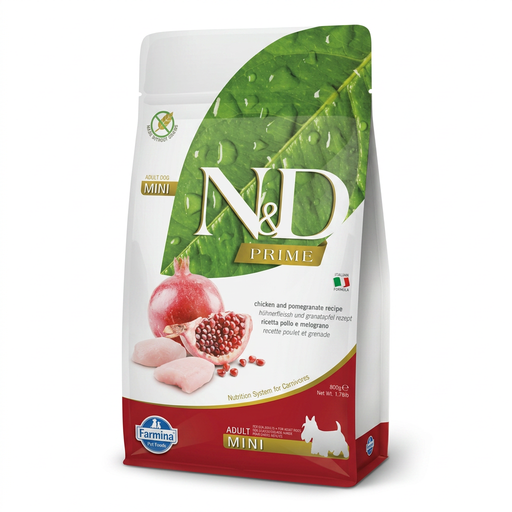
Why it suits this profile: The 800-gram pack is a manageable choice for anyone buying small-dog food for the first time and not wanting to build up a large stock straight away.
The product information describes this as complete food for adult dogs of small breeds and clearly lists the nutritional values, rather than relying only on general marketing terms.
Grain-free chicken formula; 34% crude protein and 18% crude fat according to the listed product specifications.
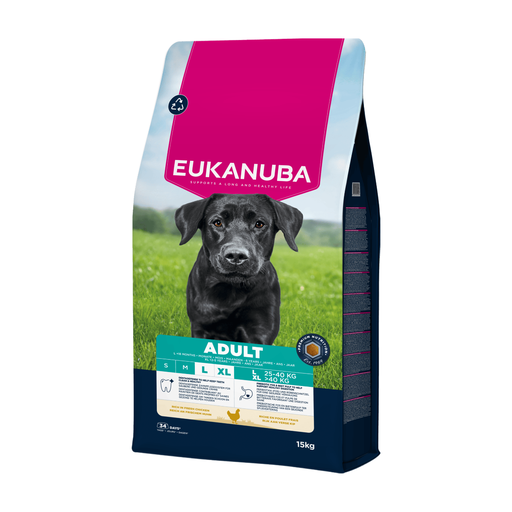
Why it suits this profile: This large pack is practical for households with a large adult dog that consumes larger quantities of food each day.
The target group is clearly defined: adult large-breed dogs from approximately 18 months to 6 years old. This prevents you from choosing a small-dog variant based solely on the flavour.
Lists chicken, L-carnitine, glucosamine, calcium and a fibre blend; the manufacturer describes the food as 100% complete and balanced.
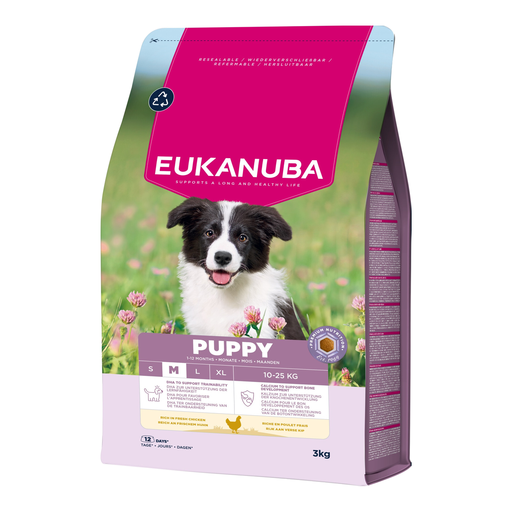
Why it suits this profile: Designed for puppies of medium-sized breeds from 1 to 12 months old, with a 3kg pack that is convenient during the growth phase and when changing food.
The breed size and life stage are stated specifically. This means you do not have to guess based on the chicken variety or a generic puppy image.
According to the product description, the formula contains DHA, calcium, FOS, MOS and beet pulp; the food is described as complete and balanced.
Suitable nutrition is just one part of daily care. For a large dog, a dog bed for large dogs with a water-repellent Oxford cover and support around the edges can be practical. With this type of bed, pay particular attention to the dimensions, washing instructions, seams and filling. Allow all parts to dry completely after washing and check regularly for damage.
For nail care, a dog nail clipper with stainless-steel blades may be suitable. Only clip the clear tip and avoid the sensitive inner part of the nail. Work calmly and stop if your dog becomes restless.
We have put together a complete, up-to-date list of products that fully meet these strict selection criteria and the applicable European safety regulations.
Choose puppy food that matches the dog’s expected adult size. A large-breed puppy has different guidelines from a small dog. Check the age indication, kibble size, daily amount and whether the food is described as complete. If you have concerns about growth or weight, ask a vet for feeding advice.
Mix the new food gradually with the current food, usually over approximately seven days. Increase the proportion of the new product each day and monitor your dog’s appetite, stools and body weight. Always ensure access to clean drinking water. If problems persist, it is sensible to consult a vet.
Not as a standard rule. Grain-free dog food may suit a particular choice or composition, but “grain-free” alone does not prove that the food is better suited. Compare the complete ingredients list, analytical constituents and feeding guidelines with your dog’s needs.
