
Vandaag of morgen in huis

Kwaliteit gegarandeerd

Welkomstaanbiedingen ontgrendelen: GRATIS bezorging | Tot 80% korting | Gratis 30 dagen JoyPlus-proefperiode
Download de app
A bag of dog food containing chicken, omega-3 or the word “premium” can quickly seem like a safe choice. However, eye-catching packaging says little about whether the food is suitable for your dog’s age, size and activity level. If you focus only on marketing claims, you could end up paying too much for food that does not meet your dog’s needs.
When choosing dog food for every life stage, these three pitfalls are especially important:
Choosing the wrong life stage
Puppies have different nutritional needs from adult or older dogs. Puppy food for large breeds should also be assessed differently from puppy food for small breeds.
Assuming “grain-free” automatically means more suitable
Grain-free dog food can be a suitable option, but it is not a general guarantee of better digestion or higher quality. Always check the full composition and the analytical constituents.
Taking a health claim as a guarantee
Words such as “supports joints” or “for healthy digestion” describe product positioning, not a medical effect. According to a brand’s own research, certain ingredients may play a role, but individual results vary. If your dog has symptoms, seeking advice from a vet is wiser than changing its food yourself.
First check whether the food is intended for a puppy, adult dog, mature dog or senior dog. For puppies, also consider their expected adult weight. Large breeds continue growing for longer and need a different nutritional balance from small breeds.
Examples of clear age categories:
The ages shown on the packaging are guidelines. A large dog may be considered a senior earlier than a small dog.
Look for a clear statement that the product is complete and balanced dog food. This means that, according to the product information, it has been formulated as a complete daily diet. Also check the feeding guidelines, your dog’s weight and its activity level.
A high protein percentage is not decisive on its own. For example, Farmina N&D Prime Chicken Puppy Mini lists 36% crude protein and 22% crude fat. Farmina N&D Premium Chicken Adult Small lists 34% crude protein and 18% crude fat. These figures are easy to verify, but they should always be considered alongside your dog’s age, size and condition.
For small-breed dog food, smaller kibble may be more comfortable to eat. According to the product description, Eukanuba Life Care foods use hexagonal kibble and a DentaDefense system. These features may suit a daily routine, but they do not replace dental checks or professional cleaning.
For healthy digestion, you can look for sources of fibre and prebiotics. Various Eukanuba recipes mention FOS, MOS and beet pulp, among other ingredients. Farmina products list ingredients including inulin, fructooligosaccharides and pea fibre. These are product specifications; individual tolerance may vary from one dog to another.
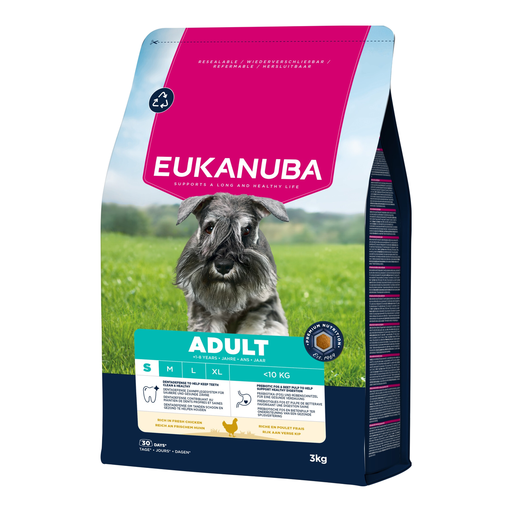
Why it suits this profile: The 3 kg pack is practical if you want to see whether a small adult dog accepts the food well before buying a larger supply.
The product information clearly refers to small adult dogs aged 1 to 8 years. This makes the life stage more specific than a general “for all dogs” claim.
Chicken as the primary named animal ingredient, FOS and beet pulp as sources of fibre, plus a stated complete and balanced composition.
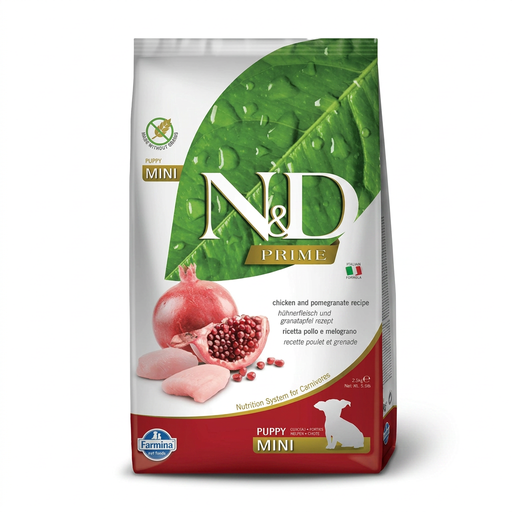
Why it suits this profile: This option is designed for small-breed puppies and, according to the product details, contains chicken, DHA, omega-3 and omega-6.
The age range and breed size are clearly specified. The grain-free composition can be verified, but it is no reason to overlook an individual puppy’s nutritional needs.
2.5 kg pack, 36% crude protein according to the product information, plus stated glucosamine and chondroitin from chicken cartilage.
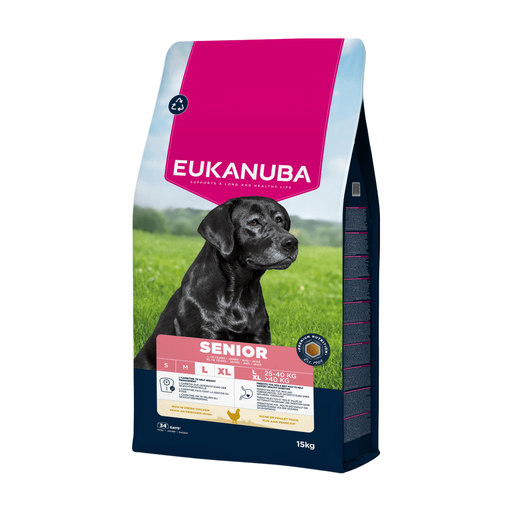
Why it suits this profile: The large pack is intended for households with a large senior dog that eats dry food every day.
The product description refers to large senior dogs from 9 years of age, or from 8 years for giant breeds. This helps avoid confusion between mature and senior dog food.
15 kg pack, stated glucosamine and chondroitin for joint support, plus FOS, MOS and beet pulp as sources of fibre.
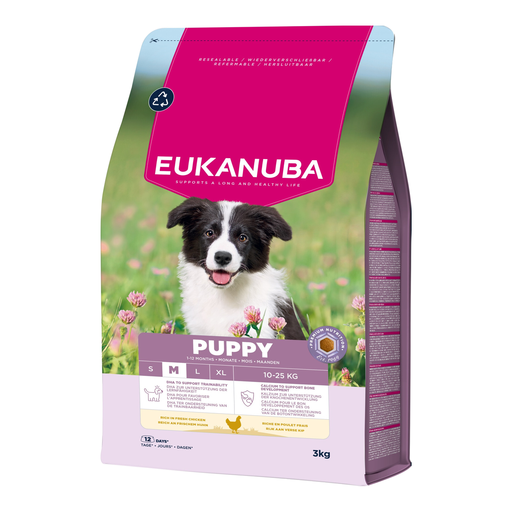
Why it suits this profile: The 3 kg pack gives a household with a medium-breed puppy a manageable quantity for a gradual changeover.
According to the product description, this food is intended for medium-breed puppies aged 1 to 12 months. This means you are not choosing based on the chicken flavour alone.
DHA, calcium, omega-3 and omega-6 are listed in the product specifications, alongside prebiotic fibre and a complete and balanced composition.
We have put together a complete, up-to-date list of products that fully meet these strict selection criteria and the applicable European safety regulations.
Mix the new food gradually with the current food, usually over at least seven days. Start with a small proportion of the new food and increase it step by step. Keep an eye on your dog’s stools, appetite, weight and energy levels.
Also pay attention to storage:
A larger bag may offer a lower price per kilo, but it is only cost-effective if your dog tolerates the food well and the bag is used within a suitable period.
Not automatically. Some foods are formulated for all life stages, but age, breed size, activity level and body condition remain important. For example, large-breed puppies have different nutritional needs from small-breed adult dogs.
This depends on the packaging and the brand’s storage advice. Seal the bag airtight, do not store it in a damp room, and check the smell, appearance and best-before date. Always follow the instructions on the label.
A recipe containing chicken may suit some dogs well, but chicken is not suitable for every dog. Check the full ingredients list and make the change gradually. If diarrhoea, itching, vomiting or weight loss persists, a vet should assess the situation.
