
Vandaag of morgen in huis

Kwaliteit gegarandeerd

Welkomstaanbiedingen ontgrendelen: GRATIS bezorging | Tot 80% korting | Gratis 30 dagen JoyPlus-proefperiode
Download de app
Buying dog food seems straightforward until you start comparing labels. One bag may state a high percentage of animal ingredients, while another focuses on terms such as “natural”, “grain-free” or “premium”. On their own, these terms say little about whether the food is suitable for your dog.
The key question is not which dog food sounds most impressive, but which food suits your dog’s age, size, activity level, body condition and any food sensitivities. Below, you’ll find what to look for in dry dog food, wet dog food and dog treats.
The label usually lists the crude protein content. This figure tells you how much protein the product contains, but not directly how much comes from animal sources or how suitable it is for your dog. An active adult dog may have different needs from a senior dog or one that gets little exercise.
Therefore, always compare:
When choosing high-protein dog food, the overall composition is particularly important. According to a brand’s own research, for example, a product may contain 85% animal ingredients, but you should also check the official ingredients list and analytical constituents on the packaging.
Grain-free dog food contains no grains, but it may still contain peas, chickpeas, potato or sweet potato. Grain-free therefore does not automatically mean that a recipe is suitable for every sensitive dog. When choosing dog food for sensitive dogs, pay particular attention to the protein source and avoid ingredients that have caused a reaction in your dog before.
If your dog has a diagnosed allergy or persistent symptoms, consulting a vet is more sensible than repeatedly changing its food yourself. Do not treat “hypoallergenic dog food” as a medical promise: check which proteins are actually present in the product.
For everyday use, it should be clear whether the product is a complete food. Some wet dog food products are complete meals, while others are intended as a supplement or treat. Dog treats should never replace your dog’s main food.
Pay attention to the pack size too. An 11.4 or 12 kg bag may seem good value, but it is less practical if your dog eats slowly or if the kibble cannot be stored properly in an airtight container once opened.
Puppy food is formulated for growth and follows different nutritional guidelines from adult dog food. Check whether the product is intended for puppies, adult dogs, all life stages or senior dogs. Smaller kibble is often more practical for small dogs. Dog food for medium-sized and large dogs may have a different kibble size and different portion recommendations.
Do not look only at the breed name. Your dog’s body weight, activity level and condition determine how much food it needs.
The following values can help you compare products objectively:
Do not compare dry food and wet food based solely on their protein percentage. Because of its higher moisture content, wet food often appears lower in protein, while the ratio may be different when calculated on a dry-matter basis.
Ingredients are generally listed in descending order. Check which type of meat or fish appears first and whether the recipe contains several animal sources. For an elimination diet or in cases of food sensitivity, a short, clear ingredients list is easier to assess.
Ideally, allow at least seven days when switching to a new food. Gradually mix increasing amounts of the new product with the old food and follow the feeding guidelines on the packaging. Always provide fresh drinking water.
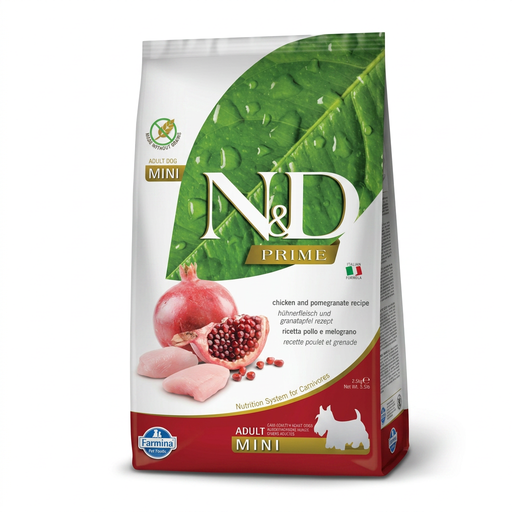
Why it suits this profile: The 2.5 kg pack is a manageable choice for an owner who wants to try a smaller quantity of dry dog food for a small adult dog.
The product information clearly states that this is complete food for small adult dogs. However, always check the portion and the current packaging.
34% crude protein, 18% fat and a chicken-based recipe, according to the product details.
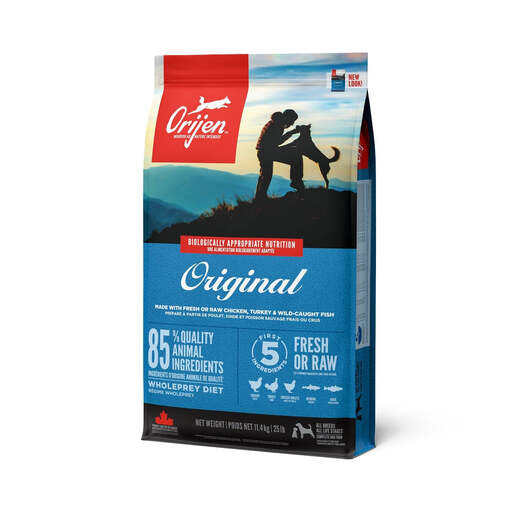
Why it suits this profile: This large bag is aimed at owners looking for high-protein dry food with several animal ingredients for dogs at different life stages.
The product page shows a detailed ingredients list and states 38% crude protein. This allows you to compare the marketing claim with verifiable figures.
38% crude protein, 18% fat and a stated nutritional status for all life stages.
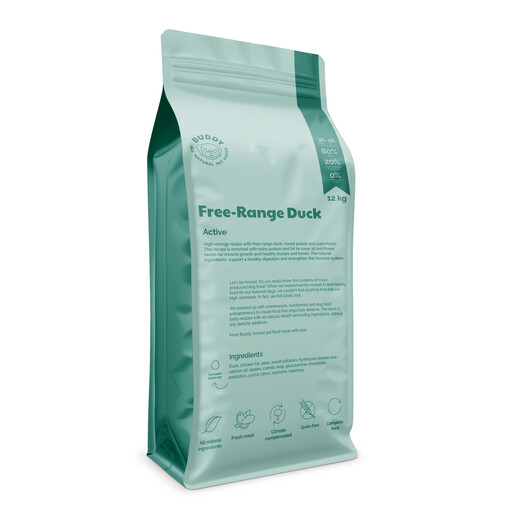
Why it suits this profile: The product description is aimed at large, active and working dogs, and lists a recipe containing duck, vegetables and added nutrients.
The composition lists 44% duck and 26% fresh duck separately. This makes it easier to check the protein source and recipe.
12 kg pack; according to the product information, grain- and gluten-free, with duck as a prominent ingredient.
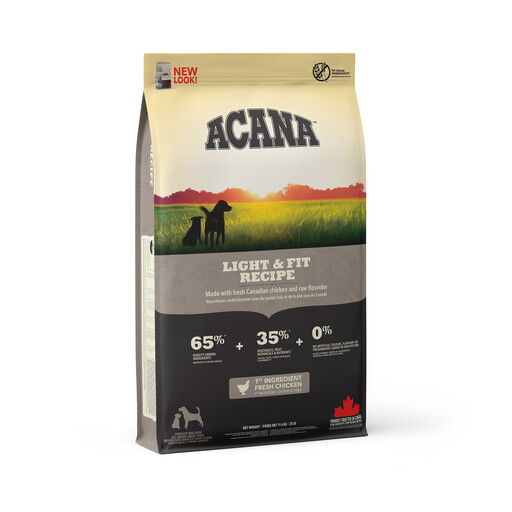
Why it suits this profile: According to the product information, this dry food has been developed with a lower calorie and fat content than other recipes in the range.
The product details state 3070 kcal/kg and 11% crude fat. Compare these values with your dog’s activity level and adjust the portion accordingly.
33% crude protein, 11% crude fat and a stated energy content per kilogram.
We’ve put together a complete, up-to-date list of products that fully meet these strict selection criteria and the applicable European safety regulations.
First, follow the feeding guidelines on the packaging and divide the daily portion between one or two meals, depending on your dog’s age, size and activity level. Puppies usually need several smaller meals. Weigh out each portion and check your dog’s body condition regularly, particularly when feeding high-calorie dog food.
Neither is automatically suitable for every dog. Dry food is practical to store and easy to portion. Wet food contains more moisture and may be more appealing to fussy eaters. With both types, check that the product is complete food and adjust the total amount when combining dry and wet food.
Store dry food in a cool, dry place in a tightly sealed container. Use opened wet food according to the packaging instructions; leftovers should generally be refrigerated and used within the stated time. Dog treats should also be stored in a dry, sealed place. Always check the use-by date and the instructions on the label.
