
Vandaag of morgen in huis

Kwaliteit gegarandeerd

Welkomstaanbiedingen ontgrendelen: GRATIS bezorging | Tot 80% korting | Gratis 30 dagen JoyPlus-proefperiode
Download de app
Buying a new bag of dog food seems simple, until you have to choose between dry food, puppy food, grain-free recipes and food for weight management. Packaging often highlights words such as “natural”, “premium” or “high in meat”. On their own, these terms tell you little about whether the food is right for your dog.
The key question isn’t which product sounds most impressive, but whether it suits your dog’s age, size, activity level and body condition. Here are the points to check so you can compare options more effectively.
A recipe featuring chicken, lamb or fish may sound appealing, but always check whether the product is labelled as complete pet food or complementary pet food. Complete food is intended to be fed daily, following the guidelines on the packaging. A treat or topper is not a substitute for a full meal.
For example, INABA Churu Dog Multipack is explicitly labelled as complementary pet food. The tubes can be given as a reward or used as a topper, but not as a complete meal.
Grain-free dog food may be a suitable choice if you want to avoid grains or are looking for a recipe with other sources of carbohydrates. However, the label doesn’t automatically mean the food is better for every dog. Check the protein and fat content, energy value and full ingredients list too.
If you suspect your dog has a food sensitivity, don’t rely on the front of the bag alone. Talk to your vet about a suitable feeding plan.
Feeding guides are just that: guides. An active dog may need a different amount from one that gets little exercise. Age, body weight and condition also play a part. Include dog treats in your dog’s daily allowance and check regularly for changes in body condition.
Puppy food is formulated for growth and is generally fed differently from adult dog food. There are also senior recipes with different formulations and nutritional values. According to the product information, Beneful Happy Adult 7+ is intended for older dogs aged 7 and over.
With puppy food, pay particular attention to the expected adult size. A large-breed puppy has different feeding guidelines from a small dog. Check whether the food is intended for small, medium or large breeds.
Food for large breeds may have a different kibble size and specific feeding guidelines. Acana Dog Puppy Large Breed is intended, according to the product information, for puppies expected to weigh at least 30 kg as adults. Eukanuba Life Care has separate varieties for medium and large adult dogs.
The breed information on the packaging is no substitute for individual feeding advice. Use the table as a starting point, then adjust the portion according to your dog’s weight, activity level and body condition.
Compare at least:
A higher protein percentage isn’t necessary for every dog. For weight management, the fat content and total energy per portion may be more important. For example, Farmina N&D Quinoa Weight Management lists 34% crude protein and 12% crude fat. According to the product description, it is intended for adult medium and large dogs. This makes it possible to compare with other options, but doesn’t automatically make it suitable for every dog.
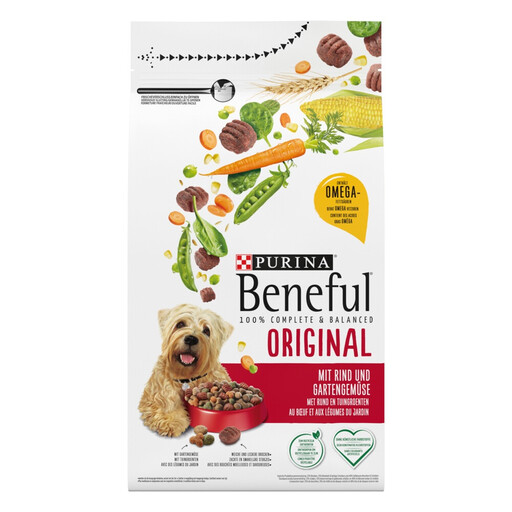
Why it suits this profile: An affordable bag of dry food for adult dogs of different weights, with a clear portion guide for dogs weighing 5, 10, 20 and 30 kg.
The packaging lists nutritional values and daily amounts, so you don’t have to choose based on taste or marketing terms alone.
Complete food for adult dogs; according to the product information, it contains 15% protein and 8% fat.
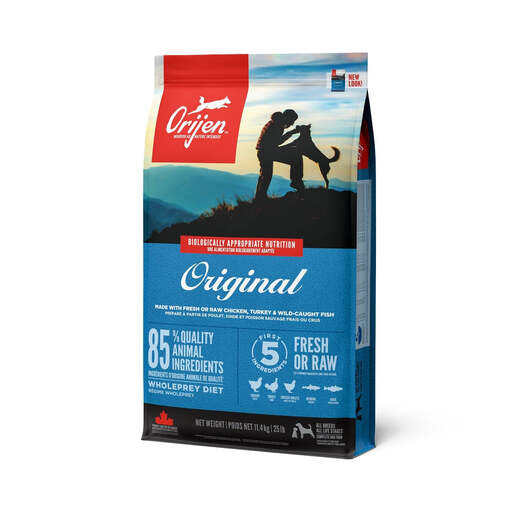
Why it suits this profile: For dog owners who want to compare a detailed ingredients profile and a high proportion of animal ingredients.
The product page shows the full ingredients list and analytical constituents, including 38% crude protein and 18% crude fat.
Complete food for dogs at all life stages, according to the product information; 11.4 kg bag for regular use.
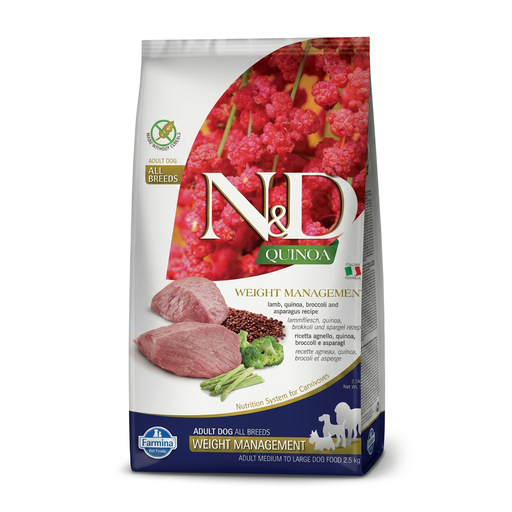
Why it suits this profile: For adult medium and large dogs where portion control and a weight-management recipe are a priority.
The product information gives specific feeding amounts by body weight and stresses the importance of avoiding overfeeding.
Grain-free recipe; lists 34% crude protein and 12% crude fat in its analytical composition.
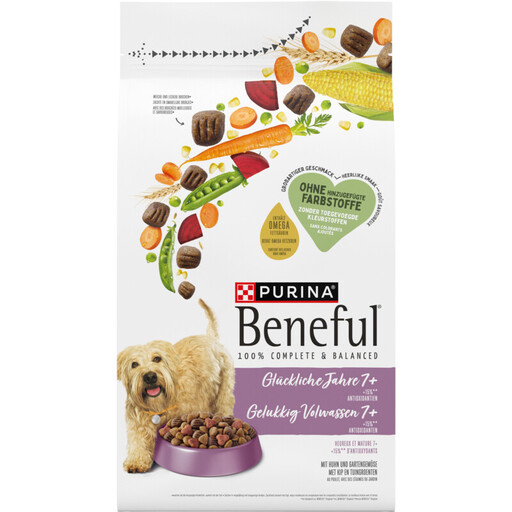
Why it suits this profile: A practical choice if you’re looking for senior dog food for a dog aged 7 and over, in a handy-sized pack.
The age guidance is clearly stated, so you won’t choose an adult recipe for an older dog without checking first.
Complete food for older dogs aged 7 and over; 1.4 kg pack with listed analytical values.
We’ve put together a complete, up-to-date list of products that meet these strict selection criteria and current European safety requirements.
Choose puppy food that suits your puppy’s expected adult size. There are specific recipes for medium and large breeds, such as Farmina N&D Pumpkin Lamb Puppy Medi/Maxi. Follow the feeding amounts on the packaging and weigh your puppy regularly.
Many adult dogs have their daily allowance split across one or two meals. The right frequency depends on the dog, the food and their activity level. Check the guidance on the bag and adjust the total amount if your dog’s weight changes.
This varies by product and packaging. Seal the bag securely after each use and store it somewhere cool and dry. Always check the best-before date and any instructions on the label. If the food has an unusual smell, colour or texture, it’s best not to feed it to your dog.
