
Vandaag of morgen in huis

Kwaliteit gegarandeerd

Welkomstaanbiedingen ontgrendelen: GRATIS bezorging | Tot 80% korting | Gratis 30 dagen JoyPlus-proefperiode
Download de app
A bag of dog biscuits or a tin of wet food may seem like a quick choice. Yet products can vary considerably in composition, nutritional value, format and intended use. An adult dog weighing 5 kg has different needs from an active dog weighing 30 kg. Treats, complementary food and complete dog food are not interchangeable either.
So do not focus solely on words such as “premium”, “natural” or “grain-free”. Above all, check the label, life stage and nutritional status. This will help you avoid buying dog food that is unsuitable for your dog or consistently overspending on a product that is not right for its intended use.
“Dog food with chicken”, “dog food with lamb” or “dog food with beef” sounds clear enough, but the quantity and form of the ingredient can vary. Sometimes meat is prominently displayed on the front, while the label also lists cereals, plant proteins or animal by-products.
That is why you should check the full ingredients list. Ingredients are generally listed in descending order by weight. Also check the analytical constituents, such as crude protein, fat, fibre, ash and moisture.
Grain-free dog food may suit a specific preference or dietary choice, but it is not a general guarantee of better tolerance. Cereals may be replaced by ingredients such as peas, chickpeas, potato or tapioca.
Does your dog have a sensitive stomach or recurring digestive problems? Do not change its food solely in response to a marketing claim. Discuss persistent symptoms with a vet and introduce any new food gradually.
Dog biscuits and treats, chews and liquid rewards are often complementary pet food. They are intended as rewards, toppers or snacks, not as a replacement for a daily meal. INABA Churu Dog, for example, states that the product is a treat and not a substitute for complete food. The recommended amount depends on your dog’s size, weight and condition.
Choose dog food that is clearly tailored to the relevant life stage. For this article, the focus is mainly on dog food for adult dogs. Also check whether the product is intended for small, medium-sized or large dogs.
A small kibble may be more practical for a small breed. For active, large or working dogs, the nutritional value per gram may be more important than the size of the kibble alone. Check the feeding table on the packaging and adjust the portion according to your dog’s weight, activity level and body condition.
The label should state whether the product is complete pet food or complementary food. Complete dog food is formulated to be given as a daily diet, in accordance with the feeding instructions on the packaging. Wet food, dry dog food and varieties in gravy can all be complete, but this must be stated for each individual product.
A treat such as a meat snack or lickable paste is usually complementary food. Give these products in moderation. Rosewood Dog Bones Mix Chews, for example, states that treats should account for no more than 10% of your dog’s daily calorie intake.
Dry food contains little moisture and is easy to weigh and store. Wet dog food contains considerably more moisture and can be useful if your dog accepts a soft texture. Once opened, a tin, tray or pouch will usually need to be kept refrigerated and used within the stated period.
Also check:
For specific symptoms, allergies or a prescribed diet, consulting a vet is a wiser choice than trying several types of food at the same time.
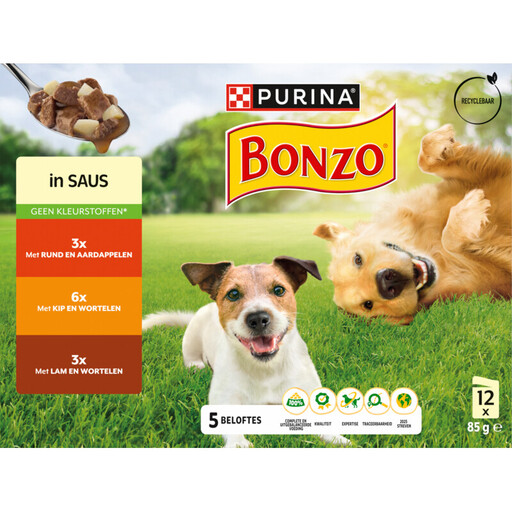
Why it suits this profile: The multipack contains portions in gravy that can be served separately or combined with dry food. This makes it practical for anyone who wants to try different flavours.
The product information states that this is complete food for adult dogs. However, always check the portion according to your dog’s weight and activity level.
12 portions, varieties with chicken and lamb, and suitable as a standalone meal or combined with kibble.
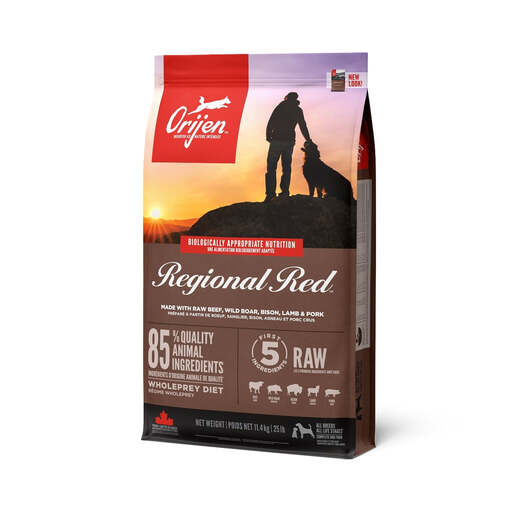
Why it suits this profile: This large bag is aimed at dog owners looking for a detailed composition containing several animal protein sources.
The composition lists specific percentages of beef, wild boar, bison, lamb and pork, among other ingredients. This allows you to assess several protein sources in advance.
Complete food, 38% crude protein according to the product information, and a contents weight of 11.4 kg.
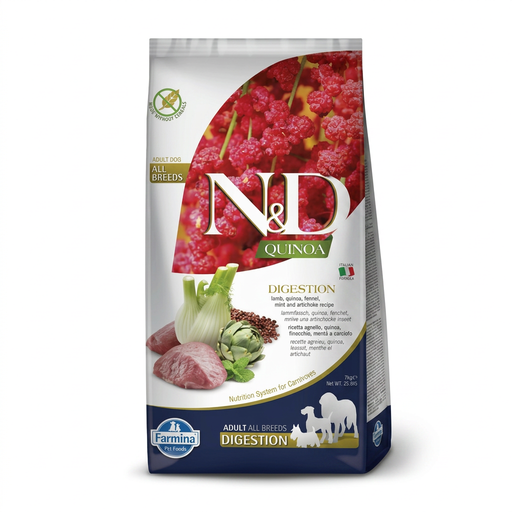
Why it suits this profile: The formula is intended for adult medium-sized and large dogs and lists quinoa, lamb, prebiotics and herbs among its ingredients.
The product description specifies the target group, protein source and analytical values. The claim regarding digestive support comes from the brand’s product information; consult a vet to check suitability if your dog has symptoms.
Grain-free composition according to the product information, 25% crude protein and 12% crude fat; 7 kg pack.
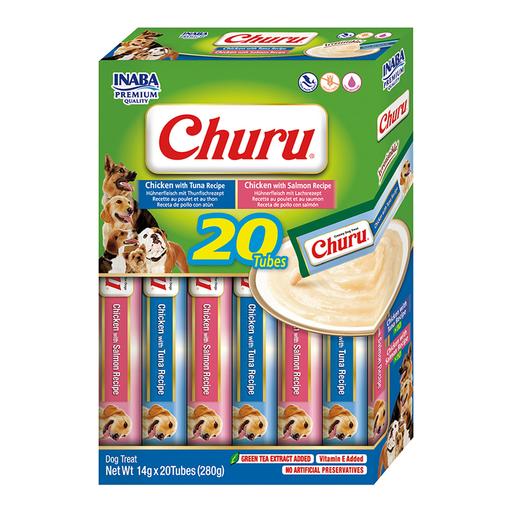
Why it suits this profile: The tubes are intended as treats, toppers or rewards during training. The multipack contains chicken and seafood varieties.
The packaging clearly states that this is complementary food. With at least 90% moisture and 12 grams per tube, you can easily limit the amount given as a reward.
20 tubes, two flavour varieties, and suitable for serving directly or mixing with your dog’s usual food.
We have put together a complete, up-to-date list of products that fully meet these strict selection criteria and the applicable European safety regulations.
Wet food generally contains more moisture and has a soft texture. Dry food, such as dog biscuits, has a longer shelf life once opened and is easy to portion. The right choice depends on your dog’s preference, the product information and your daily routine. For both types, check that the food is complete if you intend to serve it as the main meal.
Gradually mix the new food into the old one, usually over approximately 7 to 10 days if advised on the packaging. Start with a small amount of the new food and increase it step by step. Monitor your dog’s stools, appetite and behaviour. If problems persist, it is best to consult a vet.
Use treats as a supplement, not as the main food. Take the calories from all rewards together into account. Rosewood’s product information recommends limiting treats to a maximum of 10% of your dog’s daily calorie intake. If necessary, reduce the size of your dog’s normal meal and choose small portions that suit its weight and activity level.
