
Vandaag of morgen in huis

Kwaliteit gegarandeerd

Welkomstaanbiedingen ontgrendelen: GRATIS bezorging | Tot 80% korting | Gratis 30 dagen JoyPlus-proefperiode
Download de app
A bag of dog food labelled “natural”, “grain-free” or “high in protein” can seem like an obvious choice. But these words don’t tell the whole story. The right food depends on your dog’s age, size, activity level and daily needs.
The three most common pitfalls when buying dog food are:
Check the packaging to see whether the product is described as complete and balanced food. This means it’s intended as a daily meal and, according to the product information, contains the nutrients your dog needs. Treats and complementary foods serve a different purpose.
For example, MeatyWay Chicken and Apple 100g is described as intended for intermittent or complementary feeding. It’s suitable as a dog treat, but not as a replacement for a daily meal.
Also check:
Grain-free dog food contains no grains, but that doesn’t automatically make it suitable for every dog. Ingredients such as peas, chickpeas or potato may be used instead of grains. So check the full composition.
When choosing high-protein dog food, it’s useful to look at:
Farmina N&D Pumpkin Series Chicken Adult Medium to Large Dog Food lists fresh and dehydrated chicken among its main ingredients, alongside herring, pumpkin, peas and chickpeas. The product information states that it has a high proportion of protein from animal sources. This is a product specification; whether it’s suitable depends on the individual dog.
Kibble that’s too large can be difficult for small breeds to eat. With dog food for medium and large breeds, portion size, pack size and nutritional needs per kilogram of body weight all play a part.
Dry dog food is easy to store and weigh out. Wet dog food usually contains a lot of moisture and is often sold in portions or trays. Once opened, leftovers should be refrigerated according to the label. For example, CESAR states that opened food can be kept in the fridge for up to two days.
If you’re switching to a new product, do so gradually over several days. This makes it easier to see how your dog responds to the change. Always provide fresh drinking water.
The recommendations below are based on verifiable information from the product descriptions, such as life stage, breed size, ingredients, weight and intended use.
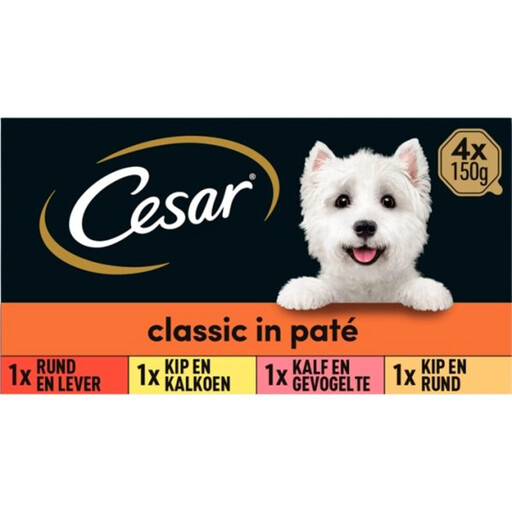
Why it suits this profile: This multipack contains four 150g portions in several flavours. It’s a practical option for owners of adult small dogs who want to try wet dog food without buying a large quantity of a single flavour.
The packaging states that this is a complete food for adult dogs. Check the portion size for your dog and adjust the amount according to their age, size and activity level.
Four varieties in one multipack, 150g portions and instructions for refrigerating leftovers.
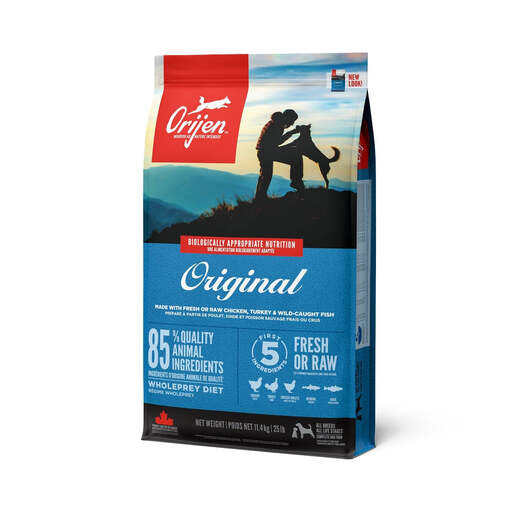
Why it suits this profile: This large bag of dry dog food is intended for dogs at all life stages, except Great Dane puppies under 14 weeks old, according to the product information.
The composition gives specific percentages, including 38% crude protein and 18% crude fat. This lets you compare the nutritional information with the feeding guidelines instead of relying on marketing terms alone.
11.4 kg bag, with chicken, turkey, herring, cod and egg listed as ingredients, plus a detailed feeding chart.
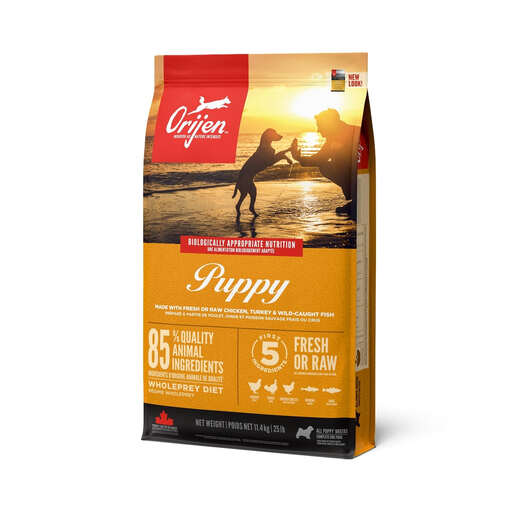
Why it suits this profile: This puppy food is formulated for growing puppies of all breeds. The product information states that it contains 85% animal ingredients, has a minimum crude protein content of 38% and features kibble sized for puppy jaws.
The guidelines cover age, breed size, portions and a transition period of 7 to 10 days. This helps you avoid choosing adult dog food or portions that are too large for a puppy.
Grain-free composition, 11.4 kg bag and clear feeding instructions for puppies, pregnant dogs and nursing bitches.
We’ve put together a complete, up-to-date list of products that meet these strict selection criteria and the current European safety regulations.
It depends on your dog’s age, weight, breed size and activity level. Adult dogs are often fed one or two meals a day, while puppies are usually given several smaller meals. Use the feeding chart on the packaging as a starting point and adjust the portion when needed.
Not necessarily. Compare the price per kilogram as well as the recommended daily amount. Wet food contains a lot of moisture, so you may need to feed a larger quantity. Dry food often keeps for longer once opened, while wet food portions can help reduce food waste.
This varies depending on the dog and breed size. Some products are intended for dogs from around 7 years old, while others are for dogs aged 9 or 10 and over. Check the age guidance on the packaging. If you’re unsure about your dog’s weight, appetite or specific nutritional needs, ask a vet for advice.
