
Vandaag of morgen in huis

Kwaliteit gegarandeerd

Welkomstaanbiedingen ontgrendelen: GRATIS bezorging | Tot 80% korting | Gratis 30 dagen JoyPlus-proefperiode
Download de app
A bag of dog food labelled “natural”, “grain-free” or “high in meat” can sound appealing. But the front of the packaging doesn’t tell the whole story. A recipe might contain plenty of animal ingredients, for example, but also be relatively high in fat. Or a product might use venison as a protein source but not be intended as a complete daily diet.
As a Joybuy Product Recommendation Officer, I start by looking at information you can verify: the nutritional status, ingredients, analytical constituents, suitable life stage and feeding guidelines. This helps you avoid paying for marketing claims that may not suit your dog.
Grain-free dog food contains no grains, but that alone says nothing about its overall nutritional value or digestibility. Grains such as oats or barley can be part of a complete recipe. For example, ACANA Classic Red Meat lists barley and oats as carbohydrate sources, but contains no maize, wheat or soya.
So don’t focus only on the words “grain-free”. Check the full ingredients list and the analytical constituents.
A high proportion of meat, organs or game may sound like a natural choice for a dog, but always check whether the product is labelled as complete pet food or complementary pet food. The Ziwi Peak Venison air-dried variety is described in the product information as complementary pet food. This is particularly important if you plan to serve it as your dog’s main meal.
Wet dog food can also be complete, but a tin containing only meat isn’t automatically a complete daily meal.
Hypoallergenic dog food isn’t a universal solution for every dog with itching, digestive problems or food sensitivities. A recipe with a single animal protein source can make it easier to compare ingredients, but speak to a vet about persistent symptoms.
Also check whether the recipe contains fish, dairy, chicken, pulses or other potential ingredients in addition to its main protein source.
Look for the legal designation on the label. Complete pet food is intended as a daily main meal when you follow the feeding guidelines. Complementary pet food is intended to be fed alongside other food, as a treat or as part of a feeding plan.
Examples from the range:
If you’re looking for high-protein dog food, it’s worth checking both crude protein and crude fat. These values are usually shown on the label.
Here are a few examples:
You can’t compare the high protein percentage of dried food directly with that of wet food. Wet food contains much less concentrated nutrients per kilogram because of its moisture content.
Dog food for adult dogs isn’t automatically suitable for puppies, pregnant dogs or senior dogs with specific needs. Your dog’s size matters too. Farmina N&D Quinoa Skin and Coat Care is available for small dogs and for medium to large adult dogs, with different feeding guidelines.
Weigh out portions and adjust them according to your dog’s weight, activity level and body condition. Make sure your dog always has access to fresh drinking water, too. When introducing new dry or wet food, make the change gradually, usually over five to ten days, to reduce the risk of digestive problems caused by a sudden change.
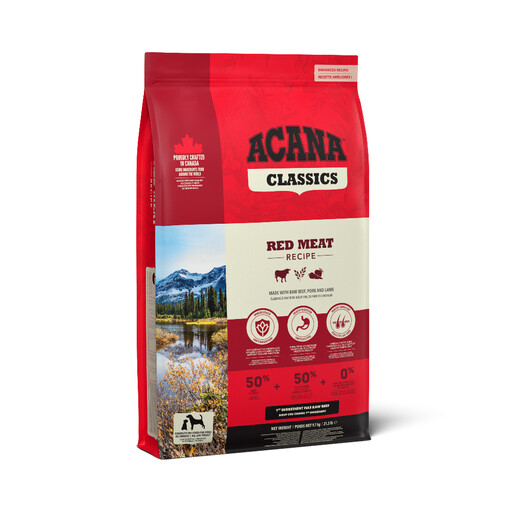
Why it suits this profile: A large bag of dry food for households looking for complete daily nutrition and keen to compare the cost per portion. The recipe contains beef, lamb and pork.
The product information clearly states that it is complete pet food, and lists its protein sources and analytical values. It isn’t a grain-free recipe: barley and oats are included in the ingredients list.
27% crude protein, 16% crude fat and a 9.7 kg bag. According to the product description, it contains no artificial colours, flavours or preservatives.
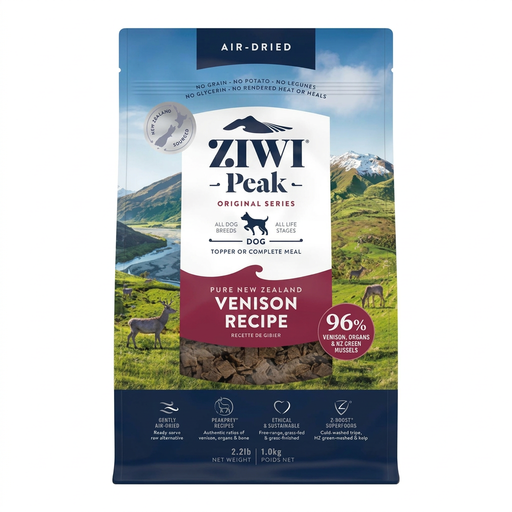
Why it suits this profile: For dog owners considering a dried recipe with venison, organs and a relatively high protein content.
The product information lists a single animal protein source and explicitly states that it is complementary pet food. So check how it fits into your dog’s feeding plan.
At least 44% crude protein, venison as the listed protein source, and glucosamine and chondroitin sulphate on the label.
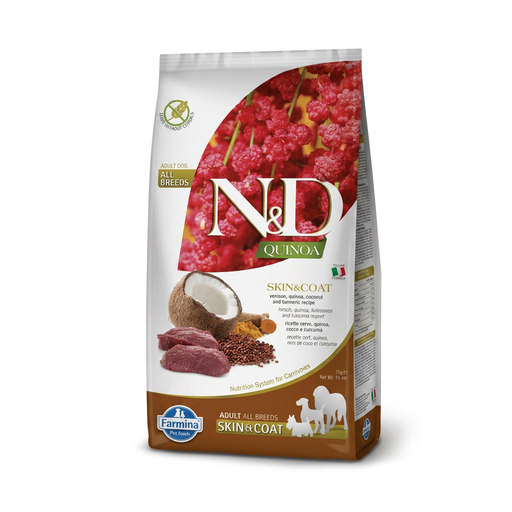
Why it suits this profile: For owners of medium or large adult dogs who are specifically looking for skin and coat care and a grain-free recipe.
The intended dogs and nutritional status are clearly stated: complete pet food for medium to large adult dogs. The skin and coat claim is linked to the listed ingredients, such as fish oil and quinoa.
32% crude protein, 18% crude fat, no grains according to the product information, and a recipe containing venison, herring meal, fish oil and quinoa.
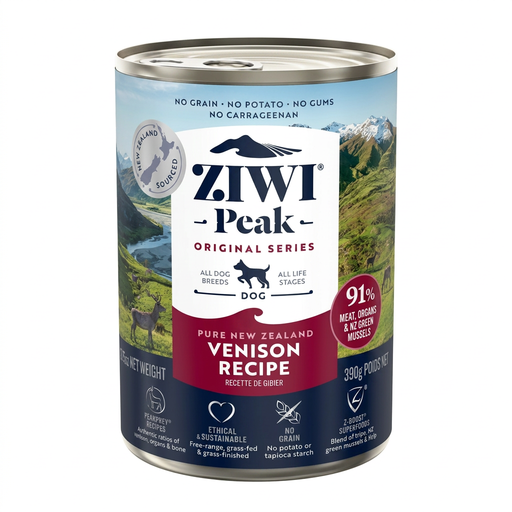
Why it suits this profile: A practical choice if you’re looking for complete wet food with venison and want to tailor portions to your dog’s weight and activity level.
The product is labelled as complete wet food. However, its nutritional values need to be read differently from those of dry food because of its high moisture content.
At least 10% crude protein, a maximum of 78% moisture and a recipe containing venison, organs and New Zealand green-lipped mussel, according to the label.
We’ve put together a complete, up-to-date list of products that meet these strict selection criteria and the applicable European safety requirements.
Dog biscuits and treats are intended to complement your dog’s diet, not replace a main meal. MeatyWay Chicken Jerky lists a minimum of 30% crude protein and is intended as a treat. Its soft texture can be handy during training; break larger pieces up for small dogs and supervise your dog while they eat.
According to the product information, Pedigree Ranchos Beef also contains at least 30% protein and 15% fat. The feeding guidelines recommend a maximum of half a treat for small dogs, one for medium dogs and up to two for large dogs. Adjust your dog’s main meal accordingly.
It depends on your dog’s preferences, the product’s nutritional status, portion size and your storage options. Dry food is more concentrated and often easier to weigh out. Wet food contains more moisture and some dogs find it palatable. When comparing analytical values, remember to take the moisture content into account.
Gradually mix the new food with the old food over about five to ten days. Increase the amount of new food a little at a time, and keep an eye on your dog’s stools, appetite and behaviour. If symptoms persist, it’s best to speak to a vet.
Store dry food in a cool, dry place in a well-sealed container. Once opened, wet food should be covered and kept in the fridge. According to Ziwi Peak’s product information, it should be used within two days. Always check the packaging, use-by date and storage advice for the specific product.
