
Vandaag of morgen in huis

Kwaliteit gegarandeerd

Welkomstaanbiedingen ontgrendelen: GRATIS bezorging | Tot 80% korting | Gratis 30 dagen JoyPlus-proefperiode
Download de app
There’s a huge choice of dog food, from dry and wet food to puppy food, senior dog food and grain-free recipes. But eye-catching packaging tells you little about whether a food is right for your dog. Age, size, activity level and ingredients matter much more.
As a Joybuy Product Recommendation Officer, I look beyond marketing claims and focus on practical product information. That helps you avoid paying too much for a recipe that doesn’t meet your dog’s everyday needs.
A bag labelled “chicken dog food”, “lamb dog food” or “fish dog food” can contain varying amounts of that ingredient. So check the ingredients list and analytical constituents. Is meat or fish listed first, and does the packaging state the percentage? That gives you a clearer picture than a photo of chicken breast on the bag.
Terms such as premium dog food, “natural” or “grain-free dog food” don’t automatically guarantee that a meal is suitable. Grain-free, for example, doesn’t mean that every ingredient is easy to digest or that every dog needs a grain-free recipe.
Puppies have different nutritional needs from adult dogs. Adult dogs, in turn, need a different energy and nutritional profile from senior dogs. So look for labels such as puppy, adult, mature or senior.
For small breeds, smaller kibble is often more practical. For large dogs, larger kibble and a large-breed formula may be a better match for the feeding guidelines on the packaging. Check the recommended age range too, as this varies by product.
The feeding guide on the bag is a starting point, not a fixed personal feeding plan. An active dog may need a different amount from a less active dog of the same weight. Treats, wet food and training rewards all count towards their daily intake too.
Weigh out your dog’s daily portion and check their body condition regularly. If you’re switching brands or recipes, introduce the new food gradually. Many product descriptions recommend making the change over around seven to ten days.
Look for complete food on the label if you plan to use it as your dog’s main meal every day. Wet dog food in a cup or tin can be complete, but this should be clearly stated on the packaging. A complementary snack or treat isn’t a substitute for a full meal.
For example, the product description for G’woon Dog Beef Liver Cup says that it’s wet food for adult dogs. Always check the current packaging and nutritional status before feeding it every day. Ziwi Peak Dog Gently Air-Dried Venison, on the other hand, is described as complementary pet food. That’s an important distinction when planning your dog’s diet.
Choose dog food for adult dogs if, according to the product information, your dog is at the adult life stage. For younger dogs, there are recipes such as puppy food for different breeds and growth stages. Senior dog food is formulated for older dogs according to the age guidance given by the brand.
Also consider:
Compare at least the protein, fat, fibre and ash content on the label. These percentages give you measurable information about the food, but they don’t tell the whole story. Check the ingredients list, nutritional additives and feeding guide too.
If your dog has sensitivities, “grain-free” doesn’t mean hypoallergenic. A recipe may still contain other sources of protein. Talk to a vet about persistent symptoms or a suspected allergy; don’t choose a food based on a marketing term alone.
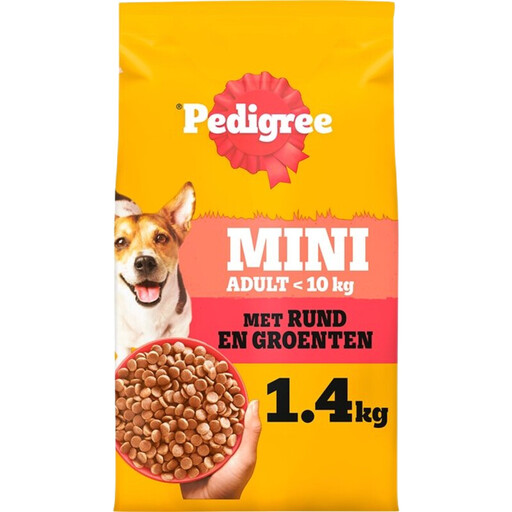
Why it suits this profile: The 1.4kg bag is a manageable size if you’re buying dry food for a small adult dog for the first time. The product information says the kibble is for dogs weighing up to 10kg.
The age and weight guidance helps you avoid choosing a general formula for a small dog. The packaging also gives portion sizes by body weight.
Dry food with a beef and vegetable flavour, 22% protein and 13% fat according to the product information; a small bag that’s easy to introduce gradually.
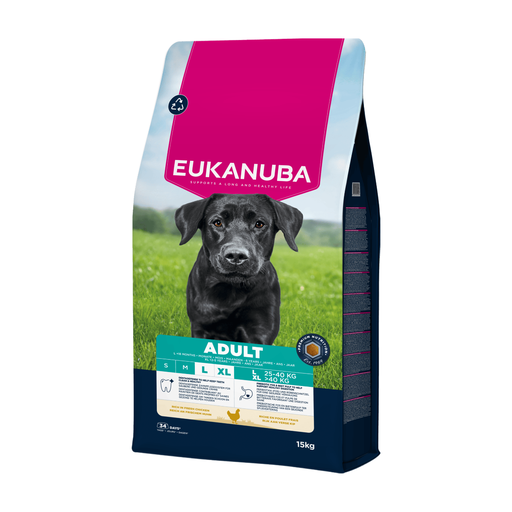
Why it suits this profile: This large bag is designed for adult large-breed dogs. According to the product description, the formula is intended for large breeds from around 18 months old.
The clear breed-size guidance helps you avoid buying a small- or medium-breed formula for a large dog. Make sure you check the portion size based on your dog’s weight and activity level.
Chicken is listed as a source of protein, the bag contains 15kg, and the kibble shape is part of the DentaDefense system according to Eukanuba.
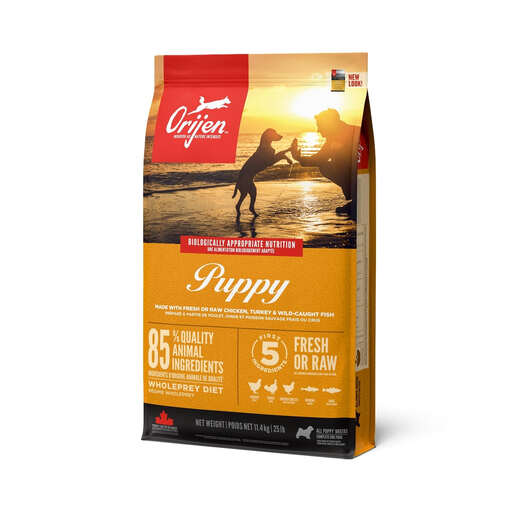
Why it suits this profile: This puppy food is intended for puppies of all breeds. The large bag may suit households with a larger puppy or several dogs, provided the formula meets your needs.
The product description clearly states that it’s for puppies, recommends a transition period of seven to ten days, and gives portion sizes based on age, weight and breed size.
According to the product information, the formula contains at least 38% crude protein, is grain-free and comes in an 11.4kg bag of dry food.
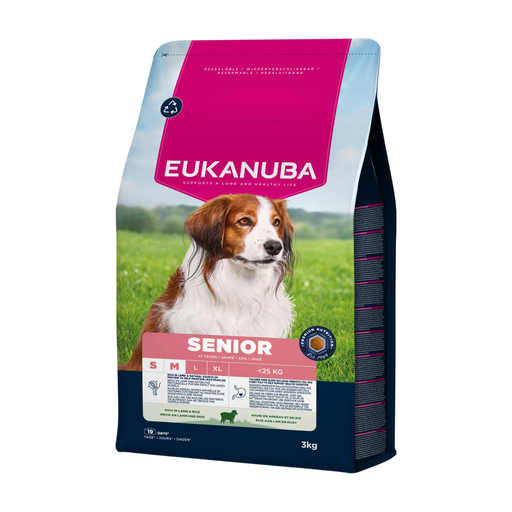
Why it suits this profile: According to the product description, this formula is intended for small and medium senior dogs aged seven and over, with lamb and rice listed as ingredients.
The age and breed-size guidance sets it apart from general dog food. That means you don’t have to rely on the word “senior” on the front of the packaging alone.
A 3kg bag, lamb and rice as the named base ingredients, and a fibre blend with prebiotics according to the product description.
We’ve put together a full, up-to-date list of products that meet these strict selection criteria and current European safety requirements.
Start by following the feeding guide on the packaging and usually divide the daily amount into at least two meals. Puppies often need several smaller meals a day. Adjust the amount according to your dog’s weight, activity level and body condition. Always make sure fresh drinking water is available.
The best-before date is shown on the packaging. Once opened, dry dog food keeps best if you seal the bag properly and store it in a cool, dry place. An airtight storage container is ideal. Check the smell, texture and freshness before serving the food.
That depends on the brand, packaging, energy content and portion size. Dry food is often easier to store and portion. Wet food contains more moisture and may appeal to dogs that prefer a softer texture. Compare the cost per day, not just the price per pack.
