
Vandaag of morgen in huis

Kwaliteit gegarandeerd

Welkomstaanbiedingen ontgrendelen: GRATIS bezorging | Tot 80% korting | Gratis 30 dagen JoyPlus-proefperiode
Download de app
Buying dog food seems simple enough – until you’re standing in front of a shelf full of dry food, wet food, puppy food and grain-free recipes. Packaging often shouts terms like “premium”, “natural” or “with chicken”, but those words don’t automatically tell you whether the food is right for your dog.
The right choice depends mainly on age, body size, activity level, nutritional needs and the daily portion. The following checklist will help you avoid paying over the odds for a product that isn’t a good fit.
“Premium dog food”, “natural” and “organic” sound appealing, but it’s better to compare the actual details on the label. Look at:
According to the brands’ own information, ingredients such as omega-3, glucosamine or antioxidants may support certain functions. Treat this as product information, not as a medical claim or guarantee.
A high proportion of animal ingredients isn’t the only relevant factor. An active dog may need a more energy-dense recipe, while a less active dog might require fewer calories. So also check the fat content, energy value and feeding guidelines.
With chicken dog food, it’s also worth looking at the full ingredients list. “With chicken” could, for example, refer to a limited amount of chicken, with other animal or plant-based ingredients making up the rest.
A 15 kg or 17 kg bag may work out cheaper per kilogram, but it’s less practical if your dog doesn’t take to the food. When trying a new type, start with a suitable pack size and switch over gradually. The product information for several of the foods mentioned recommends a transition period of around 7 to 10 days.
Puppy food is formulated for growth, while adult dog food is designed for maintenance. Senior dog food caters to older dogs with different energy needs. Also pay attention to breed size:
An example is Eukanuba Life Care dog puppy medium chicken, which according to the product description is intended for medium-breed puppies from 1 to 12 months. The Eukanuba variants for small, medium and large adult dogs each have their own age and size indication.
Choose complete and balanced dog food as the main meal if you want to use one product for daily feeding. Check the legal description on the packaging. A complementary product or treat isn’t automatically suitable as a full meal.
Dry dog food contains little moisture and is easy to weigh out and store. Wet dog food typically has a high moisture content and can be handy for dogs that prefer soft food. Once opened, wet food should be stored in the fridge for a maximum of two days, according to the product information for the CESAR products mentioned.
Don’t just compare protein percentages. Also look at:
Grain-free dog food isn’t automatically necessary for every dog. The absence of grains doesn’t in itself say anything about overall suitability. Always look at the full composition and your dog’s reaction.
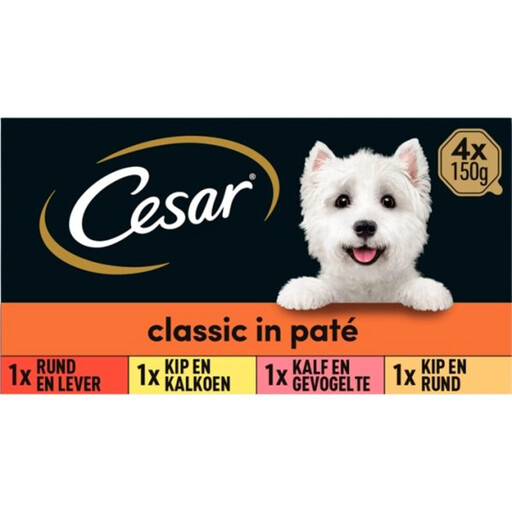
Why this fits the profile: A multipack of four portions is practical for small adult dogs and for owners who want to try different flavours first.
The packaging states that it is complete wet food for adult dogs, so you don’t have to rely on the flavour name alone.
Four individual 150 g portions, different recipes, and once opened, store in the fridge for up to 48 hours according to the product information.
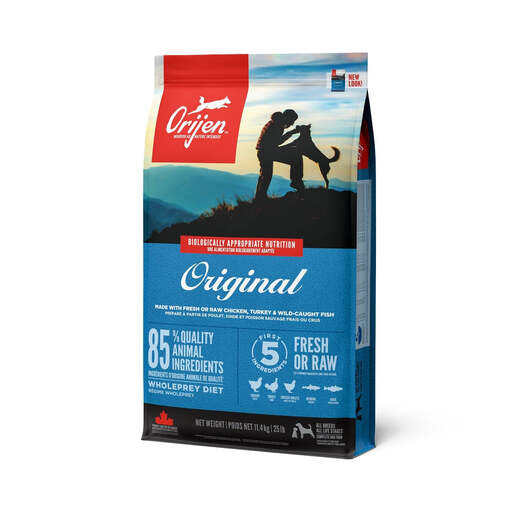
Why this fits the profile: For dog owners looking for a dry food with a high proportion of animal ingredients and a comprehensive recipe.
The product information lists the analytical values, including 38% crude protein, 18% crude fat and 3860 kcal/kg. This allows you to assess the energy density concretely.
11.4 kg dry food, with chicken, turkey, fish and egg in the recipe; according to the product description, suitable for all life stages, with a note for Great Dane puppies under 14 weeks.
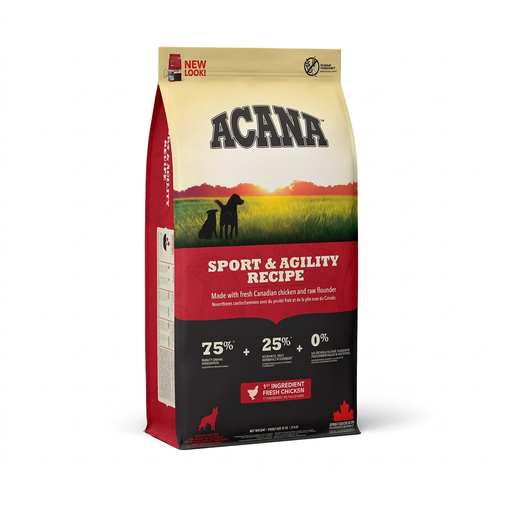
Why this fits the profile: Aimed at adult and senior dogs of all breed sizes with a high activity level, according to the product description.
The product information provides concrete values: 33% crude protein, 19% crude fat and 3800 kcal/kg. This makes it possible to compare with your dog’s energy needs.
Available in a large pack, with 75% animal ingredients according to the product information, and free from grains, soya, maize, wheat, potato and tapioca starch.
We’ve put together a full, up-to-date list of products that fully meet these strict selection criteria and comply with current European safety regulations.
That depends on the portion size, energy density and packaging. Dry food contains less moisture and is often easier to measure by the gram. Wet food has a high moisture content, but you may need a larger amount to provide the same energy. So compare the daily cost rather than just the price per pack.
Always follow the brand’s label. In general, dry food stays in better condition if you reseal the bag properly and store it in a cool, dry place. Don’t buy a larger pack than you can use within a reasonable time, especially if your dog eats small portions.
Choose food that clearly states it is puppy food and check the indication for breed size and age. A recipe for medium-sized puppies, for example, isn’t automatically the right choice for a very small or large breed. Also pay attention to feeding frequency, the portion guideline and a gradual transition when changing foods.
