
Vandaag of morgen in huis

Kwaliteit gegarandeerd

Welkomstaanbiedingen ontgrendelen: GRATIS bezorging | Tot 80% korting | Gratis 30 dagen JoyPlus-proefperiode
Download de app
A bag of dog food with words such as “natural”, “grain-free” or “premium” may sound appealing, but these terms don’t always tell you enough about whether it’s right for your dog. The best choice depends mainly on your dog’s age, size, activity level, the food’s ingredients and how you plan to feed it.
Also look out for the difference between complete food and complementary food. Complete food is designed to be fed as a daily meal when you follow the recommended amount. Always check the current packaging, ingredients list and feeding guidelines too. Product formulations can change.
“Chicken dog food”, “lamb dog food” or “fish dog food” may give you a clear idea of the flavour, but look beyond the front of the packaging. Check the full ingredients list and the percentage of the named ingredient. Some products describe animal ingredients as meat and animal derivatives.
Grain-free dog food contains no grains, but often includes other sources of carbohydrates, such as peas, chickpeas or sweet potato. That doesn’t automatically make it suitable for every dog. Choose a grain-free formula for a specific reason, such as a previously identified sensitivity. Speak to a vet about any persistent symptoms.
Puppy food, adult dog food and senior dog food aren’t interchangeable. A puppy has different nutritional needs from an older dog. Breed size matters too: small-breed dog food often has smaller kibble, while food for large dogs is formulated with larger breeds in mind.
A large bag may seem like good value, but it isn’t practical if your dog doesn’t tolerate the food well or if the bag stays open for a long time. Store dry dog food in a cool, dry place in a tightly sealed container. After opening, wet food should be kept in the fridge according to the instructions on the packaging.
Start by checking:
For puppies, for example, there are formulas for small and medium breeds, such as Eukanuba Life Care Puppy & Junior Small/Medium Lamb & Rice. For older dogs, there are varieties for dogs from a certain age, such as Beneful Happy Adult 7+.
Look for a clear indication on the label that the food is complete food. Also check the analytical constituents, such as protein, fat, crude fibre, moisture and ash. These figures can help you compare products more objectively, but on their own they don’t tell you which food is right for your individual dog.
For example, Orijen Original Prey lists 38% crude protein, 18% crude fat and 12% moisture. Beneful Happy Adult 7+ lists, among other figures, 24% protein and 8% fat. These are verifiable product specifications, not a general guarantee of how every dog will respond to the food.
Dry dog food is easy to portion and store. Wet dog food contains more moisture and may suit dogs that prefer a softer texture. Feeding a combination can be practical, as long as the total daily amount remains balanced.
Check how long wet food keeps after opening. According to the product information, G’woon Chunks in Jelly With Chicken should be refrigerated after opening and used within two days. For a large tin or a 1.24 kg pack, it’s important to make sure the portion size suits the number of dogs in your household.
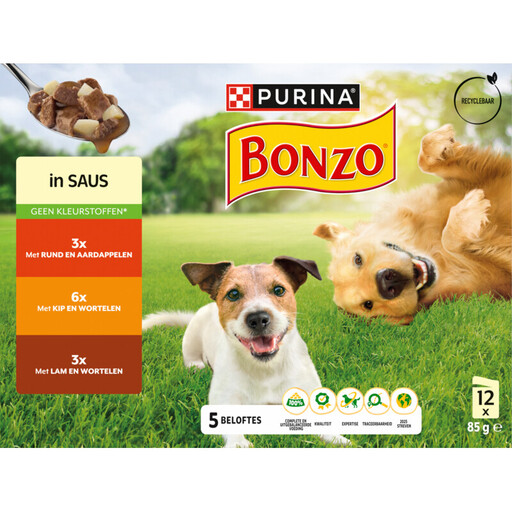
Why it suits this profile: These pouches are designed for adult dogs and can be fed on their own or alongside dry food. This gives beginners flexibility when establishing a feeding routine.
The product information clearly states that this is complete food for adult dogs. Check the recommended amount before combining it with dry food.
Complete meal pouches; chicken and lamb flavour; can be fed on their own or alongside dry food.
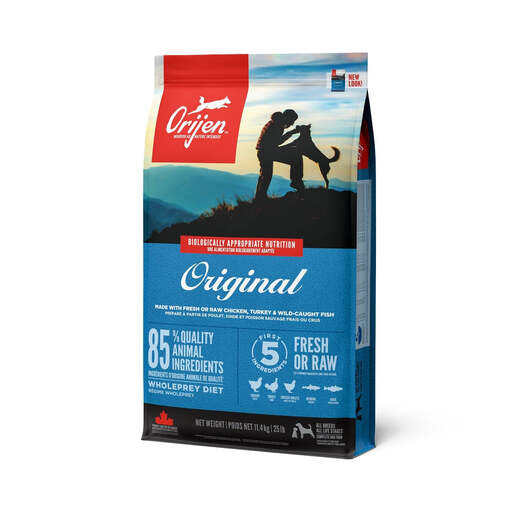
Why it suits this profile: This complete food for dogs at every life stage has an extensive ingredients list that includes chicken, turkey, herring, cod and egg. The analysis lists 38% crude protein and 18% crude fat.
The ingredients and analytical values are listed in detail, so you don’t have to rely as much on general marketing terms. Introduce the food gradually, following the product instructions.
Large 11.4 kg bag; grain-free formulation according to the product information; several animal ingredients.
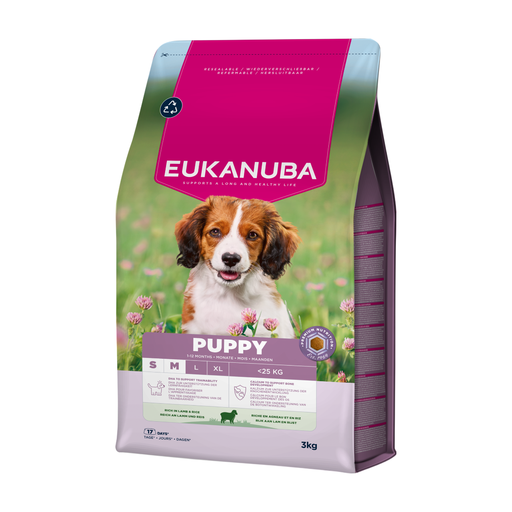
Why it suits this profile: According to the product description, this puppy food is designed for small and medium-breed puppies aged 1 to 12 months. The formula contains lamb and rice, with kibble sized for young dogs.
The intended breed size and age are clearly stated. This makes it a more targeted choice for a puppy than a general adult formula.
Designed for small and medium-breed puppies; lamb and rice listed as ingredients; 3 kg bag to try first.
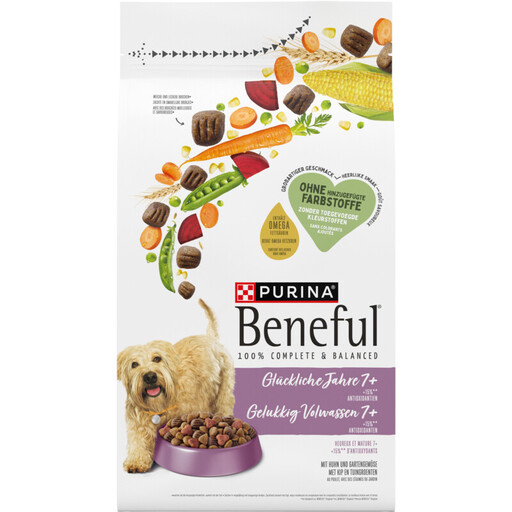
Why it suits this profile: The product information identifies older dogs aged 7 and over as its intended customers. The analytical values, including 24% protein and 8% fat, are clearly listed.
The age guidance helps you avoid choosing adult dog food without checking first. According to the product description, the formula has a lower fat content than the original Beneful formula.
Designed for dogs aged 7 and over; chicken and vegetables for flavour; practical 1.4 kg bag.
We’ve put together a complete, up-to-date list of products that meet these strict selection criteria and the applicable European safety regulations.
Start by following the feeding guidelines on the packaging and divide the daily amount into one or more meals. Puppies often need smaller portions more frequently. Adjust the amount according to your dog’s weight, activity level and body condition. Always provide fresh drinking water.
Gradually mix the new food into the old food, usually over around seven to ten days. Increase the proportion of new food each day. Stop or slow the switch if you notice clear digestive problems, and ask a vet for advice if symptoms persist.
Not always. Compare the price per kilogram as well as the recommended daily amount. A larger bag of dry dog food may work out cheaper per kilo, but only if your dog tolerates the food well and you can store it in an airtight container. With wet dog food, portion size and how long it keeps after opening matter too.
