
Vandaag of morgen in huis

Kwaliteit gegarandeerd

Welkomstaanbiedingen ontgrendelen: GRATIS bezorging | Tot 80% korting | Gratis 30 dagen JoyPlus-proefperiode
Download de app
A bag of dog food with big claims about protein, natural ingredients or grain-free recipes can look tempting at first glance. But a flashy front doesn’t always tell you whether it’s actually suitable for your dog. Age, size, activity level and daily portion size often matter more than any marketing term.
When comparing products, pay close attention to the difference between complete dog food and complementary products. A treat or topper can be fine as a reward, but it doesn’t replace a full meal. Also check that the ingredients and nutritional values are clearly listed on the label.
High-protein dog food can work well for some active adult dogs, but a higher percentage isn’t automatically necessary for every dog. A calm dog, an older dog or one with specific dietary needs may require a different balance. So look at the full nutritional profile, the energy content and the feeding guidelines.
Grain-free dog food contains no cereals, but that alone doesn’t mean the recipe is right for every dog. Grain-free formulas often use other carbohydrate sources, such as peas, chickpeas or lentils. Always check the full ingredients list and only switch to a new recipe gradually.
Wet food can be convenient because of its high moisture content and soft texture. However, not every tub, pouch or tube is a complete meal. For example, INABA Fun Bites Dog Chicken Wraps states that it is a complementary food and not a replacement for a complete meal. The same applies to INABA Churu Dog: this product can be used as a treat or topper.
Choose food that matches your dog’s life stage:
So a puppy formula isn’t automatically suitable for an adult dog. The product description for Orijen Puppy Formula, for instance, states it is for puppies of all breeds and recommends a gradual transition over 7 to 10 days.
Look on the label for a clear indication such as “complete pet food” or “complete dog food”. Complementary foods usually state that the product is intended as a treat, reward or topper.
A few practical examples:
Don’t just compare the first ingredient. Also look at:
For Acana Active & Agile, the product information states 33% crude protein, 19% crude fat and 3,800 kcal/kg. This food is intended for adult and senior dogs of all breed sizes, with extra focus on active dogs. That makes the feeding guidelines more important than just the term “sport” or “active” on the packaging.
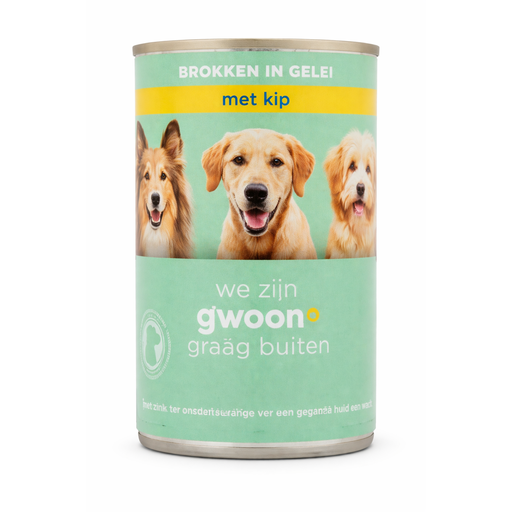
Why this fits the profile: A straightforward tin size for adult dogs, handy when you want to try a smaller amount first or split portions.
The product information states that this is complete wet food for adult dogs. Check the current nutritional values and feeding guide on the tin.
415 g per tin, chunks in jelly and intended for adult dogs.
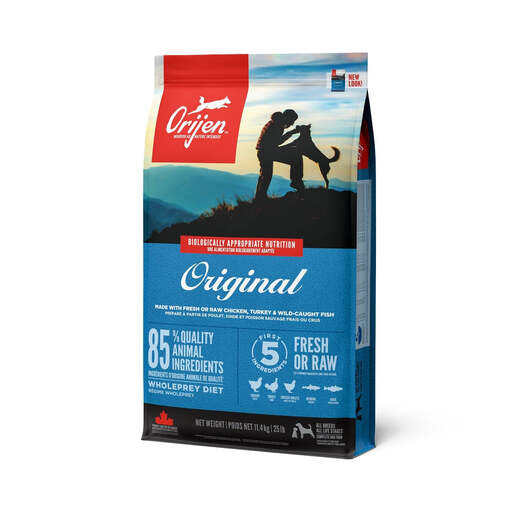
Why this fits the profile: A large bag of dry dog food for owners who want to compare an extensive ingredients list and high animal protein content.
The product page explicitly states that this is a complete food. At the same time, protein, fat, moisture and energy content are listed separately for a verifiable comparison.
38% crude protein, 18% crude fat, 11.4 kg content and a grain-free composition according to the product information.
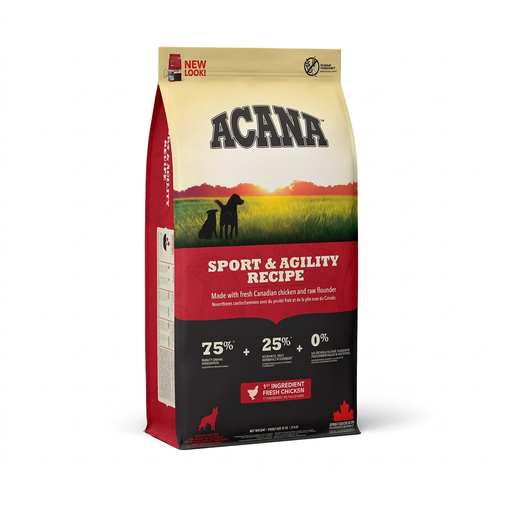
Why this fits the profile: Designed for adult and senior dogs of all breed sizes that are very active or have a higher energy requirement.
The product description states an energy content of 3,800 kcal/kg and advises adjusting the portion according to activity and body condition.
33% crude protein, 19% crude fat, 17 kg content and a grain-free formula according to the listed specifications.
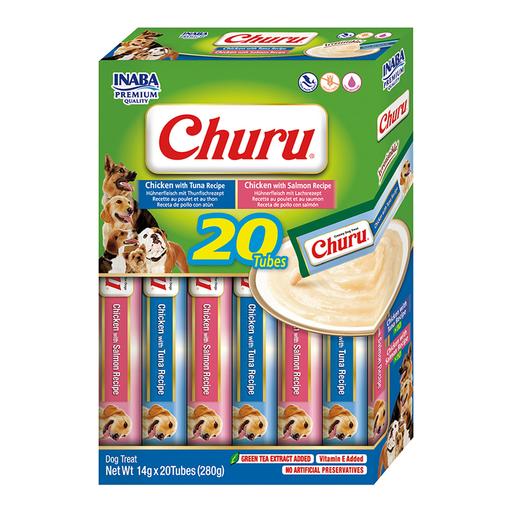
Why this fits the profile: A handy complementary snack for training, rewarding or as a topper over dry food.
The product information clearly states that this is a complementary food and not a meal replacement. This keeps the distinction from complete food clear.
20 tubes of 12 g, at least 90% moisture and two chicken and seafood varieties according to the product data.
Mix new dog food gradually with the old food. Increase the amount of new food over several days. Meanwhile, keep an eye on your dog’s stools, appetite and body condition. If problems persist or your dog has a known allergy, it’s wise to consult a vet.
Store dry food in a sealed container, in a cool, dry place. Wet food must be refrigerated after opening; always follow the time frame on the packaging. Give treats in moderation and deduct them from the daily allowance. This way, a small reward doesn’t unknowingly make up a large part of the energy intake.
We’ve put together a full, up-to-date list of products that fully meet these strict selection criteria and comply with current European safety regulations.
That depends on weight, age, breed size, activity level and the energy content of the product. Use the feeding guide on the packaging as a starting point and adjust the portion according to your dog’s body condition.
Not necessarily. Dry food is easy to portion and store, while wet food has a higher moisture content and a softer texture. The most important check is whether the product is complete and suits your dog’s life stage.
Dry food stays usable for longer if you keep it sealed and dry. Opened wet food should generally be stored in the fridge and used within the time stated on the label. For treats, such as dog snacks in tubes or pouches, the storage time varies by product.
