
Vandaag of morgen in huis

Kwaliteit gegarandeerd

Welkomstaanbiedingen ontgrendelen: GRATIS bezorging | Tot 80% korting | Gratis 30 dagen JoyPlus-proefperiode
Download de app
A bag of dog food with bold claims on the front may seem like an obvious choice. Yet words such as “natural”, “grain-free” or “with chicken” do not always tell the whole story. The ingredients list, nutritional status and feeding instructions matter more than the marketing on the packaging.
In this guide from the Joybuy Product Recommendation Officer, you will learn what to look for when choosing dog food, dog kibble, wet food for dogs, puppy food and dog treats. This helps you avoid overpaying for a product that does not suit your dog’s age, size or nutritional needs.
“With chicken” does not automatically mean that chicken is the main ingredient. Check the full composition and the order in which the ingredients are listed. For example, g'woon Chunks in Jelly With Chicken states that the product contains meat and animal by-products, including 4% chicken. That is different from a recipe in which chicken makes up a substantial proportion of the composition.
The same applies to dog food with chicken or lamb: it is worth checking the percentages. A flavour name on the front may conceal multiple animal proteins or plant-based ingredients.
Grain-free dog food contains no grains, but that does not automatically mean it is necessary or suitable for every dog. Grains are often replaced with peas, lentils, chickpeas or potato. For that reason, review the complete ingredients list and the analytical constituents.
Does your dog suffer from recurring complaints, have a known allergy or follow a prescribed diet? Discuss any switch with your vet. Food for sensitive dogs is not the same as prescription diet food specifically recommended by a veterinarian.
Many dog biscuits and dog treats are complementary pet food. They are intended as rewards or snacks and do not replace complete food. The product information for INABA Fun Bites, for example, states that it is a treat and not a replacement for a complete meal.
You should also take calories into account. Several treat products state that treats should make up no more than approximately 10% of a dog’s daily calorie intake. If your dog gains weight easily, deduct the amount of treats from its main food allowance.
Look for the designation “complete food” or “complete pet food” when you intend to use a product as a daily meal. If it says “complementary pet food”, it is intended as an additional treat or supplement.
Also pay attention to the intended life stage:
According to the product information, Acana Classics Series Grasslands Poultry Dog Food is classified as complete food for all life stages. This makes its life-stage suitability clearer than that of a product sold solely as a treat.
Dry food typically contains around 10 to 12% moisture, while wet food generally contains more than 80%. As a result, protein percentages in kibble and wet food cannot be compared directly.
INABA Chicken Wraps, for example, lists 82% moisture, 11.5% crude protein and 2.2% crude fat. Cesar Adult Wet Dog Food also lists 81% moisture. The available product information for g'woon Adult Chunks in Jelly does not specify the analytical values. Always check the label before choosing a product as your dog’s daily food.
A large bag can offer good value, but only if your dog tolerates the food well and you can use it before the best-before date. A 12 kg bag may suit a large or active dog, a multi-dog household or someone who prefers to order less frequently.
Large kibble can be inconvenient for small dogs. Check the recommended age, breed size and kibble dimensions. If you are changing food, do so gradually over approximately seven days. This makes it easier to see whether your dog accepts the new formula.
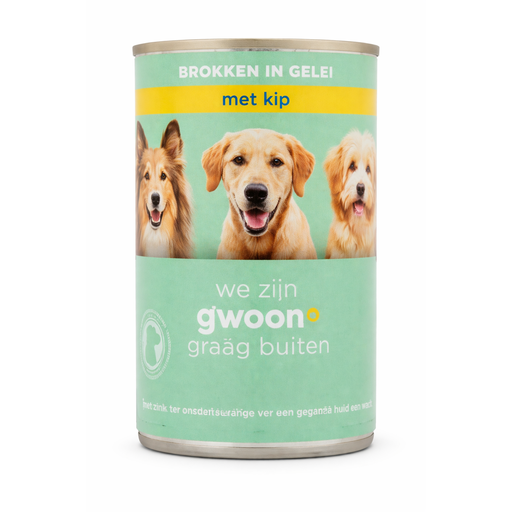
Why it fits: A convenient option for owners of adult dogs who prefer serving individual tin portions and incorporating wet food easily into the daily routine.
The product information clearly states that this is complete wet food for adult dogs. The composition also specifies that it contains grains.
A 415 g tin with a clearly defined adult-dog target group. Refrigerate after opening and use within two days.
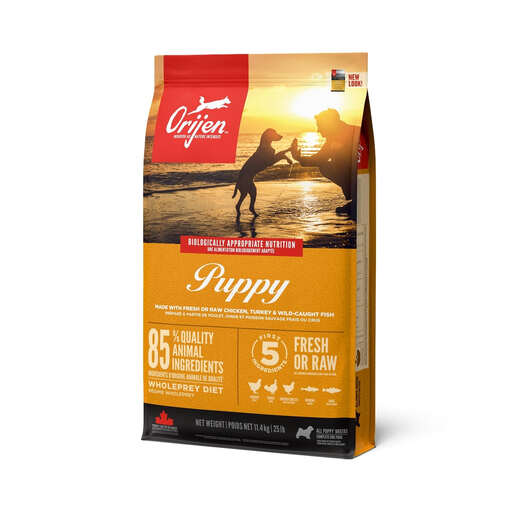
Why it fits: Designed for puppies of different breeds, with a large bag for households that use puppy food every day.
The product description identifies puppies as the target group, recommends a gradual transition over seven to ten days and includes separate feeding guidance for growing dogs.
Lists at least 38% crude protein and 18% fat. According to the product description, the kibble size is designed for puppy mouths.
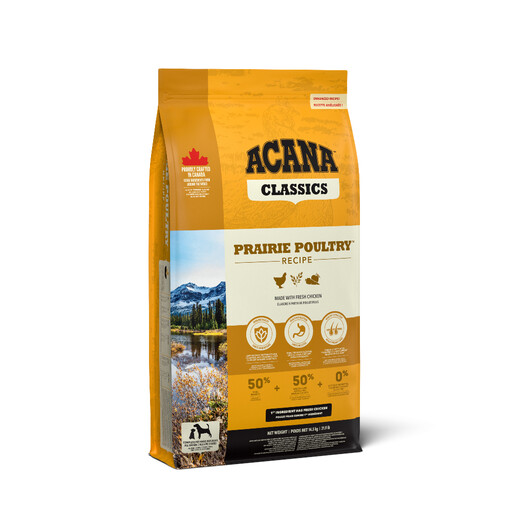
Why it fits: Suitable for anyone looking for complete kibble for different life stages and who wants to review the ingredients list in detail.
The product page lists the individual ingredients and analytical values, including 27% crude protein, 16% crude fat and 12% moisture.
A 14,5 kg bag containing chicken, turkey, oats and vegetables, with probiotics also listed in the product specifications.
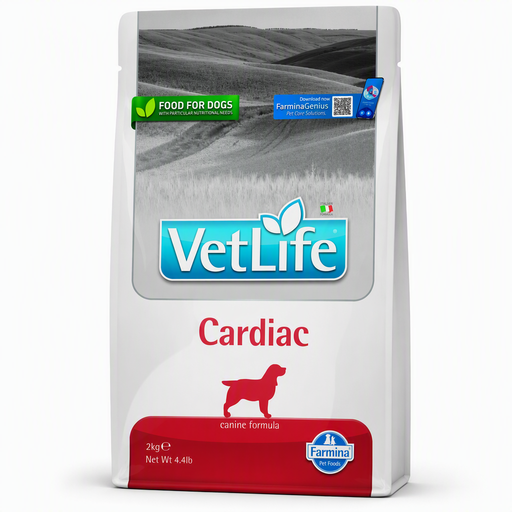
Why it fits: For owners looking for dog food that fits a specific feeding plan and who seek professional advice first.
Do not use this product based on a general claim. Ask your vet whether this formula is suitable for your dog’s condition and follow the instructions on the packaging.
A 2 kg bag and a product name that clearly refers to a specialised formula.
Browse a current range of affordable dog supplies and compare dog food, treats and other products based on price and specifications.
Mix the new food gradually with the current food, usually over approximately seven days. Start with a small proportion of the new food and increase it step by step. Monitor your dog’s appetite, stools and body condition. If problems persist, consult your vet.
That depends on the brand, packaging, portion size and energy content. Wet food contains a great deal of moisture, so you often need a greater weight to provide the same amount of energy. Compare the cost per day or per unit of energy rather than simply the price per tin or bag.
This varies by product. INABA products, for example, recommend using them within 24 hours or three days after opening, depending on the variant. Cesar advises keeping unused portions refrigerated for a maximum of 48 hours. Dry dog treats should generally be stored in a tightly sealed container in a cool, dry place. Always check the packaging and supervise your dog while it is chewing.
