
Vandaag of morgen in huis

Kwaliteit gegarandeerd

Welkomstaanbiedingen ontgrendelen: GRATIS bezorging | Tot 80% korting | Gratis 30 dagen JoyPlus-proefperiode
Download de app
Choosing the right dog food can be overwhelming. The shelves are packed with bags and cans, all promising the best for your dog. As a Joybuy Product Recommendation Officer, my job is to help you see through the marketing claims. In this article, we'll provide practical guidance and highlight some popular choices, so you can make an informed decision that suits your dog and your budget.
Before we look at specific products, here are a few general tips to get you started. The right nutrition is the foundation for a healthy and energetic life for your dog.
The ingredient list on the packaging is arranged by weight. This means the first ingredient listed is the most abundant. A good indicator of premium dog food is a clear, recognisable protein source as the first ingredient, such as chicken, lamb, or fish, rather than vague descriptions like "meat and animal derivatives." Also, watch out for unnecessary fillers. Natural dog food often contains fewer artificial colours, flavours, and preservatives.
A dog's nutritional needs change throughout its life. A puppy requires different nutrients for growth than an adult dog. Senior dog food is often formulated with ingredients that support joints and has a lower calorie content to prevent obesity. Your dog's size is also important. Large breed dog food often features larger kibble and specific nutrients, like glucosamine, to support their more heavily stressed joints.
Based on product specifications and composition, we have compiled a list of interesting options for you.
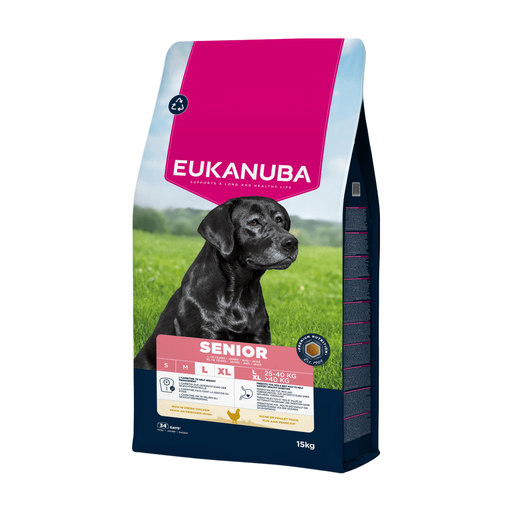
This food from Eukanuba is specifically developed for older, large-breed dogs. The focus is on supporting a healthy senior life.
Why It Stands Out According to the manufacturer, this formula is rich in fresh chicken and tailored to the needs of large dogs from 9 years of age (or 8+ for giant breeds). The composition is aimed at maintaining vitality and a healthy weight.
Key Benefits
Who Is It For? This is worth considering for owners of large or giant breed senior dogs who are looking for a complete kibble specifically targeting the challenges of ageing, such as joint wear and weight management.
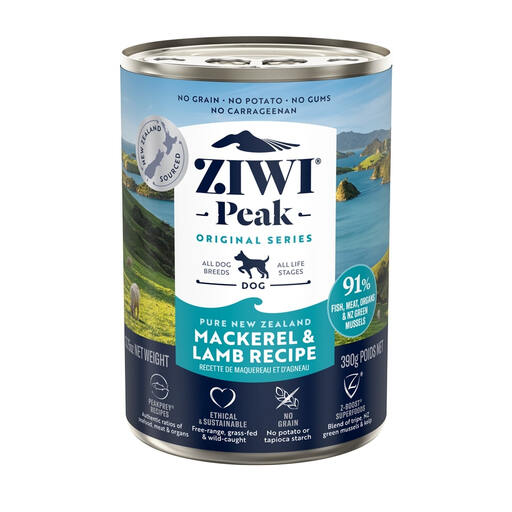
Ziwi PEAK is known for its recipes with high meat content and ingredients sourced from New Zealand. This wet food is a prime example.
Why It Stands Out This product combines two protein sources: wild-caught mackerel and grass-fed lamb. The ingredient list is short and clear, with a focus on meat, organs, and New Zealand Green Mussels.
Key Benefits
Who Is It For? This wet food is an interesting option for dog owners who want to serve their dog a meal with a high meat content and limited, high-quality ingredients. It is also suitable for picky eaters or as a supplement to dry food.
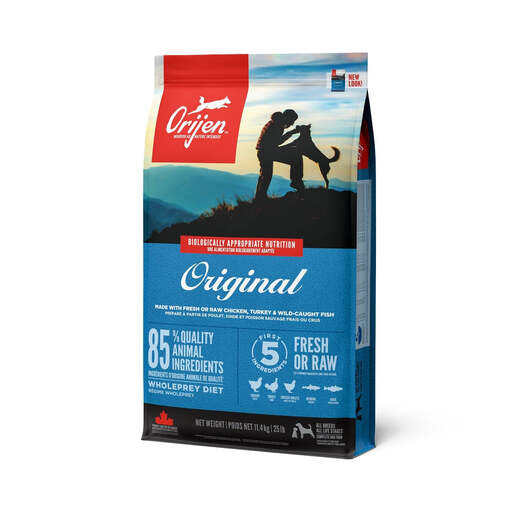
Orijen bases its food on the "WholePrey" principle, meaning it includes organs, cartilage, and bone in addition to muscle meat, to mimic a dog's natural diet.
Why It Stands Out This food has a very high percentage of animal ingredients, including fresh chicken, turkey, and various types of fish. According to the manufacturer, approximately 85% of the protein comes from animal sources.
Key Benefits
Who Is It For? This is a premium option for owners of active dogs of all life stages who are looking for a grain-free food with an exceptionally high content of animal proteins and fresh ingredients. Please note: the manufacturer states it is not suitable for Great Dane puppies younger than 14 weeks.
Good nutrition gives your dog the energy to run, explore, and play. Fun is just as important as a full food bowl. Besides food, are you also looking for a fun surprise for your dog or a gift for a young dog lover in the family? Then check out our selection of realistic walking and barking puppy toys.
What is the difference between grain-free and regular dog food? Grain-free dog food replaces grains like wheat, corn, and rice with alternative carbohydrate sources such as potatoes, peas, or lentils. This can be a solution for dogs with a diagnosed grain allergy or intolerance. For most dogs, however, grains are a perfectly good source of energy and nutrients.
How often should a dog eat per day? For most adult dogs, it is recommended to divide the daily amount of food into two meals: one in the morning and one in the evening. This helps keep digestion stable and prevents the dog from getting too hungry. For puppies, this number is often higher, at three to four meals per day. Always consult the feeding guidelines on the dog food packaging.
