
Vandaag of morgen in huis

Kwaliteit gegarandeerd

Welkomstaanbiedingen ontgrendelen: GRATIS bezorging | Tot 80% korting | Gratis 30 dagen JoyPlus-proefperiode
Download de app
A bag of dog food with impressive claims isn't automatically right for your dog. Terms like grain-free dog food, "high in meat" and premium dog food only mean something when you check the full ingredients list, nutritional information and feeding instructions.
The three most common pitfalls with dog food are:
First, look at the legal description on the packaging. Complete dog food is intended to serve as a daily diet when given according to the instructions. A treat, a pure meat product or a complementary meal has a different purpose.
A tin or cup containing only meat can look appealing because of its simple ingredients list. That doesn't automatically mean the product contains all the necessary nutrients. So check whether it says "complete food" or "complementary food". If in doubt, discuss your dietary choice with a vet, especially for puppies, older dogs or dogs with a known food sensitivity.
Look at the first ingredients and check which meat source is actually used. Dog food with meat can consist of fresh meat, dried animal ingredients, organs or animal by-products. Each of these terms has a different meaning and should be read in the context of the full ingredients list.
For dog food for sensitive dogs, a limited number of protein sources can be clearer. A single-protein recipe contains one named animal protein source according to the product description, but always check the packaging for cross-contamination, additives and the current recipe. Hypoallergenic dog food is no guarantee that every dog will tolerate it.
Compare at least crude protein, crude fat, crude fibre, moisture and crude ash. Wet food contains a lot of moisture, which can make the protein percentage look lower than in dry food. So don't just look at one percentage, but at the overall composition and the feeding guide.
Also check the target group:
Wet dog food has a soft texture and is often served at room temperature. An opened pack should, according to the product instructions, be kept refrigerated and used within the stated time. An example is G'woon Dog Beef Liver Cup 150g: a 150g cup with beef and liver, intended for adult dogs. The product description states no artificial colours, flavourings or preservatives. Check the packaging to see if the cup is labelled as complete food.
Dry dog food is easy to portion and practical for keeping in stock. Pay attention to the kibble size, daily amount and whether the bag can be resealed. When switching, a gradual transition of around seven days is a sensible approach if the product instructions advise it.
Dog treats are intended as a reward or supplement, not as a replacement for the main meal. Keep the amount limited; with G'woon Beef Strips, for example, it states that treats should make up no more than 10% of daily calorie intake. Check ingredients extra carefully for dogs that don't react well to beef, grains or certain additives.
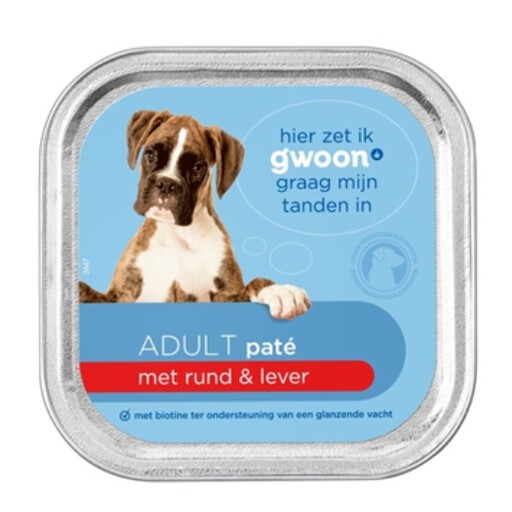
Why this suits the profile: The 150g portion is straightforward for an adult dog and can be practical when you want to try a soft wet food first.
The ingredients and target group are clearly described. However, check the label to see whether the cup is complete or complementary food before giving it daily.
Soft pâté texture, beef and liver as named main ingredients, and a compact 150g pack.
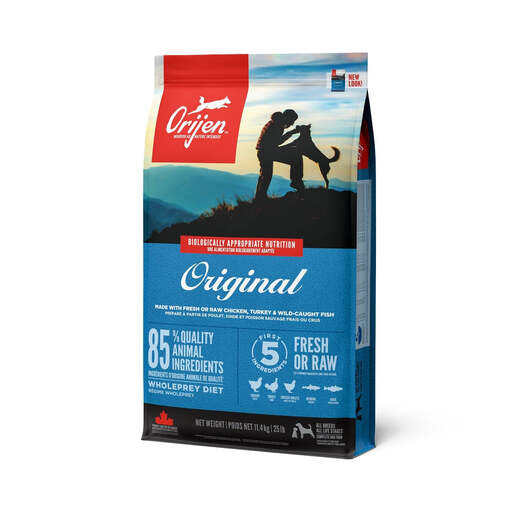
Why this suits the profile: The ingredients list chicken, turkey, herring, cod and egg, with 38% crude protein and a complete food designation for dogs in different life stages.
The ingredients list and analytical constituents are comprehensively stated, so you rely less on isolated marketing terms.
11.4 kg pack, 38% crude protein, and mention of omega-3, DHA and EPA in the product specifications.
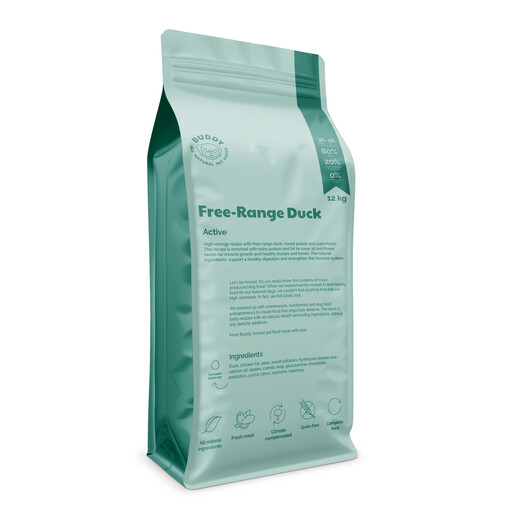
Why this suits the profile: According to the product description, this grain-free kibble is aimed at large, active and working dogs, with duck, sweet potato and a kibble size of approximately 1.2 to 1.6 cm.
The packaging states both the proportion of animal ingredients and the target group. Still compare the feeding guide with your dog's actual activity level.
12 kg supply, grain- and gluten-free composition according to the product information, and a relatively large, flat kibble.
Gradually mix the new dog food with the old food and follow the instructions on the packaging. Keep an eye on your dog's stools, appetite and weight. Store dry food sealed in a cool, dry place. Open wet food should generally be kept refrigerated and used within the stated time.
Give treats such as salmon strips alongside the regular food and count them towards the daily amount. For a product like Rosewood Dog Salmon Fillet Strips, the product description states 97% salmon; it remains a complementary treat and not a complete dog food.
We've put together a full, up-to-date list of products that fully meet these strict selection criteria and comply with current European safety regulations.
That depends on preference, nutritional needs and practical circumstances. Wet food has a high moisture content and a soft texture. Dry food keeps longer after opening and is easy to weigh out. With both types, check whether it's complete food.
Unopened dog food remains usable until the date on the packaging, provided it is stored correctly. Different times apply after opening. Seal dry food well and store opened wet food refrigerated according to the instructions. When in doubt, use the information on the label.
Start by identifying the ingredients your dog hasn't tolerated well before. Then choose a recipe with a straightforward protein source and don't change multiple foods at once. For recurring issues or a suspected allergy, consulting a vet is important.
