
Vandaag of morgen in huis

Kwaliteit gegarandeerd

Welkomstaanbiedingen ontgrendelen: GRATIS bezorging | Tot 80% korting | Gratis 30 dagen JoyPlus-proefperiode
Download de app
Choosing the right dog food seems straightforward until you start comparing the labels. One bag promises digestive support, while another highlights grain-free ingredients or a high meat content. However, an eye-catching front label does not always tell you whether a product is suitable for your dog.
Many dog owners in the Netherlands encounter three recurring pitfalls:
Look on the packaging for a statement such as “complete pet food” or “complete and balanced dog food”. This type of food is intended as a daily meal when given in the recommended quantities.
A complementary product serves a different purpose. According to the product information, the INABA Churu Dog Multipack is complementary pet food. The tubes contain at least 90% moisture and can be used as a reward, topper or training snack. They do not replace a complete meal. So even when using liquid dog treats, your dog’s main food is still essential.
Also pay attention to your dog’s life stage:
Grain-free dog food contains no grains, but that does not automatically mean it is suitable for every dog with a food sensitivity. Grains may have been replaced with ingredients such as peas, potato or sweet potato. So always check the full ingredients list.
The term hypoallergenic dog food also calls for caution. A recipe containing a single animal protein source can be useful when you want to eliminate certain ingredients, but genuine food-related problems should be discussed with a vet. Claims about sensitivities formulated according to a brand’s own research are not a guarantee of medical effectiveness.
Look at:
The feeding guidelines on the bag are a starting point. An active dog often has different energy requirements from a quiet house dog. Weigh out the portion and assess your dog’s body condition regularly. Dog treats should be included in the daily feeding plan.
When choosing dry food for small dogs, smaller kibble may be easier to eat. For large dogs, there are formulas with adjusted feeding guidelines and sometimes a larger kibble size. For products for medium-sized dogs, check that the stated weight range matches your dog.
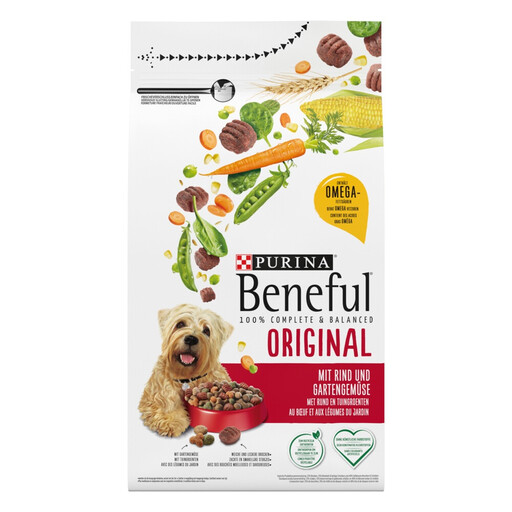
Why it suits this profile: A 1.4kg bag is manageable when you are comparing dry dog foods for the first time or would like to start with a smaller quantity for an adult dog.
The product information states that this is complete and balanced food for adult dogs. The feeding guidelines specify portions for different body weights.
According to the label, it contains 15% protein, 8% fat and 12% moisture. The recipe contains whole grains and comes in a beef flavour.
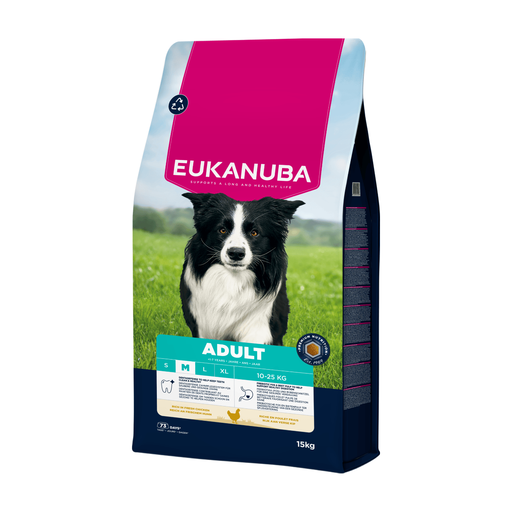
Why it suits this profile: This dry dog food is designed for medium-sized adult dogs aged 1 to 7 years and is suitable for households looking to buy a larger supply.
The target group and life stage are clearly stated in the product description. This means you do not have to rely solely on the chicken variety or the front of the packaging.
According to the product description, this is complete and balanced food. The formula contains chicken, FOS and beet pulp; the bag size is 15 kg.
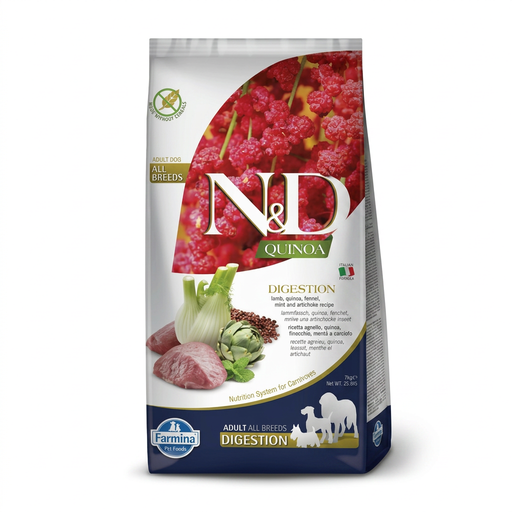
Why it suits this profile: The product description is aimed at medium-sized and large adult dogs and mentions a recipe with lamb, quinoa, prebiotics and herbs.
Rather than simply highlighting “grain-free”, the label lists specific ingredients such as 22% lamb, dried lamb meat, quinoa and sources of fibre.
The analytical values state 25% crude protein, 12% fat and 9% moisture. According to the description, the product is intended as complete food for adult dogs.
For a young dog, the life stage is more important than a popular flavour. According to the product description, Eukanuba Life Care dog puppy medium chicken is intended for medium-sized puppies aged 1 to 12 months. The stated composition includes DHA, calcium and a fibre blend with FOS, MOS and beet pulp. Always check that the breed size and age are appropriate.
For older small dogs, Eukanuba Life Care dog mature small chicken is aimed at dogs aged 8 to 11 years. The product description states that it has an adapted formula containing chicken, L-carnitine, FOS and beet pulp. This makes it an option to compare within senior dog food for small dogs.
When your dog has a sensitive stomach, a gentle transition is more important than changing food frequently. Farmina Vet Life Dog Gastrointestinal is described as food for gastrointestinal health. Only use this type of product for persistent symptoms after consulting a vet. A product page is not a substitute for a diagnosis.
Use treats as part of your dog’s daily feeding plan. The INABA Churu Dog Multipack contains 20 tubes of 12 grams in chicken and seafood varieties. According to the product information, the product contains at least 90% moisture, and the recommended amount is one to two tubes per day, depending on factors including the dog’s size and body condition.
Keep opened tubes sealed in the fridge and use them within the stated timeframe. Always make sure your dog has fresh drinking water too. If in doubt, choose smaller portions and deduct the calories from treats from your dog’s daily amount of dry food.
We have put together a complete, up-to-date list of products that fully meet these strict selection criteria and the applicable European safety regulations.
It depends on your dog’s age, size, activity level and type of food. Adult dogs are often fed one or two meals a day. Puppies generally need several smaller meals. Follow the guidelines on the packaging and adjust the portion according to your dog’s body condition.
Gradually mix the new food with the old food, usually over approximately 7 to 10 days. Increase the proportion of new food each day. Stop or slow down the transition if clear problems occur and ask a vet for advice.
No. Grain-free simply means that no grains have been used. The recipe may still contain other ingredients that your dog cannot tolerate well. Check the full composition and discuss recurring symptoms with a vet.
