
Vandaag of morgen in huis

Kwaliteit gegarandeerd

Welkomstaanbiedingen ontgrendelen: GRATIS bezorging | Tot 80% korting | Gratis 30 dagen JoyPlus-proefperiode
Download de app
Choosing dog food seems straightforward until you compare labels, flavours and nutritional claims side by side. Dry dog food, wet dog food, puppy food and senior dog food differ not only in price, but also in ingredients, energy content and ease of use.
Many Dutch dog owners come up against the same pitfalls:
For daily meals, complete and balanced dog food is a practical starting point. The packaging should state which life stage and type of dog the product is intended for. Look for descriptions such as adult dogs, puppies or senior dogs.
A product for adult dogs is not automatically suitable for a puppy. Puppies have different nutritional needs while they are growing. Feeding requirements can also vary between large and small breeds. Always check the recommended age, your dog’s size and the feeding guidelines on the packaging.
Ingredients are generally listed in descending order by weight. A recipe with chicken, lamb or beef may combine several animal-based ingredients. Some products clearly state the proportions, while others use more general descriptions.
Also pay attention to the analytical constituents:
Claims about supporting the skin, coat, teeth, digestion or immune system often come from the brand’s product information. A brand’s own research may suggest that certain ingredients play a role, but such claims are not a guarantee of the result for your individual dog.
Dry dog food is easy to weigh out and store. It is ideal for owners who want to serve consistent portions or are often out and about. Check the kibble size if you have a small dog or puppy.
Wet dog food contains more moisture and has a soft texture. This can be useful for dogs that prefer softer food. Once opened, the packaging will usually need to be stored in the fridge; always follow the instructions on the label.
A recipe with chicken, lamb, beef, duck or fish can help you vary the flavours, but avoid changing foods too often. Introduce a new food gradually, usually over around seven to ten days. This makes it easier to see how your dog responds to the change.
Does your dog have a sensitive stomach, a food allergy or another specific nutritional need? Do not choose solely on the basis of terms such as “sensitive stomach” or “grain-free”. Discuss persistent problems and a tailored feeding plan with a vet.
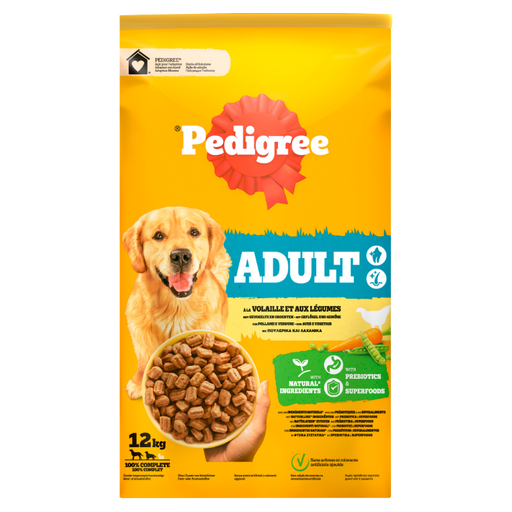
Why it suits this profile: A large pack of dry dog food for adult dogs that eat a set portion of kibble every day.
The product description states that it is a complete dry meal for adult dogs. However, check the daily portion and current ingredients on the packaging.
12 kg pack; chicken variety; kibble with a specially described texture for feeding adult dogs.
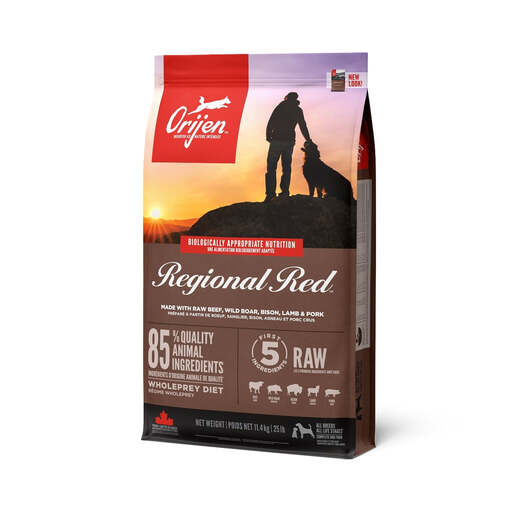
Why it suits this profile: For owners looking for an extensive recipe with multiple animal-based ingredients and clearly stated analytical values.
The ingredients list includes beef, wild boar, bison, lamb and pork, with separate percentages for each. This makes comparisons more transparent.
11.4 kg; 38% crude protein and 18% crude fat according to the product information; contains omega-3 and omega-6 fatty acids, among other ingredients.
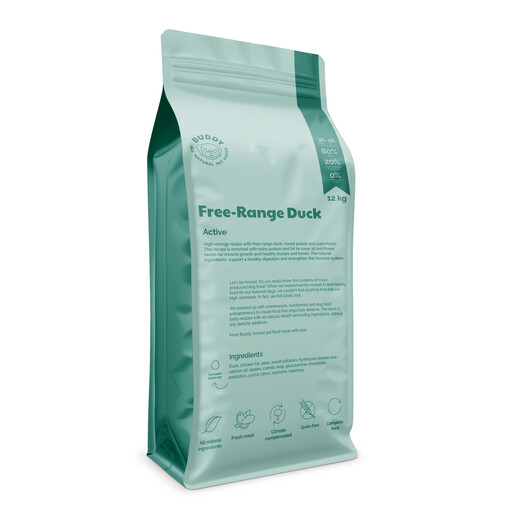
Why it suits this profile: Designed for large, active or working dogs, for which energy-rich kibble and a large pack can be practical.
The product information states that it contains 80% animal-based ingredients and 20% vegetables, fruit and other ingredients. Always adjust the quantity to your dog’s activity level.
12 kg; duck as a key protein source; grain- and gluten-free according to the product description; kibble measuring approximately 1.2 to 1.6 cm.
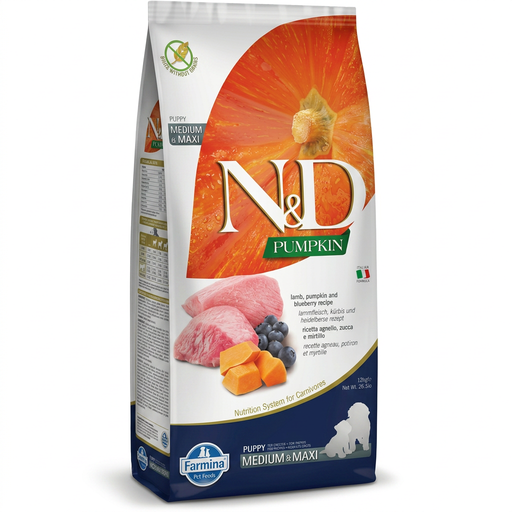
Why it suits this profile: Developed as a complete food for puppies of medium and large breeds, with feeding guidelines based on weight.
The product description identifies medium and large-breed puppies as the target group and provides portions for different weight ranges. This makes it less suitable as a general choice for every dog.
Lamb variety; grain-free recipe according to the product information; a gradual transition over around seven days is recommended.
We have put together a complete, up-to-date list of products that fully meet these strict selection criteria and the applicable European safety regulations.
Choose a product labelled as complete food for adult dogs. Then compare the ingredients, analytical constituents, kibble size and daily portion with your dog’s weight and activity level.
Neither is automatically suitable for every dog. Dry food is practical to store and weigh out, while wet food has a soft texture and a higher moisture content. Focus above all on the overall nutritional value, portion size and what your dog accepts well.
Keep dry food sealed in a cool, dry place and follow the best-before date on the packaging. Cover opened wet food, store it in the fridge and use it within the period stated on the label. Do not leave food at room temperature for extended periods.
