
Vandaag of morgen in huis

Kwaliteit gegarandeerd

Welkomstaanbiedingen ontgrendelen: GRATIS bezorging | Tot 80% korting | Gratis 30 dagen JoyPlus-proefperiode
Download de app
Choosing the right dog food may seem simple, but packaging can make comparisons surprisingly difficult. An appealing flavour, a high percentage of animal ingredients or the term “grain-free” does not automatically mean a product is right for your dog. Age, size, activity level, ingredients and daily serving size are just as important.
In this buying guide, the Joybuy Product Recommendation Officer discusses the key points to check, along with practical choices for puppies, adult dogs and dogs with specific dietary preferences.
Terms such as “natural”, “premium dog food” and “high in protein” immediately stand out, but they do not always tell you how the product should be used as part of your dog’s daily diet. Check whether the packaging states that it is complete pet food. You should also look at the analytical constituents, such as protein, fat, crude fibre and ash.
A higher protein percentage is not automatically necessary for every dog. An active young dog has different nutritional needs from a calm senior dog.
Puppy food is formulated for growth, while adult dog food is intended for maintenance. Kibble size can also make a difference. Food for small dogs often has smaller pieces than food for medium-sized or large dogs.
Look for the following information on the packaging:
Grain-free dog food may be suitable if you deliberately want to avoid grains or if a vet has recommended a specific feeding plan. However, it does not automatically mean that the product is easier to digest or suitable for every dog with a sensitive stomach. Grain-free recipes often contain other sources of carbohydrates, such as peas, chickpeas or sweet potato.
If you suspect an intolerance or allergy, or your dog has an ongoing digestive problem, it is sensible to consult a vet. Hypoallergenic dog food and prescription diet food for dogs are not the same as choosing any grain-free food at random.
For everyday feeding, preferably choose a product labelled as complete food. Then compare the crude protein and fat content with your dog’s activity level. An energy-rich formula may be better suited to an active or working dog, while a less active dog can take in too many calories if the portion is not adjusted.
Brands’ product information may mention additional benefits. Phrase such claims carefully: according to the brand’s own research or product information, ingredients such as omega 3 and omega 6 may contribute to the condition of the skin and coat. This is not a guarantee of an individual result.
Ingredients are generally listed in descending order by quantity. So do not look only at a claim on the front of the packaging; check the full ingredients list as well. Dog food with lamb, dog food with chicken and dog food with fish may contain different additional sources of animal protein.
This is important when you want to test or avoid a particular source. For example, Eukanuba Life Care Small/Medium Lamb & Rice contains lamb and rice, but according to the product information it also contains chicken as an additional protein source. This makes it less suitable if you want to exclude chicken completely.
The right kibble size makes feeding more practical. According to the product description, Bonzo Mini Menu Adult Beef Lamb is intended for adult small dogs weighing up to 10 kg and has smaller pieces. A 12 kg bag may seem economical, but it is not always practical for a small dog if the food is used slowly. Store dry food in an airtight container, in a cool, dry place, and follow the best-before date on the packaging.
The recommended amount is a starting point. Adjust the portion according to your dog’s weight, activity level and body condition. Always provide plenty of fresh drinking water.
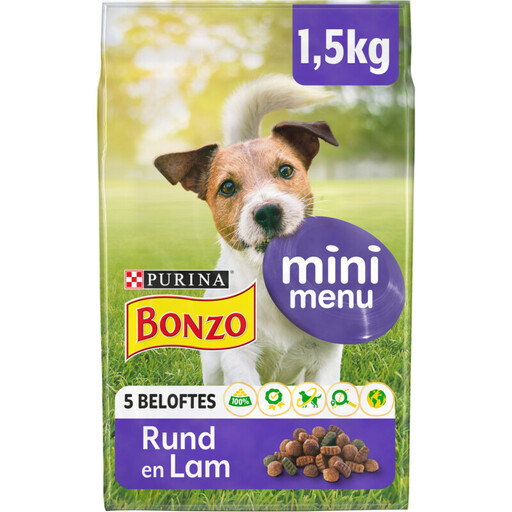
Why it suits this profile: This complete dry food is intended for adult small dogs weighing up to 10 kg and has smaller pieces. The beef and lamb flavour is a straightforward choice for anyone comparing everyday food without immediately buying a large bag.
The target group and maximum dog size are clearly stated. This reduces the risk of choosing a standard kibble that is not suitable for a small jaw.
Complete food for adult small dogs; smaller kibble; beef and lamb as the stated flavour combination.
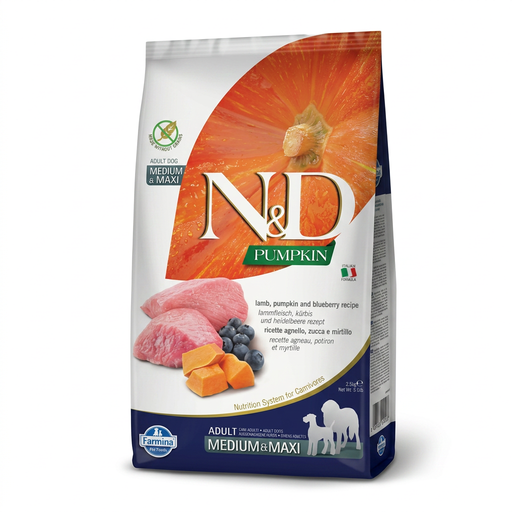
Why it suits this profile: The formulation lists lamb, dried lamb, herring and pumpkin, among other ingredients. According to the product information, this food is intended for medium-sized and large breeds and is described as grain-free.
The product page shows both the ingredients and analytical values, including 28% crude protein and 18% crude fat. This allows you to compare the front of the packaging with the specifications.
Grain-free formula according to the product description; lamb and herring as the stated animal ingredients; 2.5 kg pack.
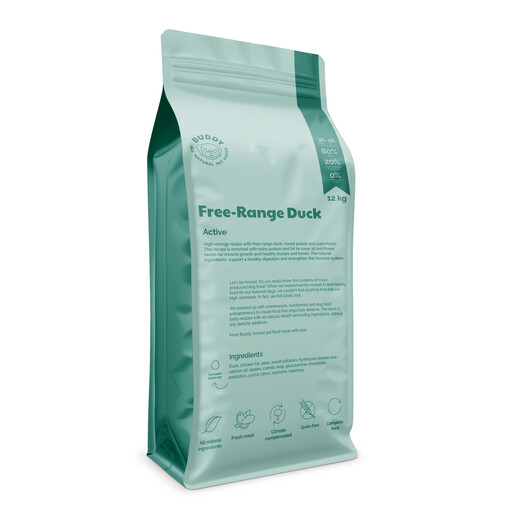
Why it suits this profile: The product description names large, active and working dogs as its target group. The 12 kg bag is practical when relatively large amounts are fed each day.
The formulation lists duck, sweet potato and a grain- and gluten-free recipe. Always check that it suits your dog, however; “free from grains” is not a universal guarantee of better tolerance.
12 kg pack; stated proportion of animal ingredients, vegetables and fruit; kibble diameter of approximately 1.2 to 1.6 cm according to the product information.
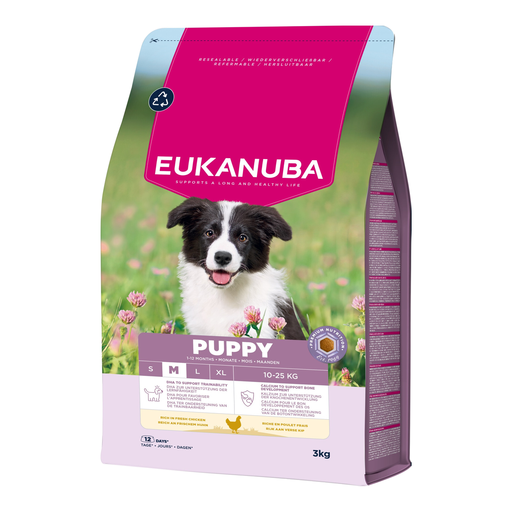
Why it suits this profile: According to the product information, this complete dry food is intended for medium-breed puppies aged from 1 to 12 months. The formulation lists chicken, DHA, calcium and a fibre blend with prebiotics.
The age range and breed size are clearly defined. This helps prevent you from feeding adult dog food during a growth phase that may require a different feeding schedule.
For medium-breed puppies; 3 kg pack; stated nutrients DHA and calcium; a gradual transition is still recommended.
We have put together a complete, up-to-date list of products that fully meet these strict selection criteria and the applicable European safety regulations.
Mix the new food gradually with the current food, usually over seven to ten days. Start with a small proportion of the new food and increase it step by step. Keep an eye on your dog’s stools, appetite and body condition. Do not automatically use the quantity stated on another bag: the calorie content may differ.
If your dog has a medical condition, a clear food reaction or a prescribed diet, the choice of diet food for dogs should be made with advice from a vet. A brand’s product claim is no substitute for individual nutritional advice.
This depends on body weight, age, activity level and the energy density of the food. Use the feeding table on the packaging as a starting point and adjust the portion if your dog’s weight or body condition changes.
Follow the storage and best-before information on the packaging. Keep the bag sealed in a cool, dry place and protect it from moisture and direct sunlight. A smaller pack may be more practical if your dog eats slowly.
Not necessarily. The flavour and protein source are only one part of the formulation. Check all the ingredients, especially if you want to avoid a particular source. If you suspect an intolerance or allergy, consulting a vet is the safest next step.
