
Vandaag of morgen in huis

Kwaliteit gegarandeerd

Welkomstaanbiedingen ontgrendelen: GRATIS bezorging | Tot 80% korting | Gratis 30 dagen JoyPlus-proefperiode
Download de app
Buying a new bag of dog food or a few tins of wet food sounds simple. Yet many dog owners mainly compare the front of the packaging. This often features terms such as “natural”, “grain-free” or “rich in meat”, while important information is usually found on the label.
The following three pitfalls are common:
Choose dog food that suits your dog’s age and body size. Dog food for adult dogs is not the same as puppy food. Puppies have different nutritional needs while they are growing. For medium-sized and large dogs, the kibble size and composition may also be relevant.
Also pay attention to the wording:
A product suitable for “all sizes” may be practical, but always check the feeding guidelines on the packaging. The quantity also depends on activity level, age and body condition.
Do not only look at the protein percentage. Also check fat, crude fibre, ash and moisture. Dog dry food generally contains much less moisture than dog wet food. This means that protein percentages cannot be compared directly on a like-for-like basis.
The ingredients list is shown in descending order. Products with chicken, beef or lamb as the first ingredient may be worth considering if you are deliberately looking for a particular animal protein source. However, check whether other animal ingredients or plant-based protein sources are included as well.
For example, a lamb recipe is not automatically suitable in the event of a food reaction. If symptoms such as vomiting, diarrhoea or itching keep returning, it is wiser to consult a vet than to keep changing your dog’s food without professional advice.
Terms such as “for sensitive stomachs”, “shiny coat” or “supports joints” should be understood as product positioning, not as a medical guarantee. According to the product descriptions of some brands, ingredients such as prebiotics, omega-3 fatty acids, glucosamine or chondroitin are added for these purposes. This does not mean that every individual animal will experience the same result.
That is why it is important to check the specific details. For example, Farmina N&D Quinoa Digestion Adult Mini lists inulin, fructooligosaccharides, omega-3 fatty acids, glucosamine and chondroitin sulphate. The product description states a minimum protein content of 25% and a minimum fat content of 12%. These are verifiable details, whereas a general claim about “optimal health” is far less specific.
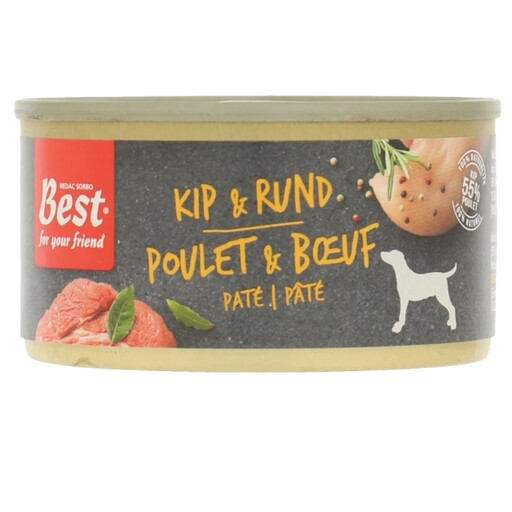
Why it’s a good fit: A soft wet food texture for adult dogs of different sizes. Handy for households that want to adjust portions for each meal.
The product description explicitly states that it is complete and balanced food for adult dogs, rather than making a flavour claim alone.
Chicken and beef are listed as the main ingredients; according to the description, unused portions can be kept refrigerated for up to 48 hours.
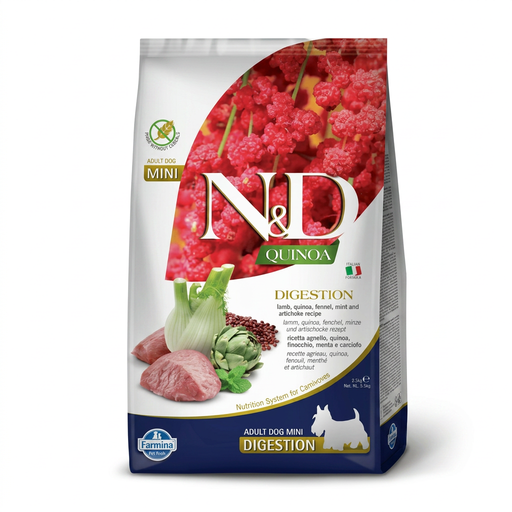
Why it’s a good fit: Designed for small adult dogs and owners who want to compare the ingredients list in more detail.
The grain-free formula is not presented as a guarantee; always check whether your dog reacts to other ingredients instead.
Contains lamb, quinoa, rice and prebiotics, with an analytically stated minimum protein content of 25%.
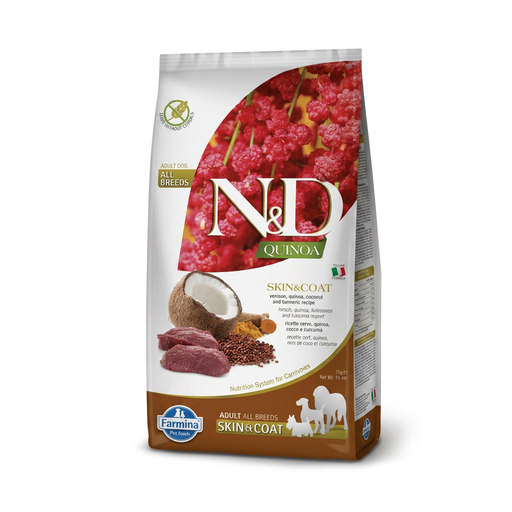
Why it’s a good fit: A larger pack for owners of medium-sized or large adult dogs who use dry food as their main meal.
The target group and size are clearly stated, so you do not have to rely solely on the marketing term “skin & coat”.
Grain-free formula with venison, quinoa and, according to the product specifications, 32% crude protein and 18% fat.
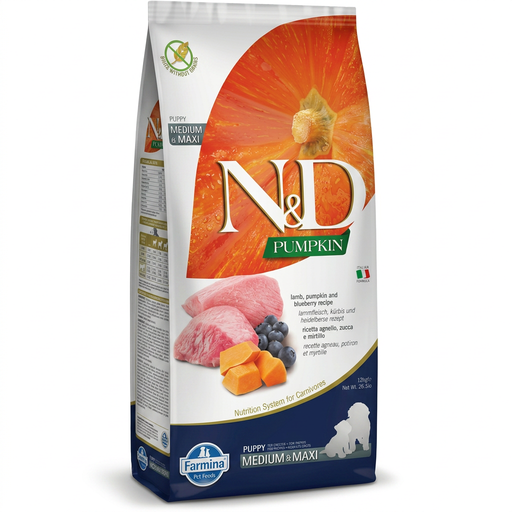
Why it’s a good fit: For puppies of medium-sized and large breeds that need a product designed for the growth stage.
It is specifically described as complete food for puppies of medium-sized and large breeds, rather than as adult dog food.
The product information lists lamb and pumpkin, along with a gradual transition period of at least seven days.
We have put together an up-to-date selection of products that meet these verifiable criteria and cater to different nutritional needs.
Mix the new product gradually with the old food. A practical approach is:
Always follow the feeding guidelines on the packaging and make sure fresh drinking water is available. Store dry food sealed in a cool, dry place. Opened wet food should be kept refrigerated according to the product information for the products mentioned; check the packaging for the exact storage period.
That depends on your dog and your daily routine. Wet food generally contains more moisture and has a soft texture. Dry food is easier to measure and store. With both types, check that the product is complete and balanced dog food.
Look for a clear ingredients list, a suitable animal protein source and a recipe containing, for example, rice or prebiotics, if your dog tolerates these well. “Grain-free” is not an automatic solution. If stomach or intestinal problems persist, advice from a vet is needed.
Use the table on the packaging as a starting point. Adjust the quantity according to body weight, age, activity level and body condition. Weigh out portions where possible, particularly with energy-rich dry food, and adjust the amount if your dog visibly gains or loses weight.
