
Vandaag of morgen in huis

Kwaliteit gegarandeerd

Welkomstaanbiedingen ontgrendelen: GRATIS bezorging | Tot 80% korting | Gratis 30 dagen JoyPlus-proefperiode
Download de app
Ordering a bag of dog food seems simple, until you compare the ingredients, nutritional values and feeding guidelines. Marketing terms such as “natural”, “grain-free” or “rich in meat” do not say much on their own. A higher price also does not automatically mean that the recipe is right for your dog.
Three common pitfalls:
Puppy food is formulated for growth, while adult dog food is intended for maintenance. For senior dogs, energy intake may be particularly relevant. Also check whether the food is suitable for small, medium-sized or large dogs. A small kibble may be more practical for a small dog; for puppies of larger breeds, food for medium or maxi puppies is often more logical than a general puppy variety.
Pay attention to the legal designation:
Ingredients are generally listed in descending order by weight. Do not just look at the first ingredient; consider the recipe as a whole. For example, Farmina N&D Ocean Series Cod and Pumpkin Adult Small Dog Food lists cod as the first ingredient and, according to the product information, contains 25% cod and 25% dehydrated cod protein. The recipe also contains fish oil, pumpkin and added taurine and L-carnitine.
Also compare:
A high protein percentage is not automatically suitable for every dog. A calm dog prone to gaining weight may need a different energy intake from an active working dog.
Dog food containing lamb, chicken or fish can be useful when you are looking for a particular protein source, but “hypoallergenic dog food” is a term that should be assessed carefully. Check the complete recipe for multiple animal proteins, fats and possible cross-contamination sources. If symptoms persist or you suspect a food allergy, a vet should guide your choice of food.
Dog food for specific dietary needs, such as a cardiac formula, is not simply a standard flavour variation. Only use this type of food after consulting a vet. A dog food supplement, such as oil, is not a replacement for a complete meal and counts as additional energy.
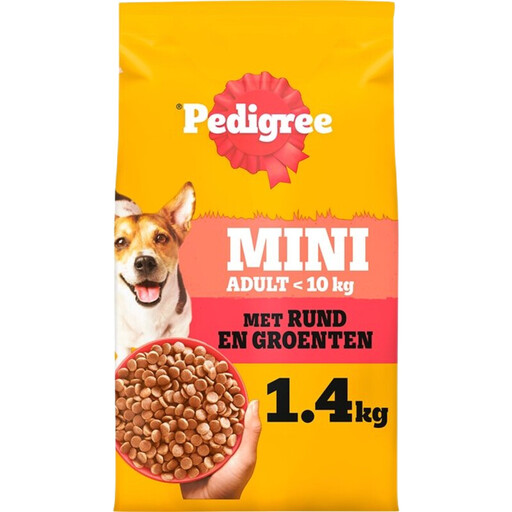
Why it suits this profile: A convenient 1.4kg pack for a small adult dog. The product information specifies kibble designed for small breeds and a daily guideline for dogs weighing up to 10kg.
The recipe and analytical values are listed, including 22% protein, 13% fat and 2.2% crude fibre. This means you can base your choice on the available data rather than the flavour name alone.
Dry food for small adult dogs, with a clear portion guide and a compact bag.
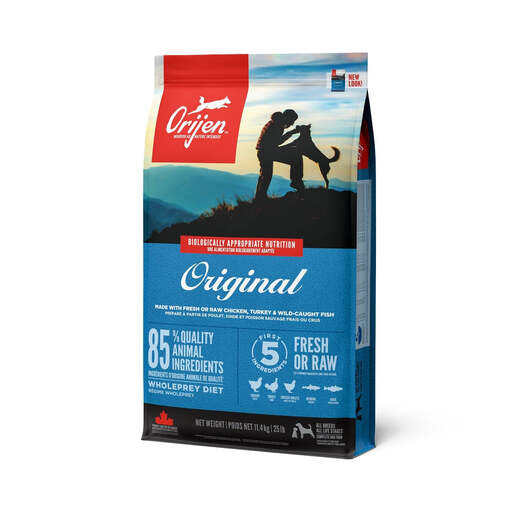
Why it suits this profile: The product description lists chicken, turkey, herring, cod and egg as animal-based ingredients. This variety is intended as a complete food for dogs at different life stages, with the exception of Great Dane puppies under 14 weeks old.
The ingredient percentages and analytical constituents are available. This allows you to verify the claim of a high-protein recipe; the product page lists 38% crude protein and 18% crude fat.
Large 11.4kg pack, with fish ingredients and a daily feeding table based on body weight.
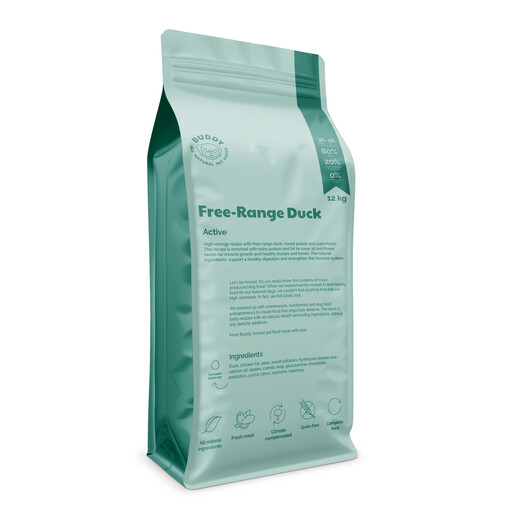
Why it suits this profile: The product information focuses on large, active and working dogs. The recipe lists duck, sweet potato, peas and salmon oil, with kibble measuring approximately 1.2 to 1.6cm.
The stated 80% animal-based ingredients and 20% vegetables, fruit and superfoods can be compared with the complete ingredients list. Always check the current packaging, however.
12kg pack, grain- and gluten-free claim in the product information, plus added glucosamine and chondroitin sulphate.
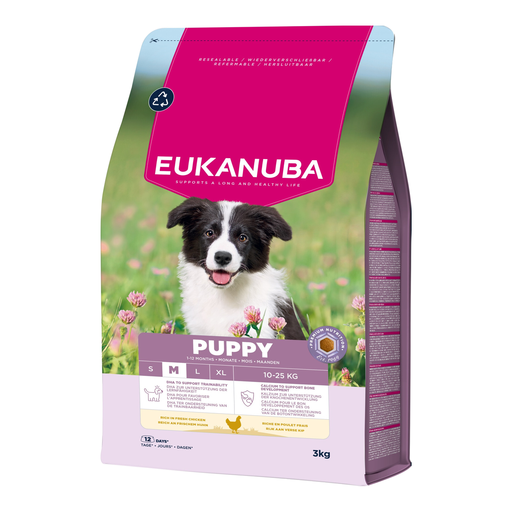
Why it suits this profile: According to the product description, this dry puppy food is intended for puppies of medium-sized breeds aged 1 to 12 months. The 3kg bag is practical when you first want to see how your puppy responds to the food.
The life stage and breed size are clearly stated. The product information also mentions calcium, DHA and a fibre blend; check the current label for the complete supporting details.
Medium-breed puppy formula, chicken as the stated animal protein source and a complete food designation in the product description.
We have put together a complete, up-to-date list of products that fully meet these strict selection criteria and the applicable European safety regulations.
If your dog’s appetite, weight, stools or behaviour changes suddenly, it is advisable to consult a vet. The same applies if you are considering dietary dog food because of a medical condition.
Choose food that clearly states the life stage and, where relevant, the expected breed size. Puppy food generally contains a nutritional profile designed to support growth. Follow the portion table on the packaging and adjust the quantity according to your puppy’s body condition.
No. Grain-free dog food may suit a specific dietary preference, but it is not automatically necessary or hypoallergenic. Check which carbohydrate sources are used instead and review the complete recipe. If you suspect an intolerance, guidance from a vet is advisable.
This varies according to the brand, packaging and storage method. Seal the bag properly, store the food somewhere cool and dry, and follow the instructions on the label. Do not buy an unnecessarily large bag if your dog eats very little or if the food will remain open for a long time.
