
Vandaag of morgen in huis

Kwaliteit gegarandeerd

Welkomstaanbiedingen ontgrendelen: GRATIS bezorging | Tot 80% korting | Gratis 30 dagen JoyPlus-proefperiode
Download de app
A bag of dog food featuring terms such as “premium”, “natural” or “grain-free” may look appealing. However, these words alone say little about whether the food is right for your dog. The best choice depends mainly on life stage, body size, activity level and the full composition.
As a Joybuy Product Recommendation Officer, I filter the most important product information so you can distinguish marketing claims from verifiable facts.
Grain-free dog food contains no grains, but that does not automatically mean it is suitable for every dog with a food sensitivity. A recipe may still contain several animal protein sources, such as chicken, beef, lamb or fish. So check the full ingredients list and consult a vet if problems persist.
“with chicken”, “with lamb” or “with fish” may mean that the ingredient makes up only a small proportion of the recipe. Check the order and percentages on the packaging. For example, Pedigree Adult Small Dog states that the recipe contains grains and that beef accounts for 4% of the composition. That is clearer than relying solely on the flavour description on the front.
A 12 or 15 kg bag may have a lower price per kilo, but only if your dog tolerates the food well and the recommended portion suits its energy needs. For a small dog, a smaller bag may be more practical. Once opened, dry dog food should be kept tightly sealed in a cool, dry place.
Puppy food is formulated for growth, while adult dog food is intended for maintenance. Senior dog food is generally aimed at older dogs and may contain adjusted energy levels or additional ingredients. Always check the age recommendation on the label.
Size matters too. Dog food for small dogs often contains smaller kibble. Medium and large dogs may require larger kibble and different feeding guidelines. Food for all life stages is not automatically the most logical choice for every individual dog.
Look for a statement such as complete food or complete and balanced food for dogs. Also check the levels of:
Only compare products while taking their moisture content into account. Wet food contains much more water than dry food, meaning the percentages cannot be compared directly.
A recipe containing chicken, lamb or fish may be perfectly suitable, but look out for multiple animal protein sources if you are specifically seeking a limited diet. A “premium dog food” label is no substitute for reading the ingredients list.
Follow the daily feeding table on the packaging and adjust the portion according to weight, age, activity level and body condition. It is best to change foods gradually, for example over seven to ten days. This helps reduce the risk of temporary digestive problems. Always provide plenty of fresh drinking water.
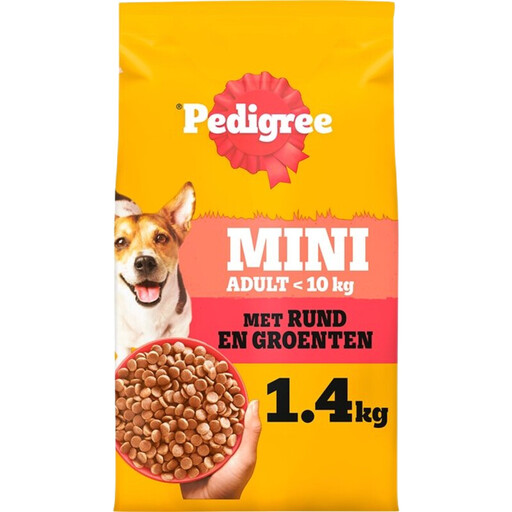
Why it suits this profile: This smaller pack is suitable for an adult small dog weighing up to 10 kg, making it easier to try dry dog food without committing to a large bag.
The product information states the target group, kibble size and nutritional values, so you do not have to rely solely on the “beef & vegetables” flavour name.
1.4 kg pack; 22% crude protein and 13% fat according to the product details; kibble for small adult dogs.
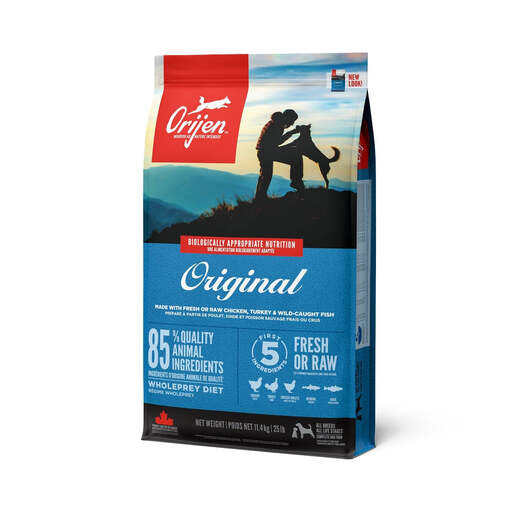
Why it suits this profile: For anyone looking for an extensive recipe containing chicken, turkey, fish and egg, and who is prepared to compare the ingredients and higher nutritional density carefully.
The product page shows a full ingredients list and analytical values. This allows you to verify the grain-free claim rather than simply taking it from the packaging.
38% crude protein; 18% crude fat; chicken, turkey, herring, cod and egg are listed among the ingredients.
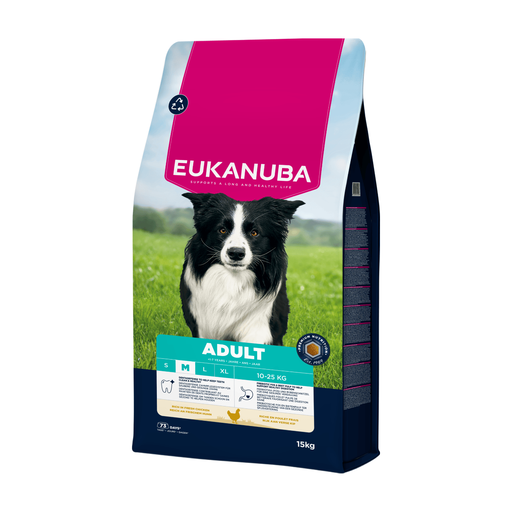
Why it suits this profile: The 15 kg pack is practical for a medium-sized adult dog that eats dry food every day and gets regular exercise.
The product description states the age range of 1 to 7 years, identifies medium-sized dogs as the target group, and mentions chicken, L-carnitine and a fibre blend. However, you should still check the feeding table based on your dog’s individual weight.
15 kg contents; chicken as the stated animal protein source; prebiotic FOS and beet pulp are listed in the product description.
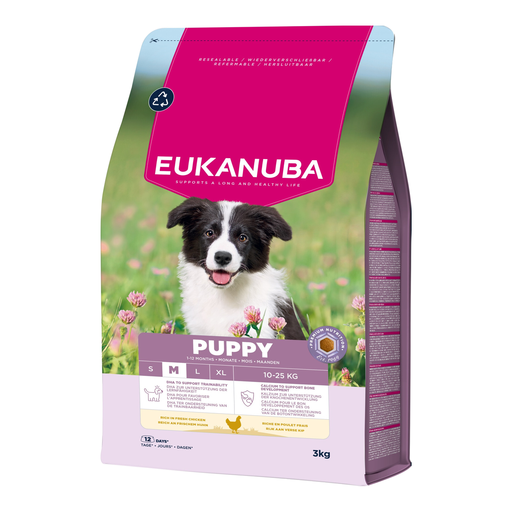
Why it suits this profile: According to the product description, this puppy food is intended for medium-sized puppies aged 1 to 12 months and comes in a 3 kg pack.
The age and breed-size guidance helps prevent you from accidentally choosing adult dog food for a dog that is still growing.
3 kg pack; chicken as the main ingredient in the description; DHA, calcium and a fibre blend are listed.
We have put together a complete, up-to-date list of products that fully meet these strict selection criteria and the applicable European safety regulations.
Start by following the feeding table for the product you have chosen. Adult dogs are often fed once or twice a day, while puppies generally need several smaller meals. Divide the total daily portion according to age, weight and activity level.
The exact shelf life is stated on the packaging. Store the bag in a cool, dry place, seal it properly and, ideally, use an airtight storage container. Check the food’s smell and texture, as well as its best-before date, before serving it.
No. A higher price may be linked to the ingredients, brand positioning or packaging, but it does not determine on its own whether the food is right for your dog. Compare the complete composition, analytical constituents, life stage, kibble size and recommended daily amount. If your dog has a sensitivity or medical condition, it is advisable to consult a vet.
