
Vandaag of morgen in huis

Kwaliteit gegarandeerd

Welkomstaanbiedingen ontgrendelen: GRATIS bezorging | Tot 80% korting | Gratis 30 dagen JoyPlus-proefperiode
Download de app
A bag of dog food featuring appealing terms such as “premium”, “grain-free” or “with chicken” can quickly seem like a safe choice. However, the front of the packaging says little about whether it is suitable for your dog. The right choice mainly depends on age, body size, activity level, ingredients and daily portion.
“Premium dog food” is not a legally defined quality category. Terms such as “natural”, “biologically appropriate” and “with fresh meat” should also be considered in the context of the complete ingredients list. So check:
For example, a product may be called “with chicken” even though chicken makes up only a small part of the overall composition. Pedigree Adult Small Dog, for instance, lists beef with a minimum percentage in the composition. That is different from a recipe in which chicken or lamb is the main source of protein.
Grain-free dog food is not automatically necessary for every dog. Grain-free recipes often use other sources of carbohydrates, such as peas, chickpeas or sweet potato. So do not focus only on the absence of grains; consider the complete nutritional value and your dog’s tolerance.
If you suspect a food sensitivity, it is best not to keep changing your dog’s food without guidance. Discuss persistent symptoms with a vet.
The feeding guide on the packaging is a starting point. A dog that goes on long walks every day may need a different amount from a dog that gets less exercise. Age, weight, breed size and body condition all matter.
Weigh out the kibble regularly. A measuring cup can be useful, but it does not always provide an accurate amount. Also remember treats: they count towards your dog’s daily energy intake.
Puppy food is formulated for growth and has different guidelines from adult dog food. A large-breed puppy grows differently from a small dog and can therefore benefit from a product that specifies the intended breed size.
For older dogs, senior dog food may be suitable when the recipe and energy value match their lower or changing activity levels. Check the age indication: some products are intended for dogs from 7 years old, while others are for dogs from 9 or 11 years old.
The size and shape of dog kibble affect how easily your dog can eat it. Dog food for small dogs often contains smaller pieces. Larger varieties are generally available for medium-sized and large breeds.
Choosing the right kibble size does not automatically prevent gulping. If your dog eats quickly, you can divide the daily amount between several meals. Always provide plenty of fresh drinking water.
Compare products using objective information:
The term “complete” means that, according to the stated feeding instructions, the product is intended as a complete daily diet. Always check the current packaging, best-before date and feeding guide. Product information may vary by product variant or pack size.
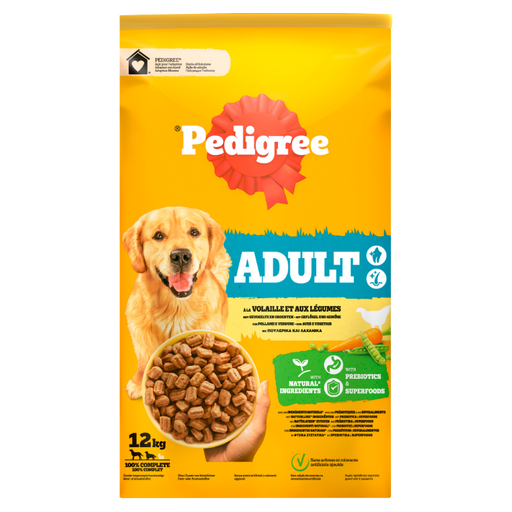
Why it suits this profile: A large pack is practical for households with an adult dog that eats dry food every day. The product description mentions fibre, vitamins and a tailored kibble structure.
The product information clearly identifies the target group: adult dogs. However, check the portion and the current composition on the packaging.
12 kg pack; intended as a complete dry meal for adult dogs.
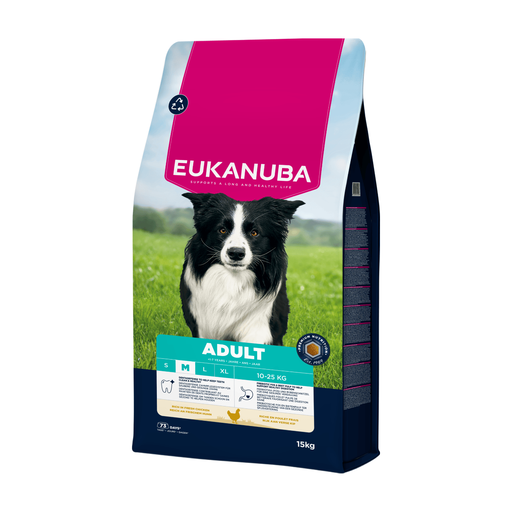
Why it suits this profile: Designed for medium-sized adult dogs aged 1 to 7 years. According to the product description, the formula contains fresh chicken, L-carnitine, FOS and beet pulp.
The age range and breed size are specified clearly. This means you do not have to choose general adult dog food without further guidance.
15 kg pack; specific formula for medium-sized adult dogs; chicken as the stated animal protein source.
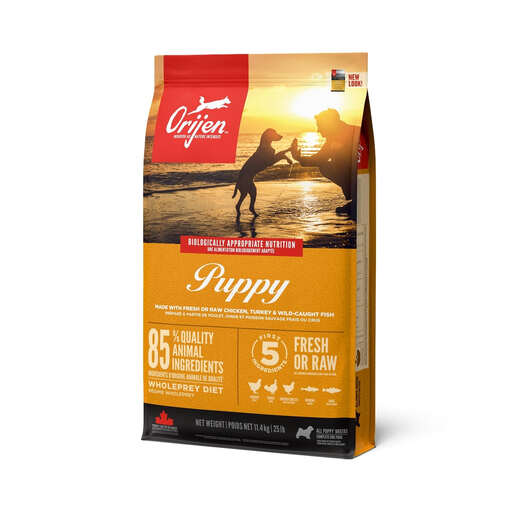
Why it suits this profile: Intended for puppies of all breeds. The product description states that it contains 85% animal ingredients, 38% crude protein and kibble sized for puppies.
The life stage is clearly defined. If you are looking for grain-free puppy food, you can compare the ingredients list and nutritional values more closely.
11.4 kg pack; chicken, turkey, egg and fish in the stated composition; suitable for puppies of all breeds.
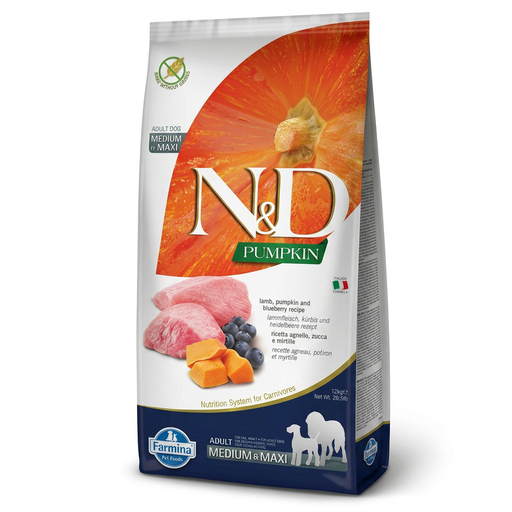
Why it suits this profile: For medium-sized and large adult dogs when you are considering dog food with lamb and without grains. The composition lists lamb, herring, pumpkin, peas and chickpeas.
The product description explicitly states the target group, protein sources and grain-free composition. This makes it easier to compare than relying on the front of the pack alone.
12 kg pack; lamb and herring as the stated animal ingredients; pumpkin added; intended for medium-sized and large adult dogs.
We have put together a complete, up-to-date list of products that fully meet these strict selection criteria and the applicable European safety regulations.
Switch gradually to new dry dog food. Over approximately 7 to 10 days, mix a little more of the new food into the old food each time. This makes it easier to see how your dog responds to the change.
Store the bag in a cool, dry place and seal it properly after every use. Check the best-before date on the packaging. If you buy a large bag, consider how quickly it will be used: a smaller pack may be more practical if your dog eats only small amounts or if you want to compare several varieties.
Look for the wording “complete pet food” or a comparable legally defined term on the packaging. Also check the target group, feeding guide and composition. Complementary food, treats and supplements are not intended to be used as a complete daily meal.
Many adult dogs have their daily amount divided between two meals. Puppies often need several meals a day. Follow the feeding guide on the packaging and adjust the amount according to weight, activity level and body condition.
This varies by product and packaging. Seal the bag airtight, store it in a cool, dry place and follow the instructions on the label. A smaller bag can sometimes be more convenient when your dog eats slowly, as the kibble will be stored for less time after opening.
