
Vandaag of morgen in huis

Kwaliteit gegarandeerd

Welkomstaanbiedingen ontgrendelen: GRATIS bezorging | Tot 80% korting | Gratis 30 dagen JoyPlus-proefperiode
Download de app
Buying dog food online seems straightforward—until you have to choose between kibble for puppies, adult dogs, senior dogs, small breeds and large dogs. Packaging is filled with terms such as “natural”, “grain-free” and “with extra meat”. Those claims do not always tell you whether the food is suitable for your dog.
This practical guide focuses on the information you can actually verify: life stage, kibble size, ingredients, analytical constituents, feeding guidelines and pack size.
“With chicken” or “with lamb” does not automatically mean that this ingredient makes up the largest part of the food. Check the ingredients list and see where the ingredient appears. For example, Pedigree Adult Small Dog lists beef as making up at least 4% of the composition. That is very different from dog food in which lamb or chicken represents a substantial share of the protein sources.
Grain-free means that grains have been replaced with other carbohydrate sources, such as peas, chickpeas or sweet potato. This does not automatically make a food suitable for every dog. Also consider the protein and fat content, energy density and your dog’s individual tolerance. If you suspect a food allergy or your dog has persistent symptoms, consult a vet. A product should not be considered hypoallergenic without supporting evidence.
A large bag of dry dog food may appear economical, but only if your dog tolerates the food well and the bag is used before it loses freshness. A small dog may take months to finish a large pack, making proper storage after opening especially important. Calculate both the price per kilogram and the estimated daily serving.
Puppy food is formulated for growth and follows different nutritional guidelines from food for adult dogs. Senior dog food is generally adapted to older dogs, although the recommended age varies by product. For example, Eukanuba Life Care Dog Senior Small specifies a target age of 11 years and above.
Also consider your dog’s size:
An all-life-stages food can be convenient, but always check that the feeding guidelines match your dog’s age, weight and activity level.
The ingredients list shows which raw materials have been used. The analytical constituents include crude protein, fat, crude fibre, crude ash and moisture. These figures make it easier to compare products objectively.
A higher protein percentage does not automatically mean that a product is a better match. An active dog may have different energy requirements from a calm companion dog. For example, Orijen Original lists 38% crude protein and 18% fat, while other products are considerably lower. Use figures like these as points of comparison, not as standalone proof of quality.
Also check whether the product is labelled as complete pet food. This means that, according to the product information, it is intended to provide a complete daily diet. Follow the feeding table on the packaging and adjust the amount according to your dog’s body condition and activity level.
Choosing the right kibble size helps prevent small dogs from struggling to chew. Products for small breeds, such as Bonzo Mini Menu Adult Beef Lamb and Farmina N&D Pumpkin Lamb Adult Mini, specify smaller kibble or are intended for dogs weighing up to approximately 10 kg.
When introducing new dry dog food, make the transition gradually. Over approximately 7 to 10 days, mix increasing amounts of the new food into the old food. Always provide fresh drinking water. Store the bag in a cool, dry place, seal it securely and, ideally, use an airtight storage container. For large packs, note the date they were opened.
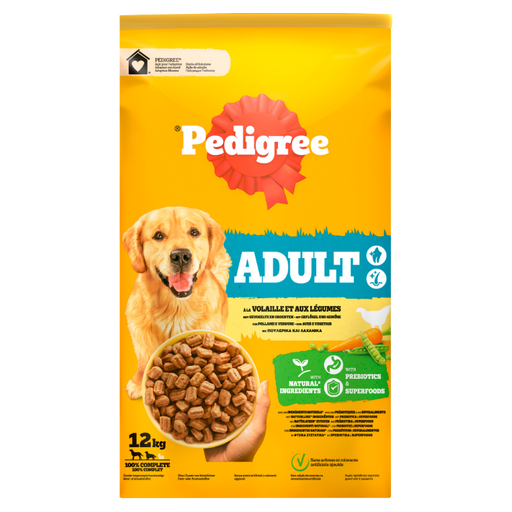
Why This Fits Their Persona: A large pack for households with an adult dog that eats dry food every day.
The product information identifies it as adult dog food and provides guidelines for daily use. However, make sure your dog tolerates the ingredients well.
12 kg pack; the product information states that it supports digestion, skin and coat.
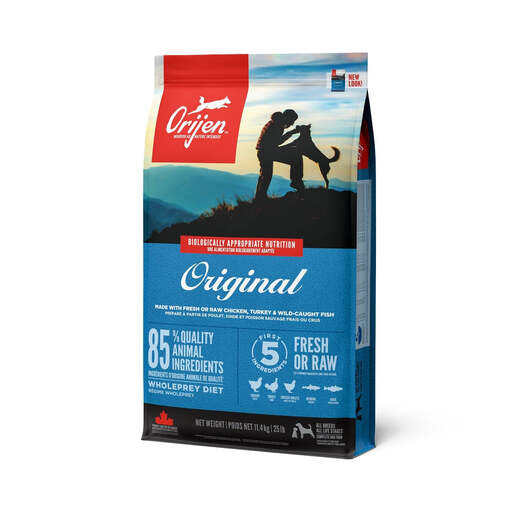
Why This Fits Their Persona: For owners looking for a grain-free formula with multiple animal-based ingredients.
The product page lists separate percentages for ingredients including chicken, turkey, herring, hake and egg. This allows you to compare the marketing claim with the complete composition.
38% crude protein; 18% fat; according to the product specifications, it contains animal-based ingredients and omega-3 fatty acids.
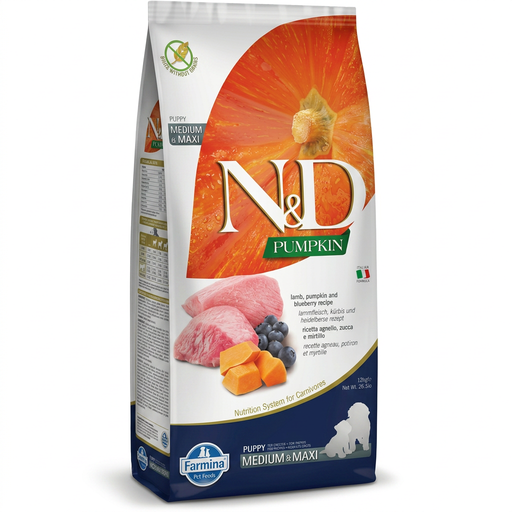
Why This Fits Their Persona: Designed for puppies of medium and large breeds, with clear feeding guidelines based on weight.
The product information explicitly identifies it as complete puppy food. According to the instructions, the transition should be made gradually over approximately seven days.
Grain-free formula; according to the label, it contains lamb, herring, pumpkin, peas and chickpeas.
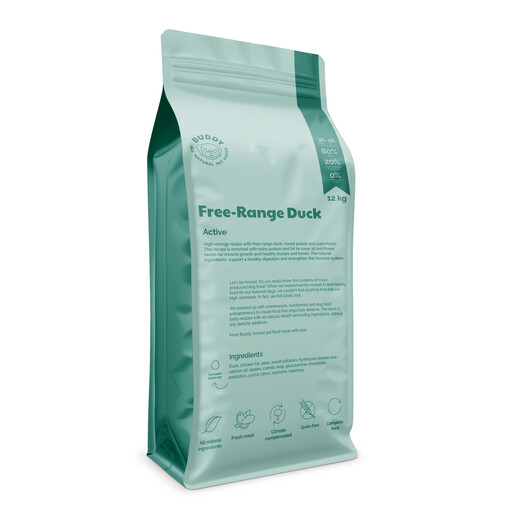
Why This Fits Their Persona: A large bag for active dogs, working dogs or households with multiple dogs.
The product specifications state the ratio of animal-based ingredients to plant-based components. Also check the serving size, as energy requirements vary from dog to dog.
12 kg pack; according to the product information, it is grain- and gluten-free, with duck listed as the animal-based protein source.
Browse a current selection of dry dog food and compare formulas for puppies, adult dogs, senior dogs and different breed sizes.
Make the transition gradually over approximately 7 to 10 days. Start with a small amount of the new food and increase it step by step. Monitor your dog’s stools, appetite and body condition. If you notice clear or persistent problems, contact a vet.
This varies by brand and packaging. Seal the bag securely, store the food in a cool, dry place and follow the best-before information on the label. Do not buy a larger bag than your dog can finish within a reasonable period.
No. Compare the price per kilogram, daily serving, life stage, kibble size and complete composition. A suitable complete pet food matters more than a higher price or a prominent claim on the packaging.
