
Vandaag of morgen in huis

Kwaliteit gegarandeerd

Welkomstaanbiedingen ontgrendelen: GRATIS bezorging | Tot 80% korting | Gratis 30 dagen JoyPlus-proefperiode
Download de app
A bag of dog food featuring words such as “premium”, “natural” or “grain-free” can seem like a safe choice at first glance. However, these terms do not always tell you enough about whether it is suitable for your dog. The right choice mainly depends on age, size, activity level, ingredients and whether the product is complete food or complementary food.
In this article, you’ll learn what to look for in dry dog food, wet dog food and treats. You’ll then find some popular choices for different households and situations.
“Dog food with chicken” only tells you something about a flavour or ingredient. Also check whether the product is described as complete and balanced dog food. A product sold as complementary food or a treat is not intended to be a complete daily meal.
This is particularly important with treats. INABA Fun Bites Dog Chicken Wraps, for example, are intended as a treat, training reward or aid for hiding a small tablet. According to the product information, they are not a meal. You should also limit treats to a maximum of around 10% of your dog’s daily calorie intake, as stated in the product information.
Grain-free dog food contains no grains, but that does not automatically make it suitable for every dog. The recipe may still contain pulses, potato starch or other sources of carbohydrates. So check the full ingredients list and the analytical constituents.
Does your dog have a food allergy, a medical condition or recurring gastrointestinal problems? Don’t choose solely on the basis of a marketing term. Discuss an adapted feeding plan with a vet.
A large bag of dry food may seem economical, but only if your dog tolerates the food well and you use it within its shelf life. Once opened, wet food needs to be refrigerated and, according to the product information, should usually be used within 48 hours.
When buying a multipack of dog food, also check the weight per portion. Four 150-gram trays are different from twelve pouches with a smaller weight. It’s therefore best to compare the price per kilogram or per complete meal.
Nutritional needs vary depending on your dog’s life stage. Look for the following descriptions:
For example, a large-breed puppy has a different growth period from a small dog. Always follow the feeding table on the packaging and adjust the amount according to activity level and body condition.
Look on the label for the legally required description “complete pet food” or similar wording. Wet dog food sometimes explicitly states that it is complete food for adult dogs. Treats, on the other hand, are often described as complementary food.
Also check the analytical constituents, such as:
These figures are not a quality ranking, but they can help you compare products objectively.
Ingredients are generally listed in descending order by weight. Don’t just look at the image on the product page; check the label when your order arrives too. Pay attention to the animal species, flavour, age suitability, net quantity and any warnings.
When changing food, make the switch gradually over around seven days. Mix increasing amounts of the new food with the old food and monitor how your dog responds. Always provide plenty of fresh drinking water.
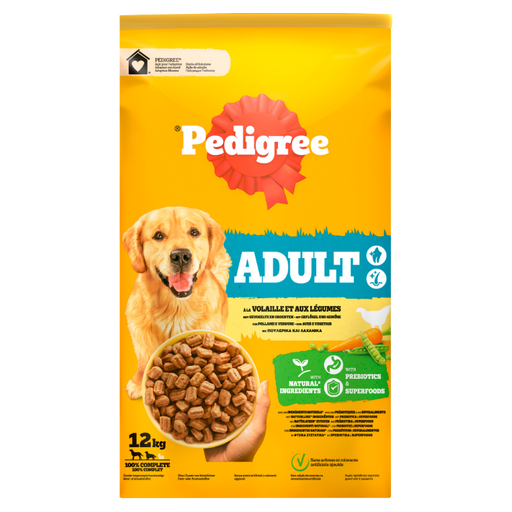
Why it suits this profile: A large pack of dry food for adult dogs that need a familiar, practical daily meal.
The product description states that this is a complete dry meal for adult dogs. Check the feeding table and current recipe on the packaging.
12 kg pack; dry kibble; the product description mentions support for digestion and dental health through fibre, protein and kibble texture.
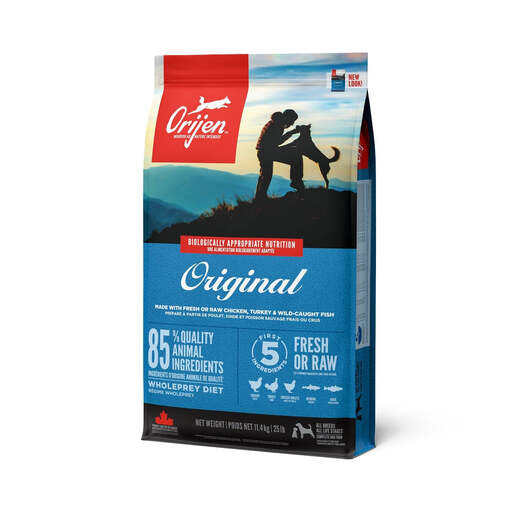
Why it suits this profile: For dog owners who value a detailed ingredients list, a high stated protein content and a grain-free recipe.
The product page specifies, among other details, 38% crude protein, 18% crude fat and a grain-free recipe. However, make sure this formulation is suitable for your dog.
11.4 kg pack; chicken, turkey, fish and egg listed as ingredients; according to the product information, complete food for all life stages.
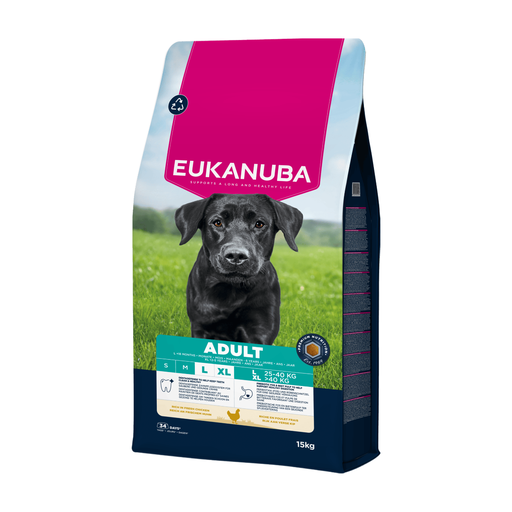
Why it suits this profile: Designed for adult large-breed dogs, with a large bag for households that need a substantial amount of food every day.
The age and breed group are clearly stated in the product description. This means you don’t have to choose food for small or medium-sized dogs based on pack size alone.
15 kg contents; chicken listed as a source; the product information mentions L-carnitine, glucosamine, calcium and a fibre blend, among other ingredients.
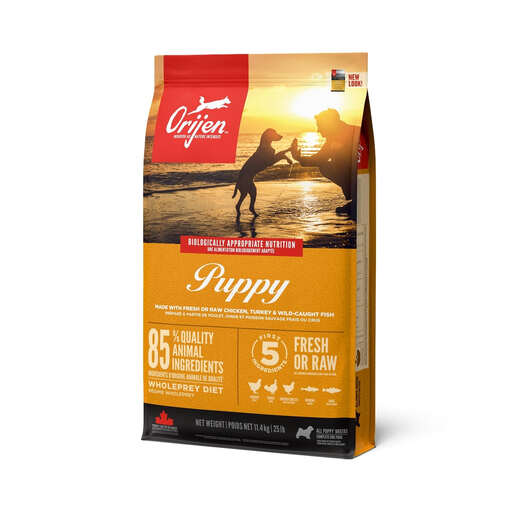
Why it suits this profile: For puppy owners looking for a large pack and wanting to follow the feeding table carefully during the growth stage.
The product description mentions puppies of all breeds and provides separate feeding guidelines for each age. Do not overfeed, and check whether it is suitable for your puppy’s expected adult size.
11.4 kg contents; grain-free recipe; according to the product information, 38% crude protein and kibble sized for puppy mouths.
We’ve put together a complete, up-to-date list of products that fully meet these strict selection criteria and the applicable European safety regulations.
Dry dog food is easy to portion and practical for everyday meals. Keep an opened bag sealed and store it in a cool, dry place. Wet food has a high moisture content and can be useful for dogs that prefer softer textures. Rosewood Dog Pâté Chicken & Beef Flavor, for example, is a soft pâté for adult dogs of all sizes; the product information lists chicken and beef as the main ingredients.
Combining dry and wet food can be practical, but adjust the total amount accordingly. Don’t automatically give the full recommended portion of both products. A gradual change is advisable for dogs with sensitive stomachs.
This depends on age, size, activity level and the food you choose. Adult dogs are often fed once or twice a day. Puppies usually need several smaller meals. Use the feeding table on the packaging as a starting point and adjust the amount according to body condition.
No. Price alone does not indicate whether a product is right for your dog. Compare the ingredients, analytical constituents, net quantity, life stage and price per kilogram. A complete food with a simple recipe may be more practical than a product packed with marketing terms.
Keep leftovers covered in the fridge and follow the instructions on the packaging. For the wet food examples mentioned, a maximum of 48 hours after opening is generally stated. Don’t leave wet food at room temperature for extended periods, and never use packaging that is bulging, leaking or damaged.
