
Vandaag of morgen in huis

Kwaliteit gegarandeerd

Welkomstaanbiedingen ontgrendelen: GRATIS bezorging | Tot 80% korting | Gratis 30 dagen JoyPlus-proefperiode
Download de app
A bag of dog food featuring a photo of meat, a grain-free label or a promise of a glossy coat may sound appealing. However, the front of the packaging does not always tell you everything you need to know. If you want to buy dog food without making unnecessary purchasing mistakes, it is worth checking the ingredients, nutritional values and suitability for your own dog.
These three pitfalls are particularly common:
For everyday use, complete food for adult dogs is a practical starting point. The label should include a legally recognised product name, feeding guidelines and analytical constituents. Pay attention to the difference between complete food and complementary food or treats.
A recipe for adult dogs is not automatically suitable for puppies, pregnant dogs or dogs with specific dietary needs. Also consider your dog’s size. Some dog kibble is intended for small breeds, while other varieties are specifically developed for medium-sized to large dogs.
Dog dry food often has a moisture content of around 9 to 12 per cent. Wet dog food contains considerably more moisture, which can make the crude protein percentage on the label appear lower. This does not necessarily mean that the product contains fewer animal-based ingredients.
So check the following:
A claim such as “more than 90% protein of animal origin” should be treated as a statement made by the brand. Always check the current packaging and ingredients list; do not treat the claim on its own as proof that the food is suitable.
A dog with a low activity level may have different energy requirements from an active working dog. The size of the kibble, daily amount and pack size also make a difference.
For sensitive dogs, a recipe with one clearly named animal protein source may make it easier to understand what your dog is eating. This is no guarantee that symptoms will disappear. If problems persist or you suspect a food allergy, it is sensible to consult a vet.
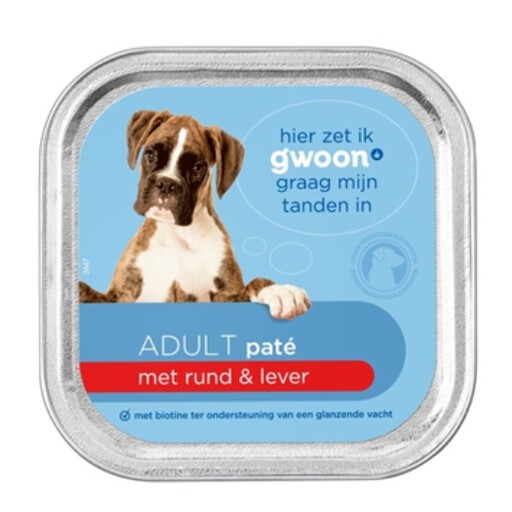
Why it suits this profile: The 150-gram portion is handy for trying the food first or adding to your dog’s daily menu. According to the product description, this wet food is intended for adult dogs.
The composition names beef and liver and gives a clear portion size. However, check the packaging to confirm that the food is labelled as complete.
Soft pâté texture, beef and liver listed as ingredients, and storage advice for opened portions.
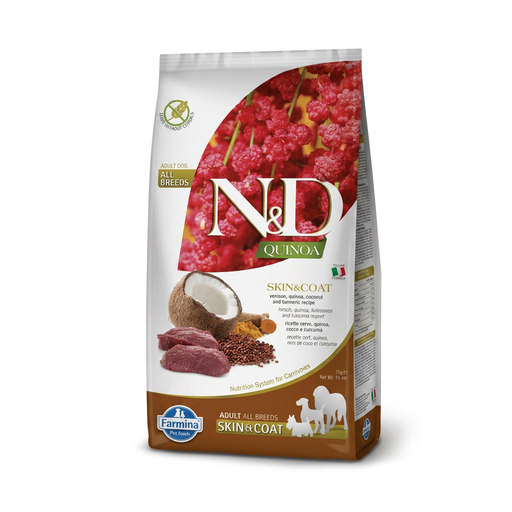
Why it suits this profile: According to the product information, this dry food formula is intended for adult dogs of medium-sized to large breeds, with venison listed as the protein source.
The packaging states the target group, analytical values and a gradual transition period of at least seven days. Grain-free remains a product specification, not a general guarantee of quality.
32% crude protein, 18% crude fat, a 7 kg pack, and venison, quinoa and linseed in the stated composition.
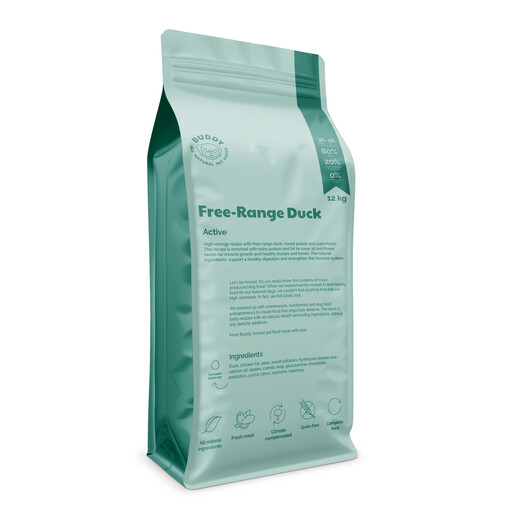
Why it suits this profile: The large bag is practical for a household with a large, active dog or several dogs. According to the product description, the recipe contains 80% animal-based ingredients.
The target group, ingredients and kibble size are stated in the product information. Store the bag tightly sealed and in a dry place to minimise waste.
12 kg pack, duck listed as an animal-based ingredient, and kibble measuring approximately 1.2 to 1.6 cm according to the product information.
We have put together a complete, up-to-date list of products that fully meet these strict selection criteria and the applicable European safety regulations.
Choose a product labelled as complete food for adult dogs. Also check the energy content, protein source, daily amount and suitability for your dog’s size and activity level.
Not necessarily. Grain-free dog food excludes grains, but may contain other carbohydrate sources. If symptoms keep recurring, it is best to discuss a suitable feeding plan and any elimination trial with your vet.
That depends on the daily portion, brand, pack size and moisture content. Dry food is often easier to store and simple to portion out for each meal. Wet food can be handy in small portions, but opened packs must be refrigerated and used promptly.
