
Vandaag of morgen in huis

Kwaliteit gegarandeerd

Welkomstaanbiedingen ontgrendelen: GRATIS bezorging | Tot 80% korting | Gratis 30 dagen JoyPlus-proefperiode
Download de app
Buying dog food seems straightforward – until you have to choose between wet dog food, dry dog food, puppy food, senior dog food and varieties for small, medium or large dogs. Packaging is often plastered with terms like “premium”, “natural” and “grain-free”, but such words don’t always tell you whether the food is right for your dog.
As a Joybuy Product Recommendation Officer, I filter product information on practical points: life stage, size, ingredients, analytical values, pack size and feeding advice. That way, you can compare dog food on verifiable data rather than just eye-catching claims.
A bag labelled “dog food with lamb” or “dog food with beef” might sound appealing. However, check the full ingredients list. Ingredients are usually listed in descending order. Also check whether the product is a complete and balanced dog food or intended as a complementary feed.
For example: a product with beef may also contain cereals, vegetable protein extracts, fats and animal by-products. That doesn’t automatically make it unsuitable, but it is important to know what you’re buying.
Grain-free dog food contains no cereals, but often includes other carbohydrate sources such as peas, potato or sweet potato. Grain-free is therefore not a universal quality benchmark. If your dog has no diagnosed sensitivity, there is usually no practical reason to select based on this term alone.
Look at the full composition and choose a recipe that suits your dog’s age, activity level and body condition.
A bag of 11.4 or 12 kg may have a lower price per kilo, but only if your dog tolerates the food well and finishes it within its shelf life. Once opened, dry food must be sealed properly and stored in a cool, dry place. For wet dog food, any leftovers should be refrigerated according to the label and used promptly.
A smaller pack is often more convenient when you want to try a new recipe first.
First, choose food for the correct life stage:
Always check the legal description and the recommended target group on the packaging. A product described as “complete food” in the product information may be offered as a full daily diet according to the feeding guide. Individual needs may vary.
Alongside the ingredients list, look at:
A higher value is not automatically better. An active dog may have different energy needs than a sedentary house dog. If your dog is overweight, has persistent digestive issues or a medical condition, consulting a vet is wiser than switching between lots of recipes yourself.
Dry dog food is easy to portion, clean to store and often suitable for households that want to keep a larger supply. The nutritional values are usually clearly listed per kilogram or percentage.
Wet dog food contains a lot of moisture and has a soft texture. That can be handy for dogs that prefer pâté or chunks in gravy. An opened tin or tray must be refrigerated and used according to the product advice.
You can combine them, but add up the total daily amount. Don’t feed the full recommended portion of dry food plus the full portion of wet food without adjusting.
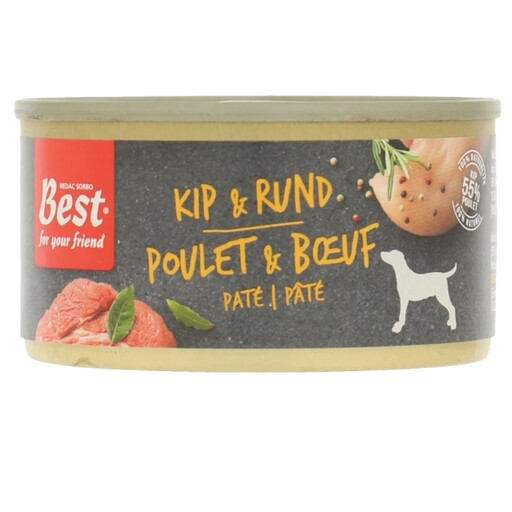
Why this profile fits: A soft wet food option for adult dogs of various sizes, handy when you’re looking for a simple meal with chicken and beef flavour.
The product information lists adult dogs as the target group and provides specific portion guidelines for different weights.
Pâté texture, tin packaging and a composition with chicken, beef, vitamins and minerals according to the product description.
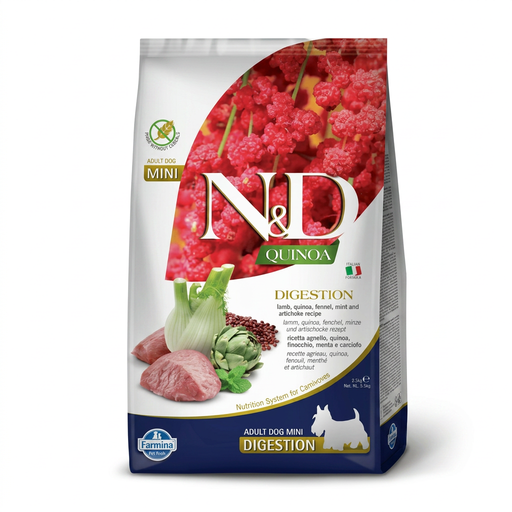
Why this profile fits: Designed for adult dogs of small breeds that may benefit from a straightforward dry food recipe with lamb and quinoa.
The product information states the target group, the 2.5 kg weight and the transition period of 7 to 10 days.
Contains according to the product specifications 25% crude protein, 12% fat, prebiotic ingredients and added glucosamine and chondroitin.
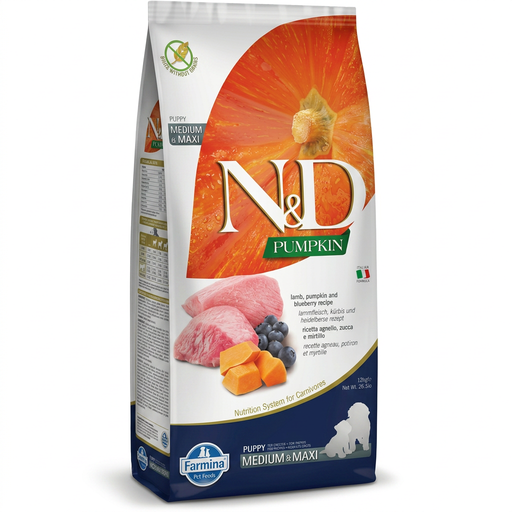
Why this profile fits: The product information describes this as puppy food for medium and large breeds, with a larger pack for daily use.
The target group and daily amounts per weight class are stated; always feed the portion according to the current packaging.
A grain-free formula according to the product description, with lamb, pumpkin and a stated transition period of at least 7 days.
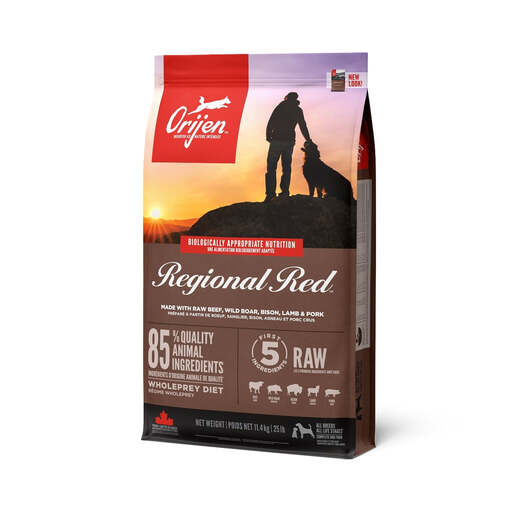
Why this profile fits: The large bag is practical for a household with multiple dogs or a dog that gets a larger daily amount of dry food.
The packaging states 11.4 kg and a complete food for dogs in all life stages; check the portion per dog individually.
According to the product specifications, the recipe includes beef, wild boar, lamb, fish, 38% crude protein and 18% fat.
Browse a current selection of dog food and compare recipes, pack sizes and target groups based on the available product specifications.
Look at a straightforward ingredients list, the target group and the stated nutritional values. A recipe that according to the product information has been developed for sensitive stomachs could be an option, but the effect varies from dog to dog. If vomiting, diarrhoea or other symptoms persist, a vet should assess the cause.
That depends on the daily portion, the moisture content and the price per kilogram. Don’t just compare the price per pack – calculate the cost per day. A large dry food bag can be economical, while small portions of wet food are handy for variety or portion control.
Unopened dog food remains usable until the date on the packaging, provided it is stored correctly. After opening, dry food must be sealed properly. Opened wet food belongs in the fridge and should be used within the stated time, often within 48 hours.
