
Vandaag of morgen in huis

Kwaliteit gegarandeerd

Welkomstaanbiedingen ontgrendelen: GRATIS bezorging | Tot 80% korting | Gratis 30 dagen JoyPlus-proefperiode
Download de app
Finding the right food seems simple enough – until you’re faced with dozens of bags, pouches and meal trays. Dog food is often marketed with terms like “premium”, “natural” or “grain-free”, but those words don’t always tell you whether the product is right for your dog. Even an attractive price per kilo can be misleading if your dog needs a large daily portion.
In this buying guide, you’ll learn what to look for in wet dog food, dry dog food and complete dog food. After that, you’ll find practical recommendations for different types of dogs.
“Premium dog food”, “with chicken” or “natural” on its own tells you very little about suitability. Always check whether the product is intended as complete food or as a complementary food. Complete dog food should state on the packaging which species and life stage it is suitable for.
Also pay attention to the difference between “with beef” and a recipe where beef is a key ingredient. Look at the full ingredient list and the analytical content of protein, fat, fibre and moisture.
Dog food for adult dogs, puppies and seniors doesn’t always have the same formulation or kibble size. A puppy, for example, has different nutritional needs during growth than an adult dog. For older dogs, a softer texture can be more comfortable, while small dogs often benefit from smaller kibble.
So don’t choose based on flavour alone. Consider age, body weight, activity level and breed size.
Wet dog food contains a lot of moisture. This can make a tray or tin seem good value, but you may need more grams per day than with dry dog food. With dry food, portion size plays a big role.
Therefore, compare the price per day, not just the price per bag or pack. Follow the feeding guidelines on the packaging and adjust the amount according to your dog’s condition and activity level.
Look for the label complete pet food for dogs when you want to use the product as a daily main meal. Products such as CESAR Classic Wet Dog Food, Bonzo meal pouches and various g’woon dog foods are described in the product information as complete food for adult dogs.
Always check the current packaging. The ingredients, feeding guidelines and suitability can vary between variants.
Choose puppy dog food when your dog is still growing. For adult dogs, there are variants for small, medium or all breeds. Senior food is tailored to older dogs according to the product description, but the exact starting age varies by brand.
Examples:
A flavour such as chicken, beef or lamb is no guarantee that the recipe consists solely of that meat type. The ingredients may also include grains, plant-based ingredients, oils, minerals and animal by-products.
If you’re looking for grain-free dog food, you need to check which carbohydrate sources are used instead. In the Eukanuba Grain Free variant, according to the product information, peas and gluten-free sweet potato are used. A grain-free recipe isn’t automatically necessary for every dog. If your dog has a known intolerance or special dietary needs, it’s wise to consult a vet.
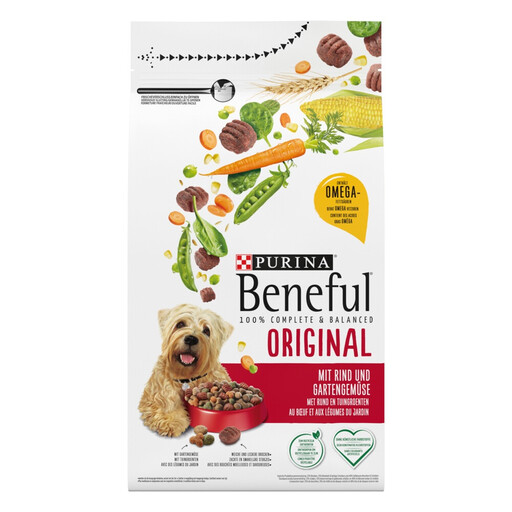
Why this fits the profile: A straightforward bag of dry food for adult dogs of various weights, with feeding guidelines for multiple weight categories.
The product information lists the ingredients and daily amounts per weight. This lets you compare portions based on concrete data rather than just what’s on the front of the pack.
Dry food with 1.4kg content, beef and vegetable flavour, and stated levels of 15% protein and 8% fat.
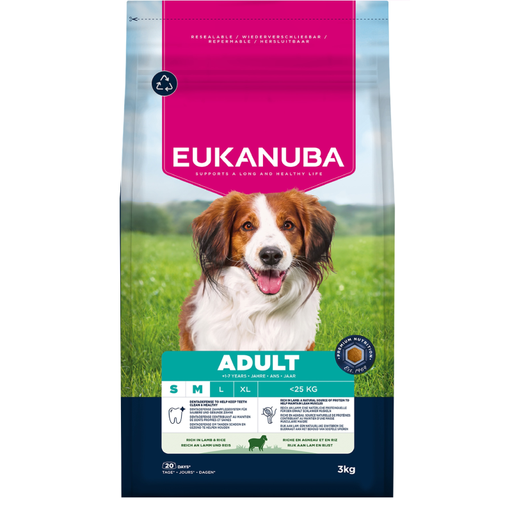
Why this fits the profile: Designed for adult small and medium dogs aged 1 to 7 years, with lamb and rice as key ingredients.
The age and breed size are clearly stated in the product description. This stops you from choosing a general food without checking whether the variant suits your dog.
3kg dry food with lamb and rice, plus a fibre blend with prebiotics according to the product information.
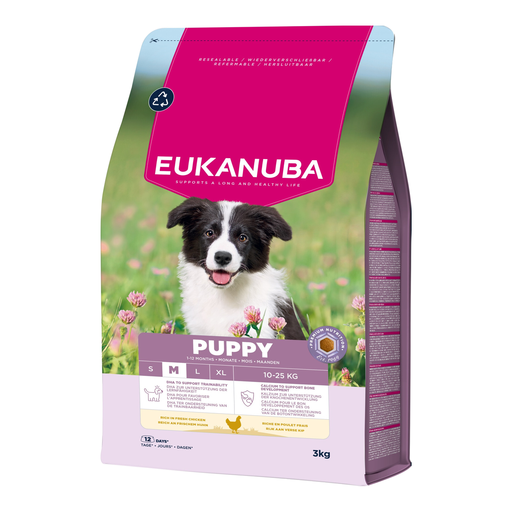
Why this fits the profile: For owners of a medium-sized puppy who want to tailor their dog’s nutrition carefully during the growth stage.
The product description specifically mentions medium-sized puppies aged 1 to 12 months. This means the life stage can be checked in advance.
3kg dry food with chicken; according to the product information, the formula contains DHA, calcium and a fibre blend with prebiotics.
We’ve put together a full, up-to-date list of products that fully meet these strict selection criteria and comply with current European safety regulations.
Not necessarily. Wet dog food generally contains more moisture and has a soft texture. Dry dog food is easy to store and simple to portion. The choice depends on your dog’s preference, nutritional needs and your daily routine. With both types, check whether it is complete food.
This varies by product. For different wet foods, a period of up to two days in the fridge is stated. Seal the pack and always follow the label. Dry food lasts longer after opening if you reseal the bag properly and store it in a cool, dry place.
Use the feeding guideline on the packaging as a starting point. The correct number of grams depends on body weight, age, activity and condition. Weigh portions if possible and adjust them gradually if your dog gains or loses weight. For medical or special dietary questions, consult a vet.
