
Vandaag of morgen in huis

Kwaliteit gegarandeerd

Welkomstaanbiedingen ontgrendelen: GRATIS bezorging | Tot 80% korting | Gratis 30 dagen JoyPlus-proefperiode
Download de app
Buying dog food seems simple, until you have to choose between dry food, wet food, grain-free dog food, puppy food and dozens of varieties with chicken, fish, lamb or beef. Marketing claims such as “premium”, “natural” and “high in protein” may sound appealing, but they only tell you so much when considered on their own. Always check them against the full ingredients list and feeding guidelines.
This guide helps dog owners compare dog food using verifiable information. That way, you can avoid paying too much for a pack that isn’t right for your dog’s age, size or daily activity level.
Grain-free dog food contains no grains, but that doesn’t automatically mean every dog needs it or would benefit from it. Check which ingredients replace the grains, such as peas, chickpeas or potato starch. Also look at the full analysis of protein, fat, fibre and moisture.
A grain-free formula may be a suitable choice if you want to avoid grains, but your dog’s individual tolerance and nutritional needs matter more than what’s on the front of the pack.
Read a claim such as “96% animal protein” carefully. Sometimes the percentage refers to the proportion of protein from animal sources, not the total amount of meat in the product. The ingredients list and analytical constituents provide more context.
So check:
A 12 or 15 kg bag of dry dog food may lower the price per kilogram, but only if your dog tolerates the food well and you use it before its best-before date. Once opened, the food may lose its aroma and quality if the bag isn’t sealed properly.
For a small dog, an 800 g or 2.5 kg pack may be more practical. Store dog food in a cool, dry place in a sealed container, and always follow the storage information on the pack.
Dog food for adult dogs isn’t the same as puppy food or senior dog food. Puppies have different nutritional needs from adult dogs. Also check whether the food is intended for small, medium or large breeds.
A product labelled complete food is intended to be fed as a dog’s main daily food, according to the instructions. Dog biscuits, treats and some small cups of wet food, on the other hand, are complementary foods. Don’t give these in unlimited amounts alongside your dog’s main meal.
For example, the g'woon Marrow-Filled Dog Biscuits label says that treats should provide no more than 10% of the daily calorie intake. The biscuits contain grains with gluten and are intended as a reward or training treat, not as a complete meal.
Choose chicken dog food, fish dog food, lamb dog food or beef dog food based on the ingredients and your dog’s preferences. A flavour name on the front doesn’t always mean that ingredient makes up the largest proportion of the product.
If your dog has a known allergy or sensitivity, it’s a good idea to check the full ingredients list. If you’re unsure about what to feed your dog, or symptoms persist, speak to a vet.
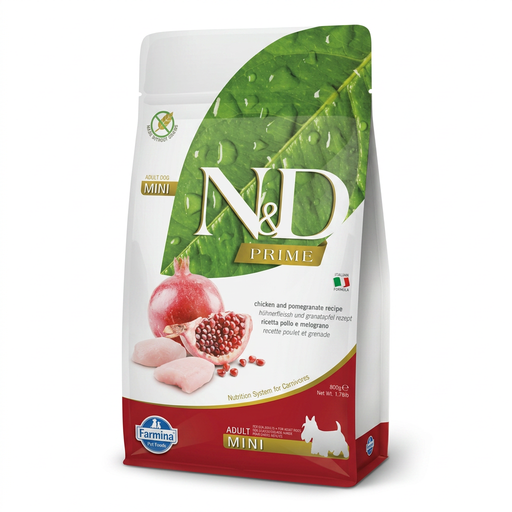
Why it suits this profile: The 800 g pack is a manageable size for owners who want to try a smaller quantity with an adult small-breed dog first.
The product information gives the intended audience, feeding guidelines and a gradual seven-day transition plan. That means you don’t have to buy a large bag straight away before you know whether your dog likes it.
For adult small-breed dogs; 34% crude protein and 18% crude fat; made with chicken and herring, according to the product information.
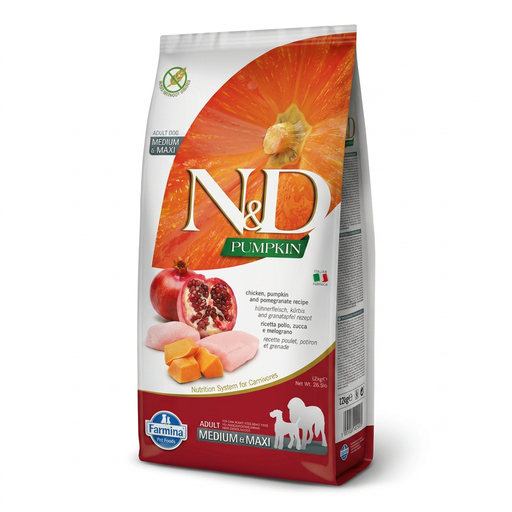
Why it suits this profile: This large pack is intended for adult medium and large dogs that eat dry food every day.
The product page clearly states the intended audience, net weight and ingredients. This makes it easier to compare the size and ingredients instead of relying on the term “premium dog food”.
12 kg pack; chicken listed as a protein source; grain-free recipe with pumpkin, according to the product description.
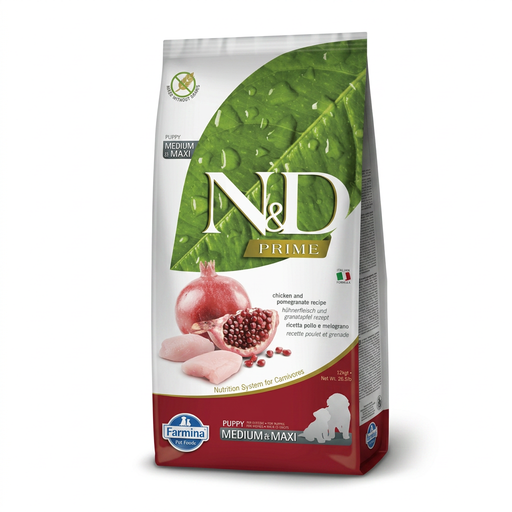
Why it suits this profile: This puppy food is intended for medium and large-breed puppies and includes feeding guidelines by weight.
The pack includes a seven-day transition plan and daily feeding amounts for different weights. This helps you avoid a sudden change of food or serving too much.
12 kg pack; 34% crude protein and 18% fat according to the analytical information; chicken is the main ingredient.
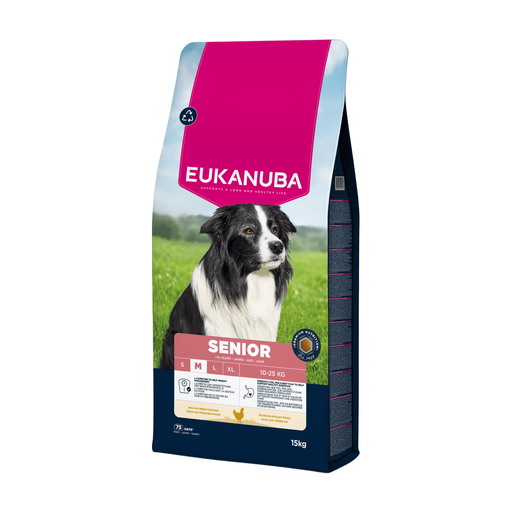
Why it suits this profile: The product description is aimed at medium-sized senior dogs aged 10 and over that need a daily food tailored to their age.
The age and size guidance is clearly stated. According to the product description, the formula contains fibre, L-carnitine, glucosamine and omega fatty acids. Check the current pack for the full specification.
15 kg pack; chicken listed as a protein source; specifically labelled for medium-sized senior dogs.
We’ve put together a full, up-to-date list of products that meet these strict selection criteria and the applicable European safety regulations.
Dry food is easy to portion and store. Wet dog food has a high moisture content and can add variety or suit dogs that prefer softer food. Just check whether the product is a complete food. A 150 g cup may also be intended as a single meal for adult small-breed dogs, as is the case with some CESAR products.
Dog biscuits and marrow-bone treats are complementary foods. The g'woon Marrow-Filled Dog Biscuits have a crunchy outside and soft filling, but contain grains with gluten. Give treats as rewards and take them into account when working out your dog’s total daily food allowance.
When changing food, a gradual transition over around seven days is a practical guideline if this is stated on the pack. Keep an eye on your dog’s stools, appetite and weight, and adjust the portion to suit their activity level and body condition.
This varies by product and packaging. Keep dry food sealed in a cool, dry place and follow the best-before date on the label. Store opened wet food in the fridge and follow the instructions; some products state that they can be kept for up to 48 hours.
Use the table on the pack as a starting point. The right amount depends on your dog’s weight, age, breed size and activity level, as well as the calorie content of the specific food. Treats count towards the total daily amount.
Not as a rule. Grain-free dog food may suit a particular ingredient preference, but “grain-free” doesn’t tell you everything about its nutritional value. Always compare the ingredients, analytical constituents and whether the product is labelled as a complete food.
