
Vandaag of morgen in huis

Kwaliteit gegarandeerd

Welkomstaanbiedingen ontgrendelen: GRATIS bezorging | Tot 80% korting | Gratis 30 dagen JoyPlus-proefperiode
Download de app
Choosing the right dog food seems straightforward until you start comparing labels, nutritional claims and different pack sizes. Are you looking for wet dog food, dry dog food or puppy food for a puppy, adult dog or senior? In that case, the ingredients, nutritional status and portion size are more important than eye-catching packaging or isolated marketing claims.
As a Joybuy Product Recommendation Officer, I filter product information down to the practical points. This helps you see more quickly which dog food suits your dog’s age, size, activity level and preferences.
Packaging may prominently highlight “dog food with chicken”, beef or lamb. Always check the complete ingredients list. For example, CESAR Classic Chicken states that the product contains 4% chicken within the category of meat and animal derivatives. The flavour name does not automatically mean that chicken is the main ingredient.
Also look out for terms such as “rich in animal ingredients” or “high protein”. These are only useful points of comparison when you consider the crude protein content alongside the ingredients list.
Complete dog food is intended to be used as a daily food according to the product information. Even so, you should check which life stage and dog size it has been developed for. Dog food for adult dogs is not automatically suitable for puppies. Puppy food often follows different nutritional guidelines and has an adjusted energy value.
A senior dog may benefit from a recipe tailored to its age and activity level according to the label. If your dog has medical problems, known allergies or a prescribed diet, it is advisable to consult your vet.
A 12 kg bag may seem attractively priced, but dog food gradually loses freshness after opening. Calculate the price per kilogram and check how many grams your dog needs each day. For a small dog, a 3 kg pack may be more practical than a large bag that remains open for months.
The same applies to wet dog food. According to the product information, an opened pack often needs to be refrigerated and used within 48 hours or no more than two days.
First choose between:
Also check the recommended age and expected adult weight. A medium-sized adult dog has different kibble-size and portion recommendations from a small dog. Products such as Eukanuba Life Care Adult Medium Chicken are aimed at medium-sized adult dogs aged 1 to 7 years according to the product description. According to the product information, Eukanuba Life Care Senior Small Chicken is intended for small senior dogs aged 11 years and over.
At a minimum, compare:
A higher protein percentage does not automatically mean that the food is more suitable for your dog. A dog with a low activity level may have different energy needs from an active or working dog. Adjust the portion according to weight, activity level and body condition, as stated on the packaging.
Check whether the product is described as “complete” or as complementary food. A complete product can be used as a daily meal according to the label. When changing food, a gradual transition over approximately 7 to 10 days is a practical guideline mentioned for several products. This makes it easier to see how your dog responds to the new food.
When choosing grain-free dog food, it is important not to focus solely on the “grain-free” claim. Check which carbohydrate sources are used, such as peas, potato, sweet potato or pulses. Grain-free food is not automatically necessary for every dog.
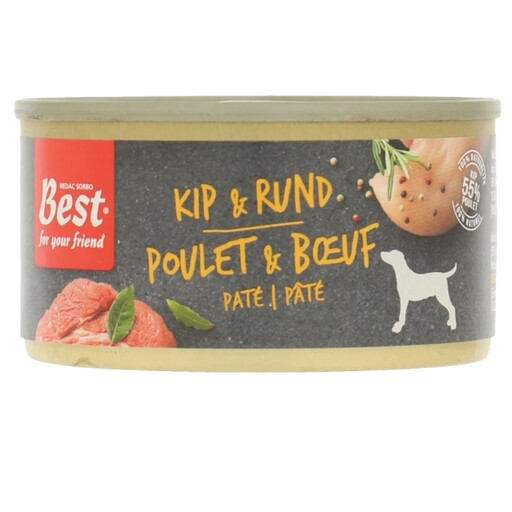
Why it suits this profile: According to the product information, this soft pâté is intended for adult dogs of all sizes. The portion recommendations for 5, 10, 20 and 30 kg make comparisons straightforward.
The product page lists chicken and beef in the ingredients and states that it is complete food for adult dogs. Always check the current packaging as well.
Soft pâté texture, chicken and beef variety, and instructions for refrigerated storage after opening.
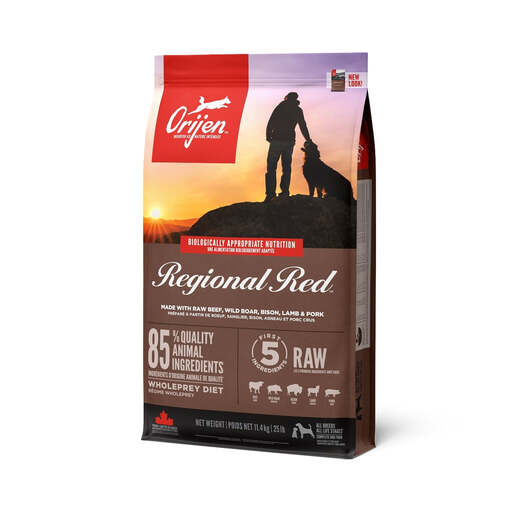
Why it suits this profile: The product information lists beef, wild boar, bison, lamb and pork as animal ingredients. The food is described as complete for dogs at all life stages.
The label provides specific analytical values, including 38% crude protein and 18% crude fat. This allows you to compare the nutritional claim with measurable data.
11.4 kg pack, several animal protein sources, and stated levels of protein, fat, fibre and moisture.
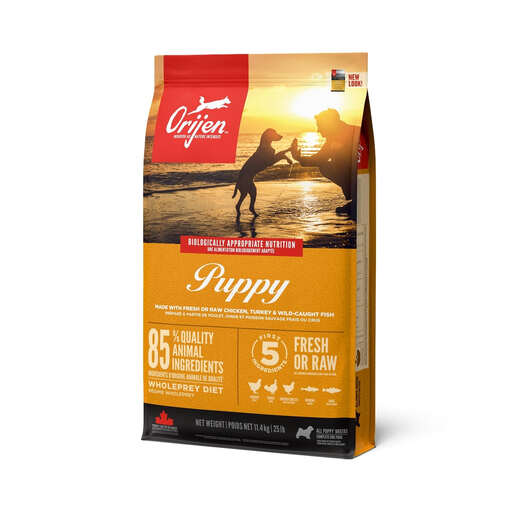
Why it suits this profile: According to the product description, this dry dog food has been developed for puppies of all breeds and features a kibble size intended to suit puppy jaws.
The product information states 38% crude protein, 18% fat and a gradual transition over 7 to 10 days. This provides more guidance than simply relying on a claim on the front of the pack.
Grain-free formula according to the product description, 11.4 kg contents and feeding guidelines for different puppy stages.
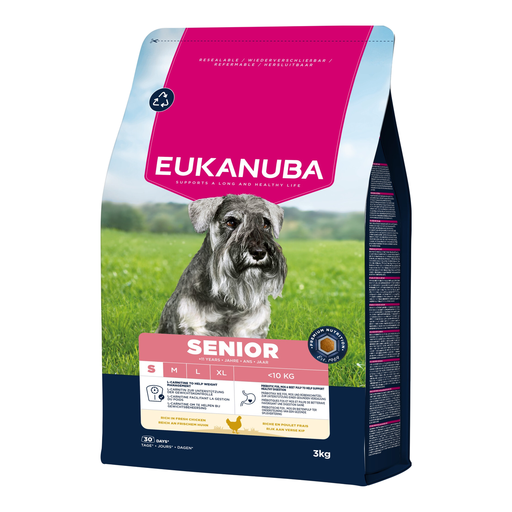
Why it suits this profile: The product description focuses on small senior dogs aged 11 years and over, and lists chicken, fibre, L-carnitine, glucosamine and chondroitin.
The age and size guidance is clearly stated. You should also check your dog’s daily portion and body condition rather than following the senior claim alone.
Designed for small senior dogs, 3 kg pack and dry kibble with several added nutrients.
We have put together a complete, up-to-date list of products that fully meet these strict selection criteria and the applicable European safety regulations.
Not necessarily. Wet dog food generally has a higher moisture content and a soft texture. Dry dog food is easier to portion and store. The right choice depends on your dog’s preferences, the product’s nutritional status and your daily routine.
This varies by product. For the pâté and tinned products mentioned, the instructions usually state that leftovers should be refrigerated and used within 48 hours or no more than two days. Always check the packaging, as the manufacturer’s instructions take precedence.
Gradually mix the new food with the current food over approximately 7 to 10 days. Increase the proportion of the new product step by step, and monitor your dog’s appetite, stools and body condition. If problems persist, it is advisable to seek advice from a vet.
