
Vandaag of morgen in huis

Kwaliteit gegarandeerd

Welkomstaanbiedingen ontgrendelen: GRATIS bezorging | Tot 80% korting | Gratis 30 dagen JoyPlus-proefperiode
Download de app
A bag of dog food featuring words such as “premium”, “natural” or “grain-free” can quickly catch your eye. However, these terms do not automatically mean the food is right for your dog. Age, size, activity level and the complete recipe matter more than the front of the packaging.
In this buying guide, you’ll learn what to look for in dry dog food, wet dog food, puppy food, adult dog food and senior dog food. We’ll also discuss when dog food with chicken, lamb or fish may be a sensible choice, and what to consider when choosing grain-free recipes.
“Containing chicken” or “containing lamb” does not always mean that this ingredient makes up the largest part of the recipe. Check the ingredients list and look at the percentages. In some products, fresh ingredients, dried ingredients and animal by-products are listed separately.
A recipe containing several animal protein sources may be less suitable if you specifically want to try a single protein source. If you suspect food sensitivities, consulting a vet is wiser than carrying out lengthy experiments yourself.
Grain-free means that grains have been replaced with ingredients such as peas, lentils or sweet potato. That does not automatically make the food more suitable for every dog. Look at the overall nutritional value, energy content and how well your dog tolerates it.
A product can be complete food without containing grains, but the term “grain-free” alone says nothing about whether it is personally suitable for your dog.
A large bag is not always better value. If your dog needs only a small portion, the bag may remain open for a long time. This affects freshness and ease of use.
Also pay attention to the size and shape of the kibble. Dog food for small dogs often contains smaller kibble than dog food for large dogs. Check the feeding guidelines on the packaging too, and adjust the amount according to your dog’s weight, activity level and body condition.
Puppy food is intended for growth and is usually tailored to age and breed size. A large-breed puppy has different nutritional needs from a small adult dog. So check the legally defined product name, such as “complete food for puppies of medium and large breeds”.
For adult dogs, choose adult dog food that suits their daily activity level. An active working dog may have different energy requirements from a dog that mainly goes on short walks. For older dogs, there are recipes specifically marketed as senior dog food, for example for small dogs from a certain age onwards.
The packaging should state whether the product is complete pet food or complementary pet food. Complete food is intended as a daily meal when used according to the instructions. Dog biscuits and dog treats, toppers and many small rewards are usually complementary and do not replace a meal.
This distinction is particularly important with wet food. A tray or pouch may contain complete wet food, but a snack or treat will not. It is best to give treats in moderation; INABA Fun Bites, for example, states that treats should provide no more than 10% of the daily calorie intake.
The ingredients list shows what the food contains, while the analytical constituents provide percentages for protein, fat, fibre, ash and moisture, among other things. Do not compare dry and wet food solely by looking at the protein percentage on the label. Wet food often contains much more moisture, so the figures cannot be compared directly.
Also consider:
A higher price does not automatically mean a better choice. Even with premium dog food, you still need to compare life stage, portion size and ingredients.
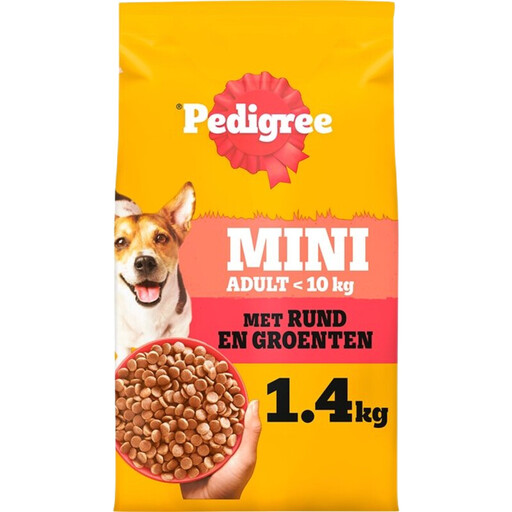
Why it suits this profile: The 1.4 kg bag is a manageable choice for anyone buying dog food for small dogs for the first time. This variant is intended for adult dogs weighing up to 10 kg.
The product information specifies the target group, portions by body weight and a kibble size for small breeds. This allows you to assess the choice based on concrete information rather than relying solely on the flavour name.
Dry food with 22% crude protein and 13% fat according to the product specifications; the packaging gives a daily guideline of up to 140 g for dogs weighing 10 kg.
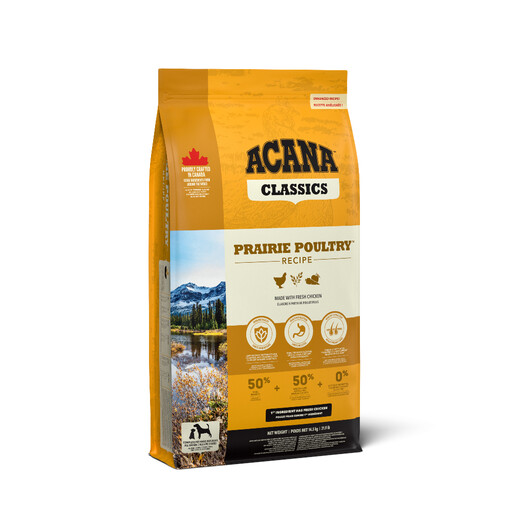
Why it suits this profile: Suitable for dog owners looking for a large bag of adult dog food with chicken and turkey, supplemented with oats and plant-based ingredients.
The recipe lists specific percentages, including 25% chicken meal, 8% fresh chicken and 25% oats. This allows you to compare the marketing claim “50% animal ingredients” with the complete ingredients list.
Complete food for all life stages according to the product information; 27% crude protein, 16% fat and 12% moisture.
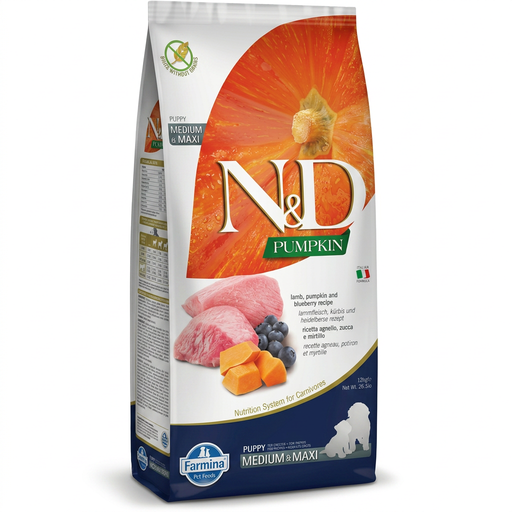
Why it suits this profile: Designed for puppies of medium and large breeds. The large bag is suitable for households that serve larger portions every day.
The legally defined product name, weight-based feeding guidelines and advice to switch over within seven days make the target group and usage easy to verify.
Grain-free recipe with lamb, herring, pumpkin, peas and chickpeas; according to the product information, this is complete puppy food.
We’ve put together a complete, up-to-date list of products that fully meet these strict selection criteria and the applicable European safety regulations.
Both types can form part of a complete diet. Dry food is easy to portion and store. Wet food generally contains more moisture and may be easier for some dogs to eat. Always check that it is labelled “complete food” and adjust the total amount when combining dry and wet food.
Mix the new food gradually with the old food, usually over approximately seven to ten days. Follow the instructions on the packaging and monitor your dog’s stools, appetite and body condition. If problems persist, ask a vet for advice.
This depends on the product, packaging and storage practices. Seal dry food airtight and store it in a cool, dry place. Use opened wet food according to the label and refrigerate any leftovers. Always check the best-before date and batch information on the packaging.
