
Vandaag of morgen in huis

Kwaliteit gegarandeerd

Welkomstaanbiedingen ontgrendelen: GRATIS bezorging | Tot 80% korting | Gratis 30 dagen JoyPlus-proefperiode
Download de app
A bag of dog food featuring terms such as “natural”, “premium” or “grain-free” is bound to catch your eye. However, these claims do not automatically mean the food is right for your dog. Age, body size, activity level and the overall composition matter more than eye-catching wording on the front of the packaging.
The price per bag can also be misleading. A small pack may seem cheaper, while a larger bag offers better value per kilo. On the other hand, a large pack may be less practical if your dog does not tolerate the food well or if it takes too long to use up.
“Dog food with chicken” or “dog food with lamb” sounds clear enough, but check where the ingredient appears in the composition and in what form it has been added. “With chicken” does not always mean that chicken is the main ingredient. So check both the ingredients list and the analytical constituents.
Grain-free dog food may be suitable for certain dietary choices, but it is not a general requirement for every dog. Grain-free recipes often use other sources of carbohydrates, such as peas, lentils, chickpeas or sweet potato. Consider the overall composition and discuss any specific dietary needs with a vet.
Dog snacks, training rewards and soft treats also provide energy. This can make a relatively significant contribution, particularly for small dogs. INABA Fun Bites, for example, are labelled as complementary feed and are therefore not a replacement for a complete meal. Keep the number of snacks limited and adjust the main meal if necessary.
Puppy food is intended for growth and has different nutritional guidelines from food for adult dogs. For older animals, senior dog food may suit a lower activity level, but the right choice also depends on weight and condition.
Also consider your dog’s expected body size:
The label states whether the product is a complete meal or complementary pet food. Dry dog food and many types of wet dog food are developed as complete nutrition. A snack or treat is usually complementary.
One example is INABA Fun Bites Chicken with Sweet Potato. The product information states that it contains 82% moisture and is intended to be given as a reward between meals. So do not use it as your dog’s daily main food. For wet food such as Rosewood Dog Pâté, the product information specifically states that it is intended as complete food for adult dogs.
Do not compare products based on protein percentage alone. Also look at fat, fibre, moisture, ash and the recommended serving size. Wet food generally contains a lot of moisture, meaning you feed more grams per day than with dry kibble. This makes comparisons based solely on the price per kilo less straightforward.
When buying, also check:
Brand claims about digestion, coat condition or weight maintenance, for example, should be read as information provided by the manufacturer. According to the brand’s own research or product description, such properties are sometimes attributed to particular ingredients or formulas. They are not a guarantee for every animal.
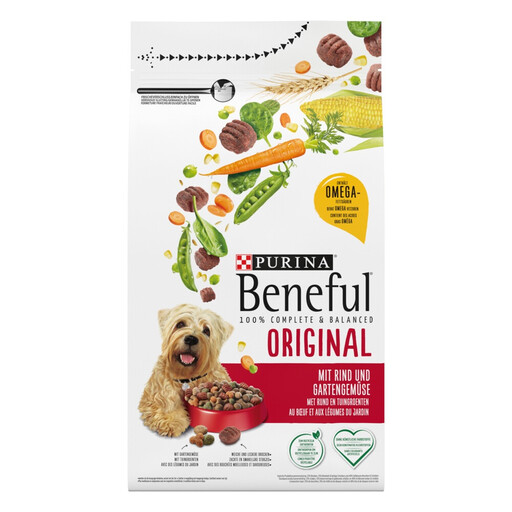
Why it suits this profile: A smaller 1.4 kg bag is practical for trying the food first and helps minimise waste while your dog gets used to a new dry food.
The packaging provides clear serving guidelines by body weight and recommends a gradual ten-day transition.
Complete and balanced adult food, with 15% protein, 8% fat and whole grains as a source of fibre, according to the product information.
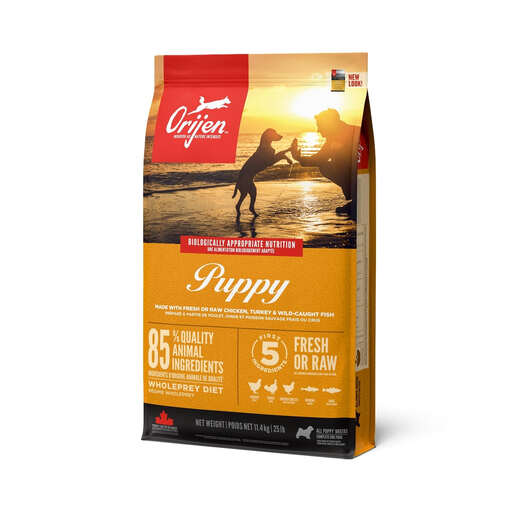
Why it suits this profile: Designed for puppies of all breeds, with a large pack for households feeding several portions every day.
The product page lists all ingredients, a minimum of 38% crude protein and a gradual transition over seven to ten days.
Grain-free puppy food with chicken, turkey, egg and fish; the bag contains 11.4 kg and the kibble size is described as suitable for puppies.
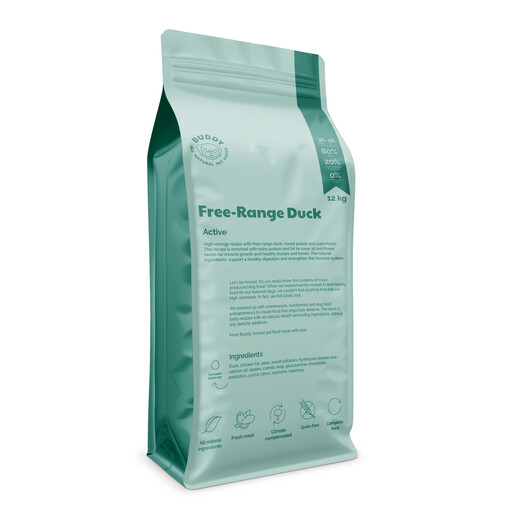
Why it suits this profile: The composition is aimed at large, active and working dogs that use more energy every day.
The product information identifies the target group and lists the main ingredients and added amounts per kilogram.
According to the specifications, it contains 80% animal ingredients, duck as the main protein source and comes in a 12 kg bag.
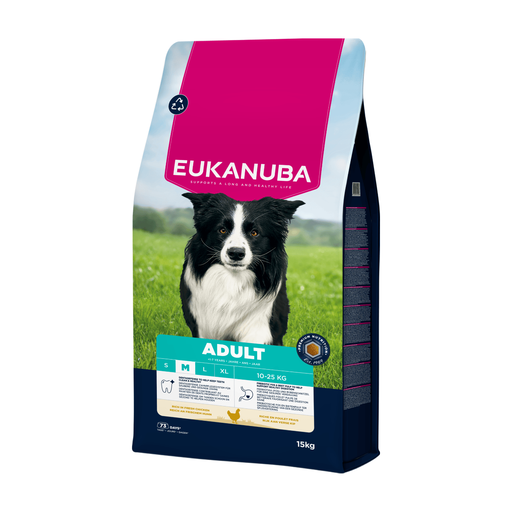
Why it suits this profile: A 15 kg pack is suitable for regularly feeding a medium-sized adult dog.
The product description explicitly states that it is intended for dogs aged one to seven years and for medium-sized adult dogs.
Dry dog food with fresh chicken, a fibre blend with FOS and beet pulp, and a complete nutritional formula according to the manufacturer.
We have put together a complete, up-to-date list of products that fully meet these strict selection criteria and the applicable European safety regulations.
Mix the new food gradually with the old food over approximately seven to ten days. Start with a small proportion of new food and increase it step by step. Keep an eye on your dog’s stools, appetite and behaviour. If problems persist, it is advisable to consult a vet.
Always follow the best-before date and store the bag in a cool, dry place, securely sealed. Wet food should generally be kept in the fridge after opening and used within one to two days, depending on the label. Choose a pack size that matches your dog’s consumption, so the food is not left open for months.
This depends on your dog’s weight, the daily serving size and the type of food you choose. Dry food is often easy to compare by the kilo. With wet food, the higher moisture content means that more grams are needed per day. Also include dog snacks in your monthly budget and compare packs by price per meal, not just by the price of the bag.
