
Vandaag of morgen in huis

Kwaliteit gegarandeerd

Welkomstaanbiedingen ontgrendelen: GRATIS bezorging | Tot 80% korting | Gratis 30 dagen JoyPlus-proefperiode
Download de app
Buying dog food seems straightforward—until you have to choose between dry dog food, wet food, grain-free recipes, puppy food and formulas for different breed sizes. Packaging is often covered with terms such as “natural”, “premium” and “rich in meat”. On their own, these claims say little about whether a product is suitable for your dog.
As a Joybuy Product Recommendation Officer, I filter product information based on practical criteria: life stage, breed size, ingredients, analytical constituents, pack size and feeding guidance. This helps you avoid paying more for a promise that does not match your dog’s needs.
Grain-free dog food contains no grains, but that does not mean every dog needs it. Grain-free recipes often use peas, chickpeas, potatoes or sweet potatoes instead. Always review the complete ingredient list and check whether the food is labelled as complete food.
If your dog has a known sensitivity to an ingredient, do not rely solely on the front of the packaging. Consult a vet if symptoms persist; dietary choices are not a substitute for professional assessment.
A protein content of 32% or 38% may sound appealing, but it is only one part of the analysis. Fat, fibre, moisture, calcium and phosphorus also matter. Wet food, for example, contains considerably more moisture than kibble, so the percentages cannot be compared directly.
Also consider the energy content and feeding guidelines. An energy-dense food may require fewer grams per day than a recipe with a lower fat content.
Puppy food is formulated for growth, while adult dog food is intended for maintenance. Senior dog food is designed for older animals, but the recommended age varies by brand and pack size. A small dog weighing 12 kg will also need different kibble dimensions and feeding quantities from a large dog.
Always check whether the product is intended for:
The label should clearly state whether the product is complete pet food. Complete food can be given as a daily staple according to the feeding instructions. Complementary food, such as some pure meat products, is not automatically suitable for this purpose.
Also check the feeding guidelines on the packaging. The recommended portion is a starting point and should be adjusted according to body condition, activity level and weight. Always provide fresh drinking water.
Ingredients are generally listed in descending order by weight. Pay attention to the named animal sources, such as chicken, lamb or salmon, but also check whether several animal protein sources are included. This is particularly relevant if you are specifically trying a single-protein diet.
The analytical table typically includes:
A claim such as “supports healthy skin and coat” should be understood as a product claim made by the brand. According to information provided by Farmina, certain recipes contain omega-3 and omega-6 fatty acids. This does not guarantee a particular result for every dog.
An 11.4 kg bag may be convenient for a large breed or a multi-dog household, but less practical if you have a small breed that eats slowly. A smaller bag helps limit waste while you are still finding out whether your dog accepts the food.
Store dry dog food in a cool, dry place and seal the bag securely. Following a food change, several product descriptions recommend a gradual transition over approximately 5 to 10 days. This can reduce the likelihood of temporary digestive problems.
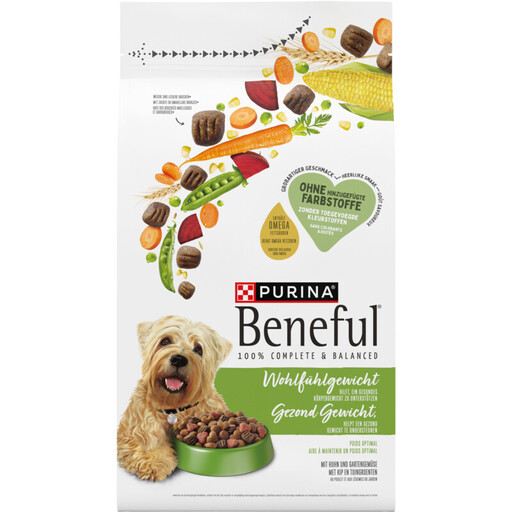
Why it fits: A manageable bag for adult dogs. According to the product description, this variety contains 20% less fat than the original Beneful recipe.
The packaging identifies adult dogs as the target group and provides feeding guidance. Still adjust the portion according to activity level and body condition.
Complete food for adult dogs; a combination of crunchy kibble and soft pieces.
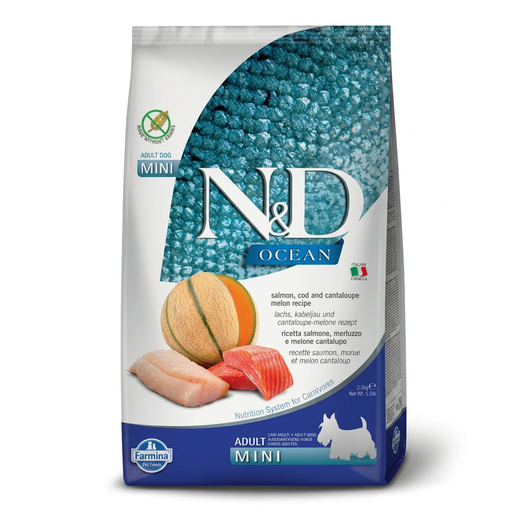
Why it fits: Designed for adult small-breed dogs whose owners want salmon-based food in a smaller pack.
The grain-free formulation is clearly stated, but also check the other protein sources, such as herring and chicken.
32% crude protein, 18% crude fats and a recipe listing fresh and dried salmon among its ingredients.
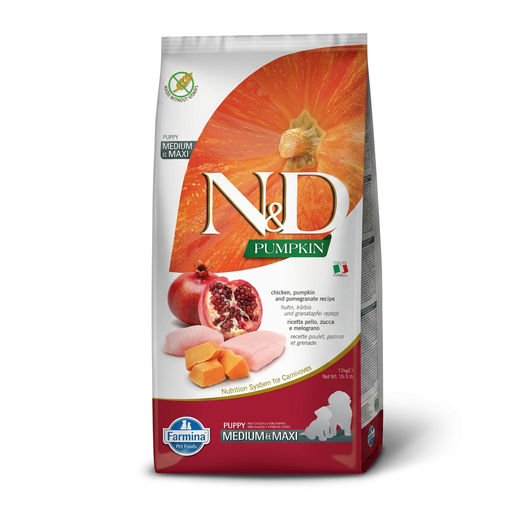
Why it fits: For puppies of medium and large breeds that need a larger pack and a dedicated puppy recipe.
The table provides portions by age and weight. Use this information instead of feeding extra based on guesswork.
Complete puppy food; 34% crude protein and 20% crude fats according to the product information.
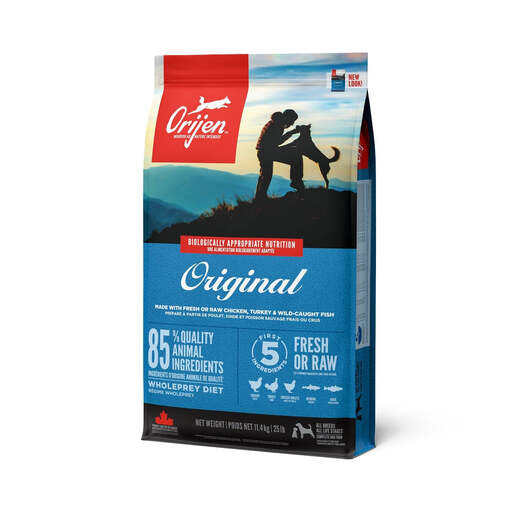
Why it fits: A large format for dog owners who use substantial quantities of dry food and are looking for a recipe with chicken, turkey, fish and egg.
The high protein and fat content makes portion control especially important. Follow the feeding schedule and introduce the food gradually over 7 to 10 days.
38% crude protein, 18% crude fats and a stated energy content of 3860 kcal/kg.
Browse a current selection of dog food and compare life stage, breed size, ingredients and pack size.
Dry dog food is easy to measure and store. It is often a practical choice for daily meals and larger pack sizes. Wet dog food contains plenty of moisture and can appeal to dogs that prefer a softer texture. Cesar Turkey & Veal, for example, is a complete wet food for small adult dogs and contains 83% moisture according to the product information. Once opened, any remaining food should be refrigerated and used within a maximum of two days.
Combining foods is possible, but make sure you account for the calories and nutrients provided by both products. Do not simply replace part of your dog’s daily kibble portion with wet food without adjusting the quantities.
Do not choose solely based on terms such as “hypoallergenic dog food” or “for sensitive stomachs”. Check the protein sources, fibre, fat content and transition instructions. Eukanuba Life Care Adult Small/Medium Lamb & Rice lists lamb, rice and a fibre blend containing prebiotics and beet pulp in its product description. According to the brand’s description, the formula is intended for small and medium adult dogs. Discuss recurring gastrointestinal problems with a vet.
None of these flavours is automatically suitable for every dog. Chicken-based dog food is widely available, lamb-based food may suit dogs whose owners prefer that protein source, and salmon-based food offers a fish-based alternative. Above all, consider the complete formulation, nutritional values and your dog’s tolerance.
Follow the best-before date and storage instructions on the packaging. Seal dry food airtight and store it in a cool, dry place. Choose a pack size that you can use within a reasonable period. For wet food, refrigerate it after opening and follow the specific time limit stated on the label.
