
Vandaag of morgen in huis

Kwaliteit gegarandeerd

Welkomstaanbiedingen ontgrendelen: GRATIS bezorging | Tot 80% korting | Gratis 30 dagen JoyPlus-proefperiode
Download de app
A bag of dog food featuring words such as “natural”, “grain-free” or “high protein” can quickly catch your eye. But an eye-catching front label doesn’t always tell you whether the food is right for your dog. The best choice depends on their age, breed size and activity level, as well as the ingredients and how you plan to feed it.
As a Joybuy Product Recommendation Officer, I check product information against verifiable features. This helps you find the right dog food more quickly, whether you have a puppy, an adult or senior dog, or a dog with specific preferences.
A high protein percentage may sound appealing, but it’s also worth checking the protein source, fat content and full ingredients list. For example, Orijen Puppy Formula lists a minimum of 38% crude protein, with chicken, turkey, egg and fish among its key ingredients. This makes it specifically suited to growing puppies, not automatically to every adult dog.
Grain-free dog food contains no grains, but that doesn’t automatically make it a better fit. Some recipes use peas, chickpeas, lentils or potato instead. So check the overall ingredients and feeding guidelines. Farmina N&D Pumpkin, for example, lists chicken, herring, pumpkin, peas and chickpeas among its ingredients.
Dog treats are intended as rewards or supplements. For example, the MeatyWay Chicken and Apple 100g clearly states that the product is for intermittent or supplementary feeding only. Always provide fresh water, and remember to account for the extra calories in your dog’s daily feeding plan.
Puppy food, adult dog food and senior dog food differ in their nutritional purpose and recommended portions. Breed size also matters:
Food suited to a medium-sized adult dog may not be right for a large-breed puppy or a small senior dog.
Look for complete and balanced dog food on the label if it’s going to be your dog’s main daily meal. Wet dog food can be a complete food, but check each product. The CESAR 150-gram portions are described as complete wet food for adult dogs, while the MeatyWay treat is intended as a supplement only.
Check at least the following:
If you’re choosing a specific recipe, such as dog food with lamb and rice or dog food with fish, also check whether it contains other animal protein sources. Eukanuba Life Care Dog Adult Small/Medium Lamb & Rice contains chicken as well as lamb. This is important if you’re looking to avoid a particular protein source.
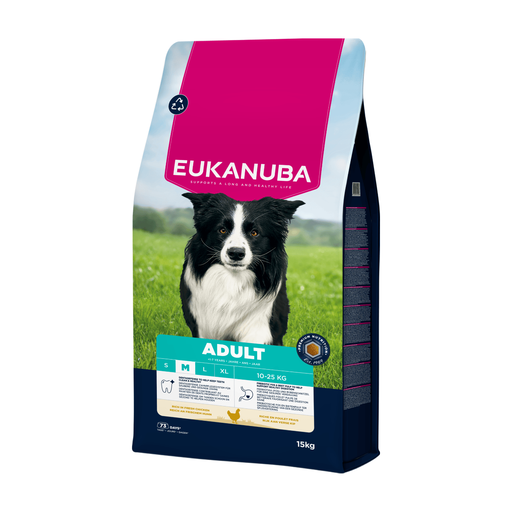
Why it suits this profile: A large bag of dry dog food for medium-sized adult dogs aged 1 to 7 years. The product information lists chicken, FOS, beet pulp and daily portion guidelines.
The life stage and breed size are clearly stated, so you don’t have to rely on terms such as premium dog food alone.
15 kg bag; chicken listed as an ingredient; recipe for medium-sized adult dogs.
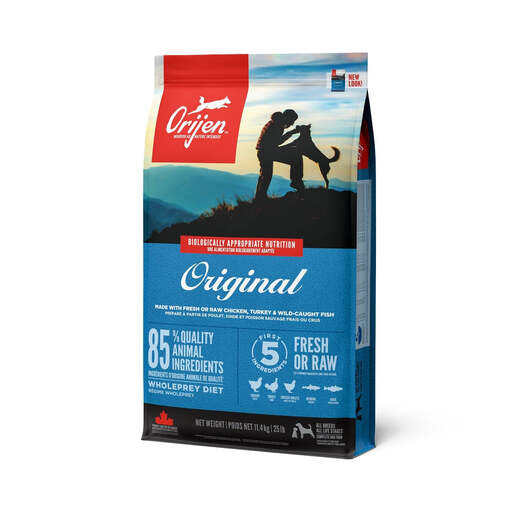
Why it suits this profile: For anyone looking for a grain-free formula with several animal ingredients. The listed ingredients include chicken, turkey, herring, cod and egg.
The product information lists both the ingredients and analytical constituents, including 38% crude protein and 18% crude fat.
Grain-free; 11.4 kg bag; chicken, turkey and fish in the listed ingredients.
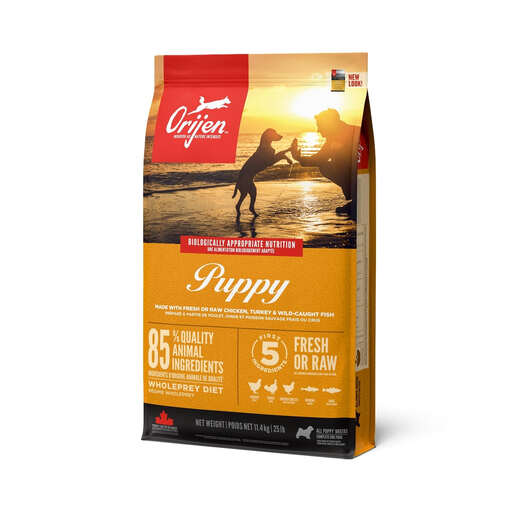
Why it suits this profile: Formulated for puppies of all breeds. The product information lists 85% animal ingredients, a minimum of 38% crude protein and a transition period of 7 to 10 days.
The life stage, kibble size and feeding frequency are stated clearly. This helps avoid confusing puppy food with food for adult dogs.
11.4 kg bag; grain-free recipe; guidelines for 3 to 4 meals a day for young puppies.
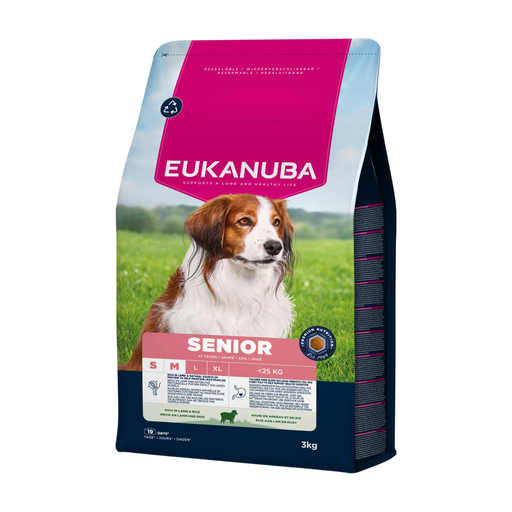
Why it suits this profile: For senior dogs of small and medium breeds from around 7 years old. The recipe contains lamb, rice, chicken and a fibre blend.
The packaging isn’t focused on flavour alone: the product information clearly defines the age group, breed size and nutritional purpose.
Small 3 kg bag; lamb and rice listed as ingredients; glucosamine and chondroitin mentioned in the product description.
We’ve put together a complete, up-to-date list of products that meet these strict selection criteria and the applicable European safety regulations.
Dry dog food is easy to portion and simple to store in a sealed container. Large bags, such as 11.4 or 15 kg, can be good value if your dog tolerates the food well and you store it somewhere dry.
Wet dog food has a high moisture content and is often sold in portions. CESAR offers 150-gram portions, as well as a multipack with different flavours. Store opened portions according to the label; the product information states that they can be kept in the fridge for up to 48 hours.
If you want to change your dog’s food, do so gradually over several days. Keep an eye on their stools, appetite and body condition. If symptoms persist or you have a question about a therapeutic diet, it’s best to speak to a vet.
It depends on their weight, age, breed size and activity level, as well as the number of calories per gram. Start with the feeding guidelines on the packaging, then adjust the portion carefully according to your dog’s body condition. Treats count as extra food.
No. The term premium dog food alone doesn’t guarantee that it’s suitable. Compare the ingredients, analytical constituents, life stage, breed size and whether it’s labelled as a complete food. A simpler recipe may suit your dog better than a complex one with lots of ingredients.
Always check the date and storage instructions on the packaging. Dry food should be kept in a sealed container in a cool, dry place. Opened wet food should be refrigerated and used within the stated time. If the packaging is damaged, leaking or looks unusual, don’t feed the food to your dog.
