
Vandaag of morgen in huis

Kwaliteit gegarandeerd

Welkomstaanbiedingen ontgrendelen: GRATIS bezorging | Tot 80% korting | Gratis 30 dagen JoyPlus-proefperiode
Download de app
There’s a huge choice of dog food: from dry and wet food to puppy and senior food, grain-free recipes and options with chicken, lamb or fish. But attractive packaging doesn’t always tell you whether a food is right for your dog. Age, size, activity level and the full ingredients list matter more than the slogans on the front.
“Made with chicken”, “with lamb” or “with fish” doesn’t automatically tell you how much of that ingredient the food contains. So check the ingredients list and look for the words complete pet food. According to the product information, only then is it intended as a complete daily diet. Complementary food, treats and some trays or pouches aren’t suitable as a replacement for every meal.
Grain-free dog food may suit a particular dietary preference or a dog whose vet has recommended a specific diet. However, grain-free doesn’t automatically mean the food is easier to digest or more suitable. Grain-free recipes often replace grains with ingredients such as peas, chickpeas or sweet potato. So check the full ingredients list and keep an eye on how your dog responds.
The feeding guide on the packaging is a starting point. An active dog often has different energy needs from a less active pet. Age, size and body condition also matter. Weigh your dog’s daily portion rather than relying on guesswork. If your dog’s weight changes noticeably, they have ongoing digestive problems or you’re unsure about their diet, it’s best to speak to your vet.
Puppies have different nutritional needs from adult or older dogs. When choosing puppy food, check the stated age range and the size of the adult breed it’s intended for. The range includes, for example, recipes for small and medium-sized puppies, as well as food for medium and large adult dogs.
Here are some useful terms to look out for:
Look for the words complete and balanced dog food or “complete food” on the packaging. Also check the analytical constituents, such as protein, fat, fibre and moisture. Don’t compare dry and wet food on protein percentage alone: wet food contains much more moisture, so the percentages aren’t directly comparable.
For dry dog food, kibble size, resealability and the recommended daily amount are also practical considerations. For wet food, check the storage instructions after opening and the use-by date.
If you’re looking for dog food with chicken, lamb or fish, it’s worth checking the full recipe. A lamb-based product, for example, may also contain chicken. This matters if you’re trying to avoid a particular animal protein.
When your dog has a sensitive stomach, it’s important to make the change gradually. Over several days, mix a little more of the new food into the old food each time. A recipe described as containing easily digestible ingredients isn’t automatically suitable for every dog.
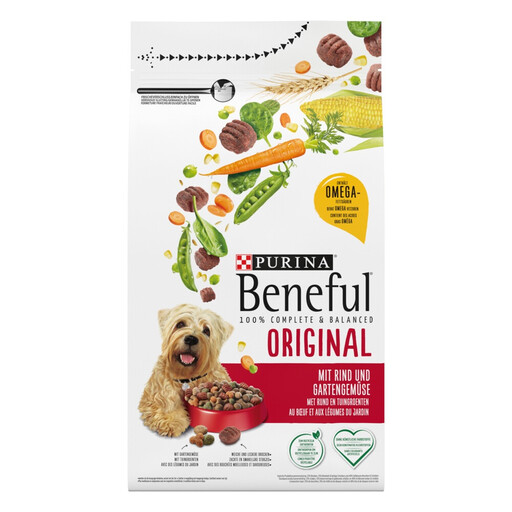
Why it suits this buyer: This is dry food for adult dogs of all weights, in a 1.4 kg pack. The product information lists beef, vegetables and wholegrains.
The product page describes it as 100% complete and balanced food, and includes portion guidelines for different weights.
Dry kibble with 15% protein and 8% fat, plus feeding guidelines for dogs weighing 5 to 30 kg.
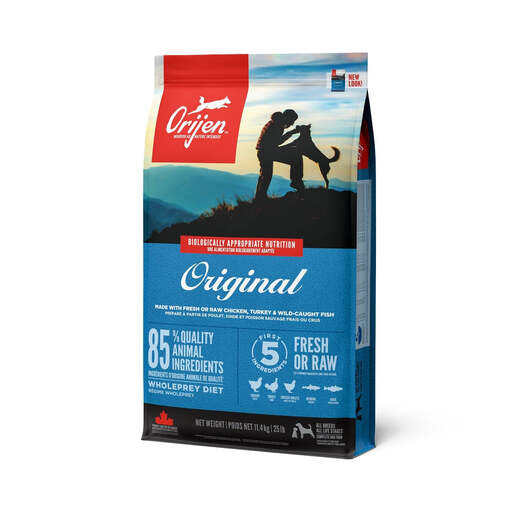
Why it suits this buyer: According to the product description, the recipe contains chicken, turkey, herring, cod and egg. It’s intended as complete food for dogs at every life stage.
The ingredients and analytical constituents are listed in detail, so you don’t have to rely on the front of the packaging alone.
38% crude protein, 18% crude fat and an 11.4 kg pack; the product description also mentions omega-3 and omega-6.
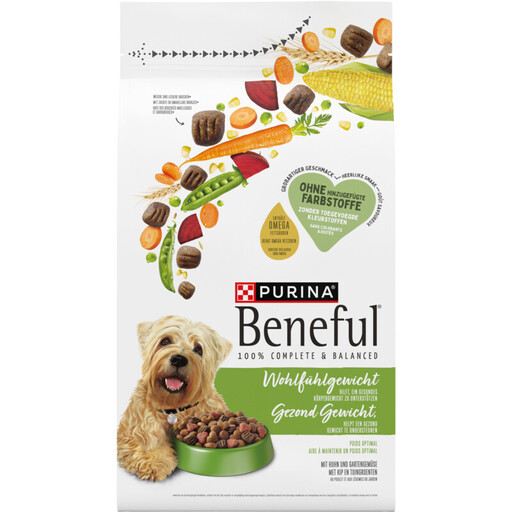
Why it suits this buyer: According to the product information, this adult food is designed for owners who want to keep a close eye on their dog’s portions and fat intake.
The product description states that it contains 20% less fat than the original Beneful recipe. You should still adjust the portion to your dog’s activity level and body condition.
Complete food for adult dogs, combining crunchy kibble with soft pieces.
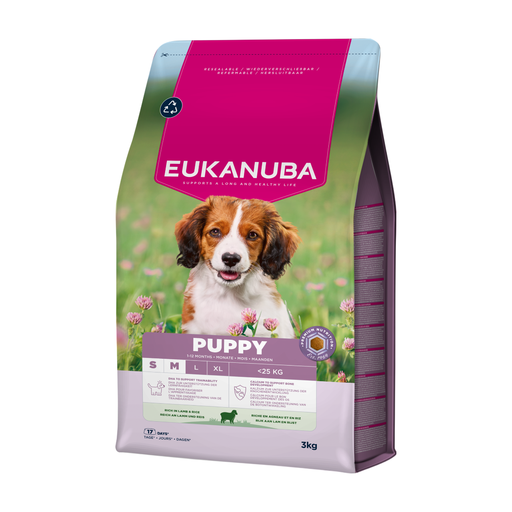
Why it suits this buyer: According to the product description, this puppy food is intended for small and medium-sized puppies aged 1 to 12 months, with lamb and rice.
The age range and breed size are clearly specified, making it easier to distinguish puppy food from adult dog food.
The product information lists calcium, DHA, prebiotics and a complete, balanced recipe for growing dogs.
We’ve put together a complete, up-to-date list of products that meet these strict selection criteria and the applicable European safety requirements.
Neither is automatically better for every dog. Dry food is easy to portion and store. Wet food contains more moisture and may appeal to dogs who aren’t keen eaters. For both types, check that the food is complete and adjust the portion to your dog’s energy needs.
A gradual transition of around a week is usually a good rule of thumb. Start with a small amount of the new food and increase it step by step. Keep an eye on your dog’s stools, appetite and general condition. If problems persist, it’s best to ask your vet for advice.
It depends on your dog’s weight, age, activity level, breed size and the energy content of the product. Use the table on the packaging as a starting point. Weigh out the portion and adjust it if your dog gains or loses weight, or becomes noticeably more or less active.
