
Vandaag of morgen in huis

Kwaliteit gegarandeerd

Welkomstaanbiedingen ontgrendelen: GRATIS bezorging | Tot 80% korting | Gratis 30 dagen JoyPlus-proefperiode
Download de app
Buying dog food seems simple until you compare labels, flavours, kibble sizes and nutritional claims. Attractive packaging says little about whether the food is suitable for your dog. Age, size, activity level, preference for wet or dry food and any food sensitivities are more important than a striking slogan.
Pay particular attention to these three common pitfalls:
Puppy food is not the same as dog food for adult dogs. A growing puppy has different nutritional needs from an adult or senior dog. So check the information on the label:
For large breeds, kibble size is also relevant. Very small kibble can be eaten quickly, while larger kibble may not be practical for every small dog. Also check the recommended daily amount and adjust it according to your dog’s weight, activity level and body condition.
Look for the wording complete and balanced dog food or a similar legally recognised designation. Complete food is intended to be given as daily nutrition according to the instructions on the packaging. A complementary product is not intended for this purpose.
Among other things, compare the following on the label:
A higher protein percentage is not automatically suitable for every dog. A calm dog may have different energy needs from an active working dog. Brand product information may mention additional benefits. Treat such claims with caution: according to the brand’s own research or product information, certain fibres, fatty acids or kibble shapes may support particular functions. Do not regard this as a medical guarantee.
With chicken dog food, lamb dog food, duck dog food or venison dog food, it is sensible to look beyond the flavour name. Check how much of the named ingredient is actually included in the recipe and whether other animal protein sources have also been added.
For dogs with a sensitive reaction to food, a straightforward recipe may be more practical. Dog food for sensitive dogs is not, however, a medical treatment. If symptoms such as itching, diarrhoea or weight loss persist, it is advisable to consult a vet.
Wet dog food generally contains a lot of moisture and has a soft texture. Dry dog food is easier to portion and store. You can combine both types, as long as you keep an eye on your dog’s total food and energy intake.
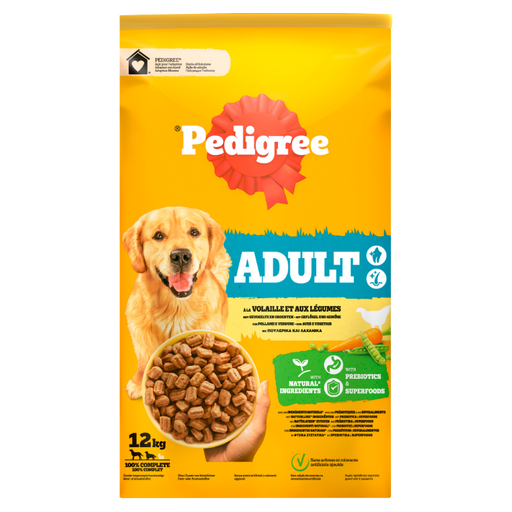
Why it suits this profile: The 12 kg bag is practical for households with one or more adult dogs that eat dry food every day. The product information describes it as a complete dry meal for adult dogs.
The nutritional information specifies an adult target group and a clear pack size, making it less likely that you will choose puppy food or a bag that is too small.
12 kg of dry food; intended for adult dogs; according to the product information, with fibre, vitamin E, zinc and B vitamins.
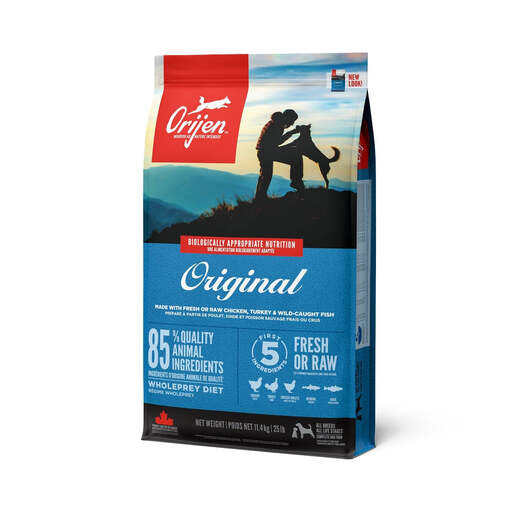
Why it suits this profile: According to the product specification, this dry food contains 38% crude protein and 18% crude fat, with chicken, turkey, herring, cod and egg listed as ingredients.
The analysis data and ingredients are clearly listed. This allows you to assess the composition rather than relying solely on the term grain-free.
11.4 kg pack size; 38% crude protein; omega-3 and omega-6 fatty acids are listed in the product specification.
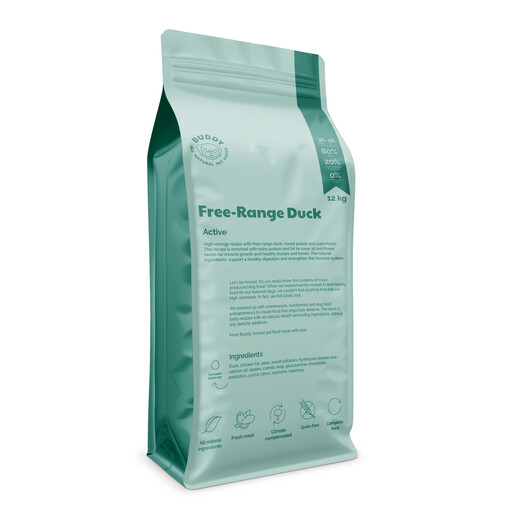
Why it suits this profile: According to the product information, this food is aimed at large, active and working dogs. The listed ingredients include duck, sweet potato and salmon oil.
The target group and kibble size of approximately 1.2 to 1.6 cm are specified. However, check that this size is suitable for your dog.
12 kg pack; duck as the named primary ingredient; according to the product specification, free from grains and gluten.
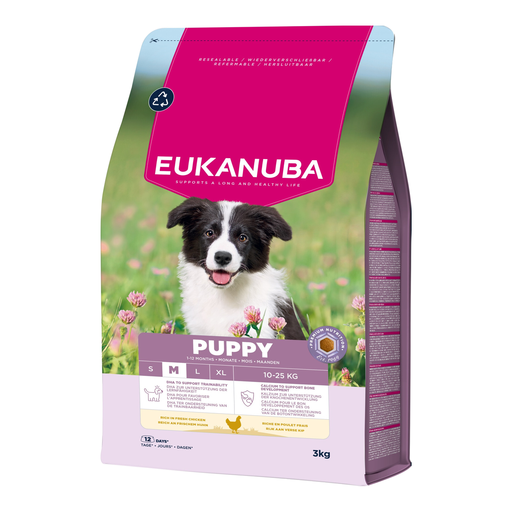
Why it suits this profile: According to the product information, this dry food is intended for puppies of medium-sized breeds aged 1 to 12 months, with chicken listed as an important protein source.
The age range and breed size are clearly specified. This reduces the risk of accidentally buying adult dog food for a puppy.
3 kg pack; intended for medium-sized puppies; according to the brand, the formula contains DHA, calcium and a fibre blend.
We have put together a complete, up-to-date list of products that fully meet these strict selection criteria and the applicable European safety regulations.
That depends on the moisture content, energy content and daily portion. Dry food is often easier to store in large packs. Wet food can be useful for dogs that prefer a soft texture. Compare the daily cost, not just the price per pack.
Unopened dog food remains usable until the date shown on the packaging, provided it is stored correctly. Once opened, dry food must be sealed properly. Wet food should generally be kept in the fridge; always follow the manufacturer’s specific instructions.
Check that the label states that it is complete food and specifies which life stage it is suitable for. Also look at the composition, analytical constituents, feeding guidelines and any restrictions relating to breed, age or activity level. If you suspect a food sensitivity, professional advice is recommended.
