
Vandaag of morgen in huis

Kwaliteit gegarandeerd

Welkomstaanbiedingen ontgrendelen: GRATIS bezorging | Tot 80% korting | Gratis 30 dagen JoyPlus-proefperiode
Download de app
Buying a new bag of dog food seems simple, until you have to choose between dry dog food with chicken, lamb, fish, grains or a grain-free recipe. Age and size also make a difference: puppy food is not the same as dog food for adult dogs, and a small dog will often need different kibble dimensions from a medium or large breed.
Marketing copy can sometimes make the choice more difficult. Focus mainly on verifiable information on the label, rather than words such as “natural”, “premium” or “for a sensitive stomach”.
“With chicken” or “with beef” does not automatically mean that the product consists mainly of that type of meat. Check the ingredients list and see whether percentages are provided. Some products, for example, specify only a limited proportion of the named animal ingredient.
Grain-free dog food contains no grains, but that alone does not tell you whether it is suitable for your dog. Grain-free recipes may contain other sources of carbohydrates, such as peas, chickpeas, potato or sweet potato. That is why you should compare the full composition and analytical constituents.
Adult dogs, puppies and senior dogs do not have the same nutritional needs. Breed size is also important. Kibble for small breeds is often smaller, while dog food for medium and large breeds may have a different nutritional profile and kibble size.
For everyday use, choose a product that the label identifies as complete and balanced nutrition for the appropriate life stage. Also check whether it is intended for puppies, adult dogs or seniors. A product for all life stages can be practical, but the feeding guidelines remain the most important factor.
With puppy food for medium and large breeds, it is especially important to follow the recommended quantity and age category on the packaging. Do not automatically give more just because your puppy is growing quickly.
Analytical constituents such as crude protein, fat, crude fibre, ash and moisture help you compare products objectively. A higher protein percentage does not automatically make a product suitable for every dog. Also consider activity levels, body condition and individual tolerance.
Examples from the range:
These figures are meaningful only when considered alongside your dog’s life stage, weight and activity level.
Look at the order of the ingredients and check which quantities are actually provided. Dog food with lamb, for example, may contain both fresh lamb and dehydrated lamb. In dog food with chicken, chicken may be listed as a clearly named ingredient, while the product also contains grains and plant-based ingredients.
Claims about digestion, skin, coat or joints should not be interpreted as medical effects. According to Farmina’s product information, the Quinoa Digestion variant contains ingredients including inulin, fructooligosaccharides, fennel, mint and artichoke. The manufacturer positions this product for adult dogs of small breeds, with a focus on digestion. It is not a substitute for advice from a vet if problems persist.
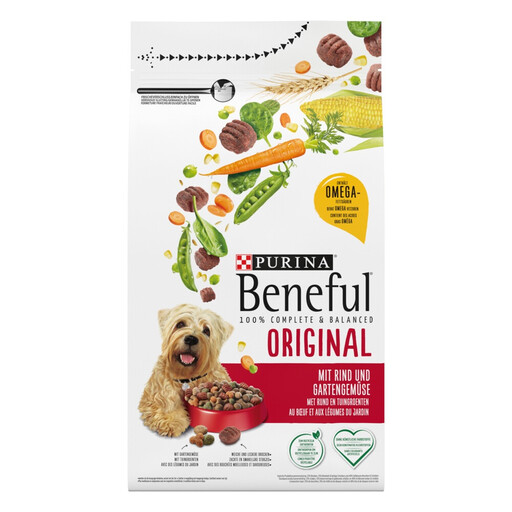
Why it suits this profile: A 1.4 kg bag is practical when you want to see how your adult dog responds before buying a larger quantity. According to the product information, the recipe contains grains, 15% meat and animal derivatives, and 8% fat.
The composition and analytical values are provided, so you can compare “with beef and vegetables” with the actual ingredients list.
Complete nutrition for adult dogs; 1.4 kg pack; feeding advice tailored to weight and activity level.
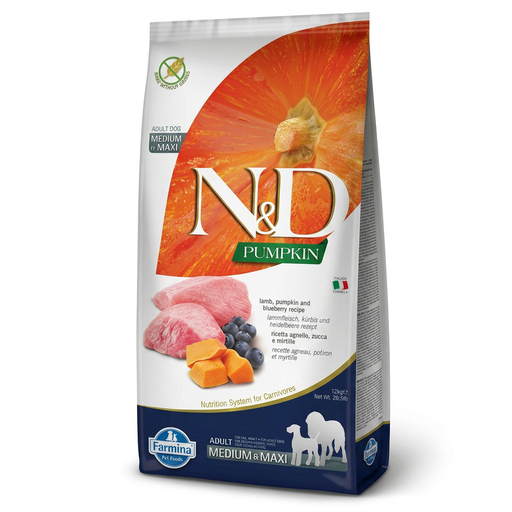
Why it suits this profile: This large pack is intended for adult dogs of medium and large breeds. According to the product information, the grain-free recipe contains lamb, herring, pumpkin, peas and chickpeas.
The target audience, net quantity and feeding guidelines are clearly specified. This helps you avoid ordering a small-breed recipe for a large dog.
12 kg content; grain-free composition; lamb and herring listed as animal ingredients.
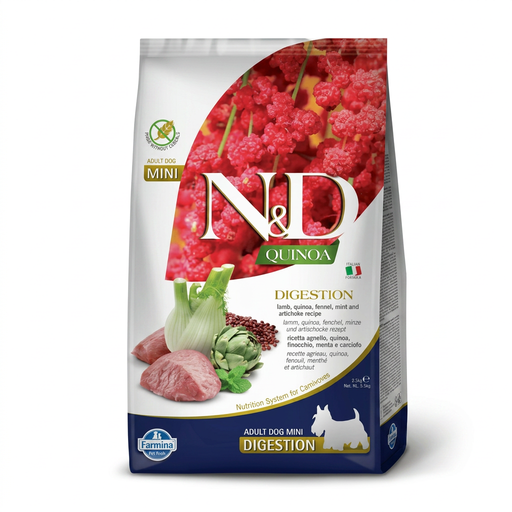
Why it suits this profile: This variant is aimed at adult dogs of small breeds. According to the product information, the product contains ingredients including lamb, quinoa, prebiotics, fennel, mint and artichoke.
The recipe is not positioned solely on the front of the pack as being for “sensitive digestion”; the ingredients and analysis are also available for you to check.
2.5 kg pack; 25% crude protein; glucosamine, chondroitin sulphate and omega-3 fatty acids listed in the product specifications.
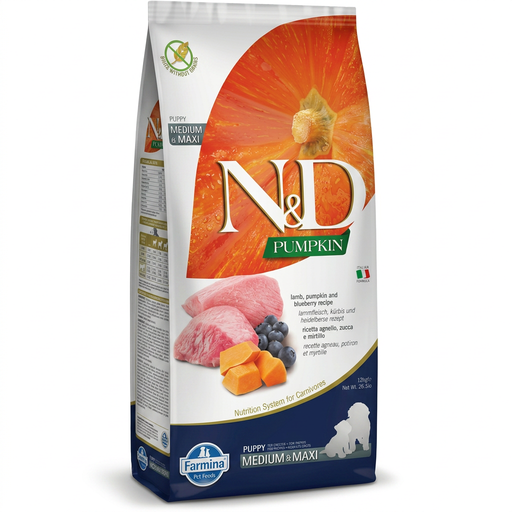
Why it suits this profile: According to the product information, this is complete puppy food for medium and large breeds, with feeding guidelines for each weight category.
The packaging is specifically for puppies, not adult dogs. According to the product information, the transition to new food should take place gradually over seven days.
Puppy recipe for medium and large breeds; 12 kg content; lamb, herring and pumpkin listed in the composition.
Mix new and old food gradually, usually over 7 to 10 days, depending on the instructions on the packaging. Keep an eye on your dog’s stools, appetite and body condition. If problems persist, it is sensible to consult a vet.
Store dry dog food in a cool, dry place and seal the bag securely after use. A large pack is only cost-effective if your dog eats the food within a reasonable period. Weigh out portions according to the feeding advice and adjust them to your dog’s activity level and body condition. Remember to include treats in the total.
For senior dogs, there are variants such as Beneful Happy Adult 7+ Chicken & Vegetables. For weight management, Beneful Healthy Weight is an option which, according to the product information, has a lower fat content than the original recipe. If you would rather compare dog food with chicken, fish or game, you can also compare the composition of Farmina N&D Ocean and Pumpkin with Beneful or Pedigree dog food.
We have put together a complete, up-to-date list of products that fully meet these strict selection criteria and the applicable European safety regulations.
This varies by brand and packaging. Seal the bag securely, store it in a cool, dry place and follow the instructions on the label. Also check the best-before date and use the smell or texture as an additional practical check.
Gradually mix the new food into the old food, generally over seven to ten days. Start with a small proportion of new food and increase it step by step. If your dog develops diarrhoea, vomiting or a prolonged loss of appetite, it is best to consult a vet.
Consider total energy intake, portion size, treats and daily activity. A weight-management product can help you feed your dog in a more targeted way, but the correct quantity depends on your dog’s body condition and individual needs.
