
Vandaag of morgen in huis

Kwaliteit gegarandeerd

Welkomstaanbiedingen ontgrendelen: GRATIS bezorging | Tot 80% korting | Gratis 30 dagen JoyPlus-proefperiode
Download de app
A bag of dog food covered in bold claims can seem like an obvious choice. However, terms such as “natural”, “grain-free” or “high in meat” do not tell you enough about whether it is suitable for your dog. The right choice depends on their age, size, activity level, sensitivities and whether you are looking for a complete meal or simply a treat.
Grain-free dog food contains no grains, but that does not automatically mean it will be easier for every dog to digest. Instead, ingredients such as peas, potato, sweet potato or other sources of carbohydrates may be used. So check the full ingredients list rather than just the front of the packaging.
Does your dog suffer from recurring problems, itching or a suspected food sensitivity? In that case, it is sensible to consult a vet. A recipe described in the product information as “low allergen” or chicken-free is not automatically a medically hypoallergenic dog food.
Soft dog treats, liquid snacks and training treats are usually complementary pet food. They do not replace a complete meal. Too many treats can also increase your dog’s daily energy intake. As a practical rule of thumb, treats should provide no more than around 10% of your dog’s daily calories, unless advised otherwise by a vet.
A 12 kg bag may seem good value, but it is not always practical for a small dog or a household with limited storage space. Once opened, the smell and freshness may deteriorate. Check the recommended daily amount, the shelf life and whether you can seal the bag airtight. Refrigeration is often required after opening wet or very moist treats.
Puppy food is formulated for growth and differs from food for adult or senior dogs. For example, senior dog food may contain ingredients that, according to the product information, have been added to support joints or provide an adapted nutritional composition.
You should also choose food according to your dog’s body size. Dog food for small dogs often contains smaller pieces. For medium-sized and large dogs, portion size, energy density and kibble size are important. Always check the official feeding guidelines on the packaging and adjust the amount according to your dog’s weight, activity level and body condition.
Pay attention to:
For example, Eukanuba Grain Free Adult Small/Medium Ocean Fish lists fish as an important source of protein, sweet potato and peas as alternative sources of carbohydrates, and prebiotics such as FOS and beet pulp. The product description also mentions omega-3 and omega-6 fatty acids and a chicken-free recipe. These are verifiable product features; they do not guarantee a particular health outcome.
The label should state whether the product is complete food or complementary pet food. Complete dry food can be used as a daily meal in line with the feeding guidelines. INABA Churu Dog Multipack, for example, is a treat with a minimum moisture content of 90% and, according to the product information, can be used as a treat, topper or training reward. It does not replace a complete meal.
Extra care is needed if your dog has heart, joint or other health problems. A product such as Vet Life Cardiac Formula is, according to the product information, developed to support heart function. Only use this type of diet food after consulting a vet, especially if your dog is already taking medication.
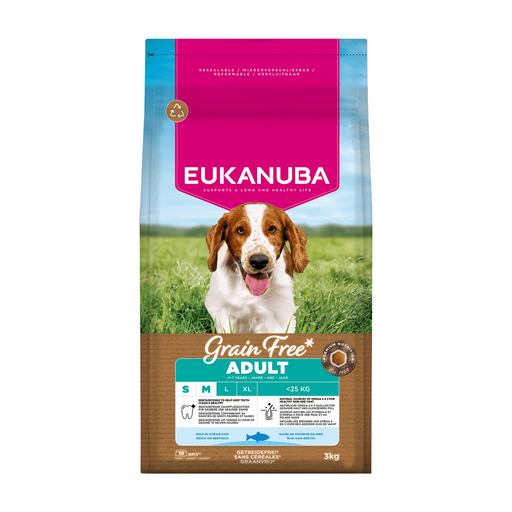
Why it suits this profile: A straightforward option for adult small and medium-sized dogs aged 1 to 7 years, with a 3 kg pack and a fish-based recipe.
The product information clearly states the life stage, breed size, chicken-free recipe and carbohydrate sources used. This means you do not have to rely solely on the term grain-free.
Ocean fish as a source of protein, FOS and beet pulp according to the label, plus kibble with a DentaDefense system.
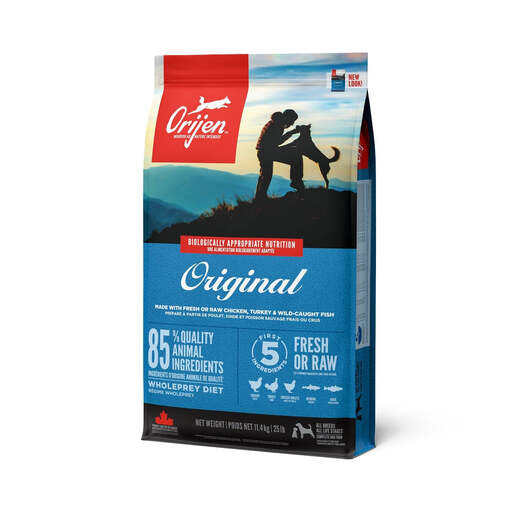
Why it suits this profile: For owners who want to compare a detailed ingredients list and a high stated protein content for an adult dog.
The product information specifies, among other things, 38% crude protein, 18% crude fat, 12% moisture and the main animal ingredients. This makes comparison more concrete than relying on marketing terms alone.
Grain-free recipe, several animal protein sources and a recommended gradual transition over 7 to 10 days.
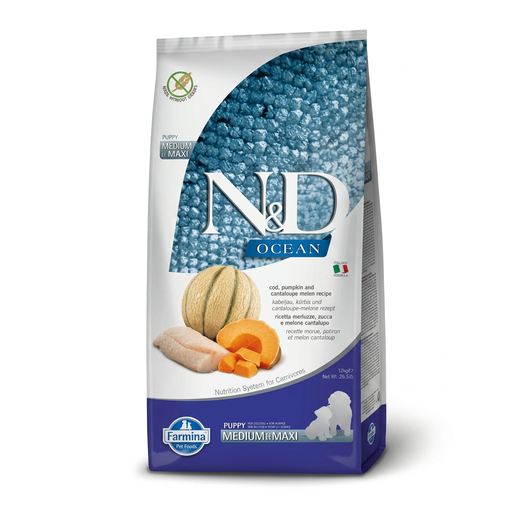
Why it suits this profile: Designed for owners of medium-sized or large-breed puppies who are looking for fish-based puppy food in a larger pack.
The product name and product information refer to puppies and the Medi/Maxi sizes. The stated recipe includes cod, dehydrated cod protein and pumpkin.
Herring oil, 5% dried pumpkin according to the ingredients list and feeding guidelines based on body weight.
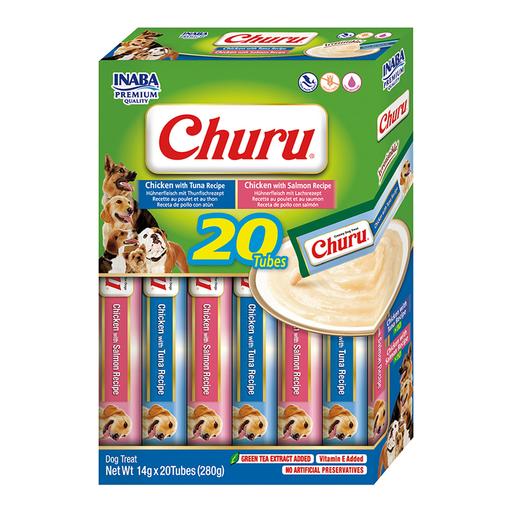
Why it suits this profile: Handy as a soft reward, food topper or change during training, with chicken, tuna and salmon varieties.
The legal product name states that it is complementary pet food. This makes it clear that you should use this snack alongside, not instead of, complete dog food.
A minimum of 90% moisture, 20 tubes of 12 grams and suitable for feeding directly or mixing into your dog’s usual food.
We have put together a complete, up-to-date list of products that fully meet these strict selection criteria and the applicable European safety regulations.
For dogs that prefer lamb, you could consider Farmina N&D Pumpkin Lamb. There are varieties for small dogs, puppies and medium-sized or large dogs. The product information mentions lamb, pumpkin and added glucosamine and chondroitin sulphate. When choosing dog food containing fish, game or lamb, it is still important to check whether other animal proteins have been added.
For adult dogs with food sensitivities, Buddy Wild Reindeer Meat Dog Food may be worth comparing based on its ingredients. According to the product information, it contains no grains or gluten and uses game as a source of protein. Buddy Free-range Duck is also aimed at active and large dogs, with a stated recipe containing animal ingredients, vegetables, fruit and superfoods.
A senior dog may benefit from a recipe formulated specifically for their age. Eukanuba Grain Free Senior Small/Medium Ocean Fish states that it is suitable from 7 years of age and contains added glucosamine and chondroitin. This information describes the recipe, but does not replace individual nutritional advice.
Mix the new food gradually with the old food. A transition of around seven days is a practical guideline: start with a small proportion of the new food and increase it step by step. Keep an eye on your dog’s stools, appetite and body condition.
This depends on your dog’s weight, activity level and the energy content of the treat. Use the feeding guidelines on the packaging and, ideally, keep treats below 10% of your dog’s daily calorie intake. If necessary, reduce the amount of their main food.
This depends on the brand, pack size, energy content and daily portion required. Do not compare only the price per bag; also compare the price per kilogram and the recommended daily amount. Store dry food sealed and in a dry place to help minimise waste.
