
Vandaag of morgen in huis

Kwaliteit gegarandeerd

Welkomstaanbiedingen ontgrendelen: GRATIS bezorging | Tot 80% korting | Gratis 30 dagen JoyPlus-proefperiode
Download de app
There is a wide choice of dog food and treats. Packaging features terms such as grain-free, natural, premium and dental care. On their own, these words say little about whether a product is suitable for your dog. The right choice mainly depends on your dog’s age, body weight, size, activity level and any dietary sensitivities.
The cheapest pack is not always the most practical purchase either. A large bag of puppy food, for example, can be inconvenient if your dog needs a different feeding routine. And a dog treat marketed as supporting dental care does not replace daily checks or proper dental care.
Grain-free dog food contains no grains, but that does not automatically mean it is necessary or more suitable for every dog. Look at the full ingredient list and consider your dog’s nutritional needs. In some recipes, grains are replaced with ingredients such as peas, chickpeas or sweet potato.
A flavour description such as chicken, beef or lamb does not always tell you how much of that ingredient the product contains. Check the ingredients list, which in the European Union is generally arranged by weight. Also pay attention to the difference between complete pet food and complementary pet food. A chew stick or dog treat is usually a supplement, not a replacement for a daily meal.
Some brands mention a percentage by which tartar build-up could be reduced according to their own research. Pedigree, for example, states that its own research indicates a reduction in tartar build-up of up to 80%. This is a brand claim, not a guarantee for every dog. Chews must also be suitable for your dog’s size and chewing habits. Always supervise your dog to reduce the risk of choking or swallowing large pieces.
Puppy food is formulated for growth and has different nutritional ratios from food for adult dogs. So check whether the product is intended as puppy dog food, for adult dogs or for senior dogs. A puppy’s eventual size also matters. Products for small, medium and large breeds may differ in kibble size and feeding advice.
Examples include Farmina N&D Ocean Cod with Pumpkin Puppy Medi/Maxi and Eukanuba Life Care for puppies of small and medium breeds. Always follow the feeding guidelines on the packaging and, preferably, switch gradually to new food.
A dental stick for a small dog is not automatically suitable for a medium or large dog. Look for descriptions such as mini, small, medium or maxi. The packaging for Pedigree Dentastix Medium, for example, states that it is intended for medium-sized dogs. G’woon Dental Sticks Medium are also aimed at medium-sized dogs, while the mini version has been developed for smaller dogs.
Chews such as bones and hide sticks require extra supervision. Check that your dog chews calmly, that the product does not become too small and that the daily amount remains within approximately 10% of its calorie intake, as advised for several treats.
Do not compare protein percentages alone. Also look at the protein sources, fats, fibre, minerals and any added ingredients. If your dog has a sensitivity, a recipe with a limited ingredients list may be more practical, but discuss persistent symptoms with a vet.
Veterinary dog food, such as Farmina Vet Life Gastrointestinal or Cardiac Formula, is intended for specific dietary situations. Do not use this type of food as a general solution without advice from a vet. Also check the best-before date, storage instructions and guidance for use after opening.
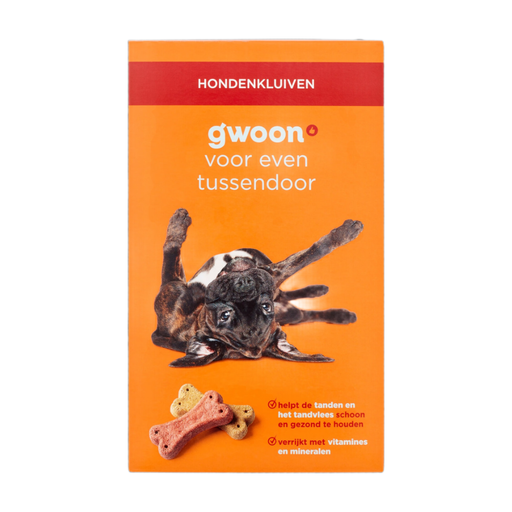
Why it suits this profile: A straightforward choice for anyone looking for a complementary chew without immediately putting together a large selection.
The product information states that it weighs 500 g, has a chicken flavour and contains no artificial colours or flavourings. It remains a treat, not a complete meal.
500 g per box; suitable for dogs of various breeds according to the product description; supervision is still required while chewing.
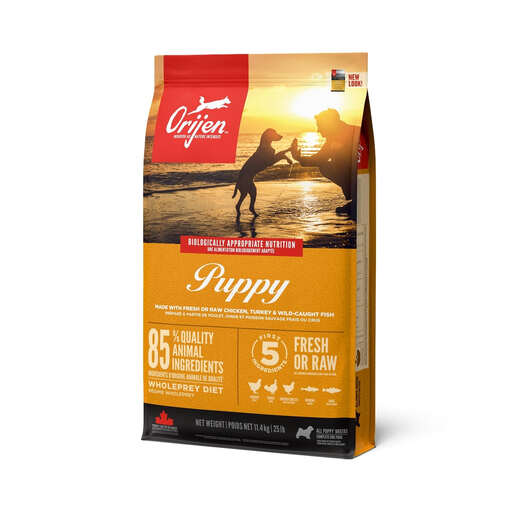
Why it suits this profile: Designed for puppy owners looking for a large pack of grain-free food containing several animal-based ingredients.
The ingredients include chicken, turkey, egg and herring, among others, and the product information states that it contains no grains. However, check that it is suitable for your puppy.
11.4 kg of dry food; at least 38% crude protein according to the product details; intended for puppies of all breeds.

Why it suits this profile: Convenient for owners who want to give a medium-sized dog weighing 10 to 25 kg a regular dental treat every day.
The size and daily amount are clearly linked to medium-sized dogs. The stated effect against tartar is a Pedigree claim, not a guarantee.
56 sticks; suitable for dogs weighing 10–25 kg according to the product information; no added sugar.
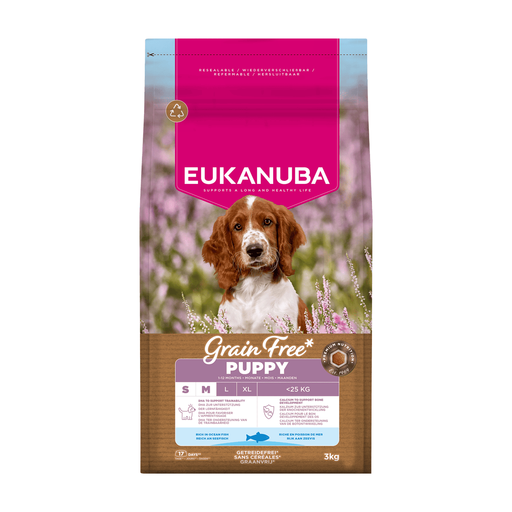
Why it suits this profile: A practical option for puppies of small and medium breeds, with a manageable pack size during a change of food.
The target group, age range and protein source are clearly described. The term grain-free remains a product specification, not a general guarantee of quality.
3 kg of dry food; intended for small and medium-breed puppies aged 1 to 12 months; ocean fish as an animal protein source.
We have put together a complete, up-to-date list of products that fully meet these strict selection criteria and the applicable European safety regulations.
As a general rule, keep treats and rewards to a maximum of 10% of your dog’s daily calorie intake, unless the packaging or your vet advises otherwise. If you regularly give your dog a lot of treats, consider reducing the amount of its main meal.
A product labelled as complete pet food is intended to support your dog’s daily nutritional needs when given according to the feeding advice. Always check the age category and adjust the portion according to your dog’s weight, activity level and body condition. Chews and dental sticks are generally complementary.
This varies from product to product. Store dry food sealed in a cool, dry place. Once opened, wet food usually needs to be refrigerated and used within the period stated on the label. For dental sticks and dog chews, follow the specific instructions on the packaging.
