
Vandaag of morgen in huis

Kwaliteit gegarandeerd

Welkomstaanbiedingen ontgrendelen: GRATIS bezorging | Tot 80% korting | Gratis 30 dagen JoyPlus-proefperiode
Download de app
Dog chews come in a range of forms, from soft rewards and bone-shaped treats to firm chew sticks. But the shape alone tells you little about whether a chew is right for your dog. A small dog may struggle with a chew that’s too hard, while a powerful chewer can finish a soft treat in no time.
Marketing claims can also be confusing. So focus on the size, ingredients and feeding instructions. This can help you avoid buying a large pack that isn’t right for your dog, or a treat presented as a dental chew when it’s really intended as an occasional snack.
Bone-shaped dog treats are easy to recognise, but how long they last depends mainly on their texture, thickness and size. A soft treat is handy for training, but is usually eaten more quickly than a firm dog chew.
According to brands’ product descriptions, a firm texture or special shape may help to mechanically clean teeth while your dog chews. This doesn’t guarantee less plaque or tartar. So use dental chews as an addition to regular dental checks and veterinary advice, not as a replacement.
A chicken, beef or salmon variety may also contain grains, vegetable by-products or other animal ingredients. Check the ingredients if your dog reacts badly to certain foods. Also check whether the product is a complementary feed or a complete food: most dog chews are intended as rewards or occasional treats.
Choose a dog treat that suits your dog’s jaw size and body weight. The range includes options such as:
Always check the age and weight guidance on the packaging. A treat for adult dogs isn’t automatically suitable for puppies.
First, decide what you want the treat for:
Several products state that treats should make up no more than 10% of your dog’s daily calorie intake. This is especially important for dogs that don’t get much exercise or gain weight easily.
Compare the ingredients list rather than relying on the front of the pack. A treat with no artificial colours or flavours may still contain several protein sources. This matters if your dog has a food intolerance.
Examples from the range:
A short ingredients list doesn’t automatically mean a product is suitable. Also check the analytical constituents, calorie content if provided, and storage advice.
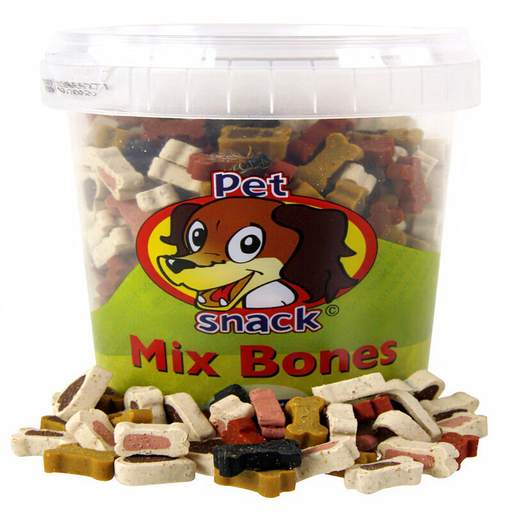
Why it suits this type of owner: These soft, bone-shaped treats are intended as rewards, training treats or fillings for a Kong or puzzle toy. The bulk pack is a good fit for households that regularly give small portions.
The product information clearly gives a daily amount of a few biscuits. So this isn’t a treat to give without limit as a long-lasting chew.
Soft texture, suitable for training, with 12 packs of 500 grams. The product information lists no declared additives.
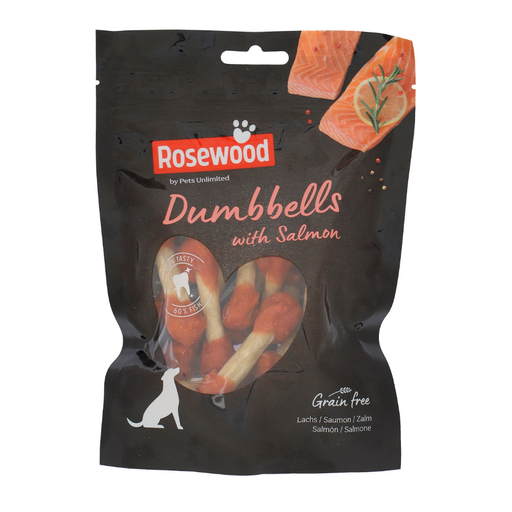
Why it suits this type of owner: This treat is designed for small and medium-sized adult dogs from 4 months old, and lists salmon as its main ingredient.
The intended dog size, minimum age and ingredients are clearly stated. This makes it easier to compare products than relying on the word “salmon” alone.
The product details list 60% salmon, 35% protein and a low fat content of 0.5%.
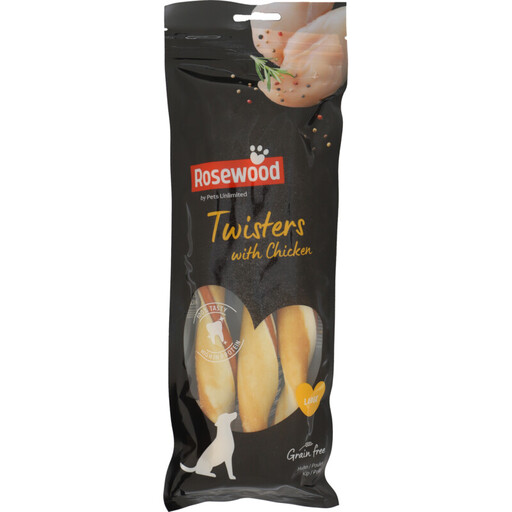
Why it suits this type of owner: The large variety is designed for dogs that enjoy chewing and want to hold on to a chicken and beef-hide treat for longer.
The size is clearly listed as large, making it less likely that you’ll accidentally choose a mini variety for a powerful chewer.
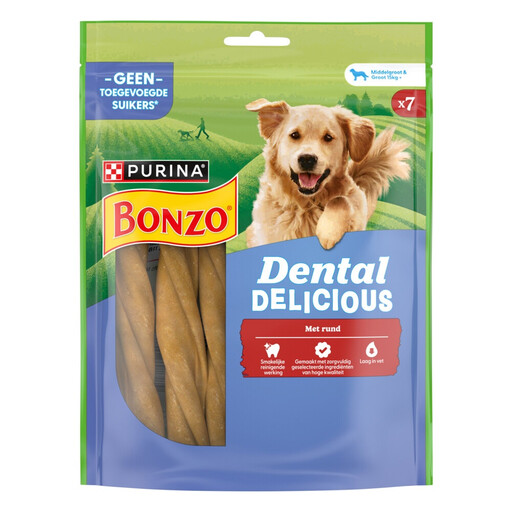
Why it suits this type of owner: According to the product information, this firm beef variety is intended for medium-sized dogs weighing 10 to 25 kg, with one stick a day as a guideline.
The feeding instructions state the recommended dog weight, maximum amount and need to supervise your dog while chewing.
According to the manufacturer, the shaped, firm outer layer is designed to help care for teeth while your dog chews. The pack contains 7 sticks weighing 200 grams in total.
We’ve put together a full, up-to-date list of products that meet these strict selection criteria and the relevant European safety requirements.
Always supervise your dog when giving them a treat. Remove any small pieces that could break off, and take the chew away when it becomes small enough to swallow. Make sure fresh drinking water is available, and adjust your dog’s main meal if the treat adds extra calories.
Store dog chews according to the label, usually in a cool, dry place. Seal opened packaging securely. Check the best-before date and, if in doubt, follow the information on the pack. Stop giving the treat if your dog shows signs of intolerance or digestive problems, and ask a vet for advice if needed.
Not always. Several products in this category are intended only for adult dogs or aren’t suitable for puppies below a certain age. Check the minimum age, and don’t choose firm dog bones unless the product clearly states that they’re suitable.
It depends on the texture, size and your dog’s chewing habits. A soft training treat may be gone in seconds, while a firm Twister or chew stick will generally last longer. The actual time varies from dog to dog.
According to manufacturers’ own product claims, the shape and texture may help to mechanically clean teeth while your dog chews. The effect isn’t the same for every dog. So treat dental chews as an addition to daily care, and ask a vet to assess any dental problems.
