
Vandaag of morgen in huis

Kwaliteit gegarandeerd

Welkomstaanbiedingen ontgrendelen: GRATIS bezorging | Tot 80% korting | Gratis 30 dagen JoyPlus-proefperiode
Download de app
Packaging for dog and cat food is often covered in appealing claims. Words such as “natural”, “with added vitamins” or “for a healthy lifestyle” say little on their own about whether a product is suitable for your pet. The right choice depends mainly on age, body size, activity level, health status and the complete nutritional composition.
A product with chicken, salmon or beef on the front is not automatically suitable as a daily food. First check whether it is labelled as complete pet food or complementary pet food. A complete meal is intended to be given as a daily food. A snack, treat or complementary product does not replace that meal.
For example, INABA Fun Bites Dog Chicken Wraps are a complementary product. According to the product information, they contain 82% moisture and are intended as a treat or reward, not as a replacement for a complete meal.
Kitten food and puppy food are formulated for the growth stage. An adult animal has different nutritional needs. For dogs, also consider their expected adult weight and the size of the kibble. A medium-sized puppy does not automatically benefit from the same food as an adult dog of the same breed.
A similar distinction applies to cats. Cat food for adult cats is not the same as food for kittens. An adapted formula may also be relevant after sterilisation, depending on body condition and activity level.
Grain-free dog food is not automatically necessary for every dog. The most important consideration is whether the overall composition suits your pet and whether the food is labelled as complete. If your dog has recurring problems, consult a vet rather than excluding ingredients yourself for a prolonged period.
Claims about digestion, teeth or weight are also brand claims. Treat them with caution. According to Purina’s own research, for example, the Sensitive formula may be associated with less odour from stools after fourteen days. This is not a guarantee for every animal.
Look for the legally required designation and feeding guidelines on the packaging. A product labelled “complete and balanced pet food” is intended as a complete meal when it is suitable for the correct animal species and life stage. Snacks such as dog biscuits and dog treats should be given in moderation.
The Rosewood Dog Bones Mix Chews packaging states that treats should account for no more than 10% of daily calorie intake. Also check the ingredients: this product contains, among other things, vegetable derivatives, soya, lupin, poultry, lamb and beef. This makes it less suitable for dogs with a known sensitivity to any of these ingredients.
Follow the feeding table on the packaging, but use it as a starting point. Requirements vary from one animal to another. An active dog may need more food than a calm dog of the same weight. Check your pet’s body condition regularly and adjust the portion gradually.
There are various formulas available for adult dogs. According to the product information, Eukanuba Life Care Dog Adult Medium Chicken is intended for medium-sized adult dogs aged 1 to 7 years. There is also a lamb and rice variant for small and medium-sized adult dogs. The product description lists this formula as an option for dogs with sensitive stomachs; individual tolerance may vary.
Do not just look at the percentage of meat on the front. Check the full ingredients list, analytical constituents, recommended amount and net contents. Pack size also matters with dry food: a 15 kg bag may be cost-effective for a large household, but less practical if your dog needs to try a new formula first.
Store dry food in a cool, dry place and seal the packaging securely. After opening, wet dog food should be refrigerated according to the label and used within the stated period. INABA Fun Bites, for example, state that an opened pouch should be kept refrigerated and used within 24 hours.
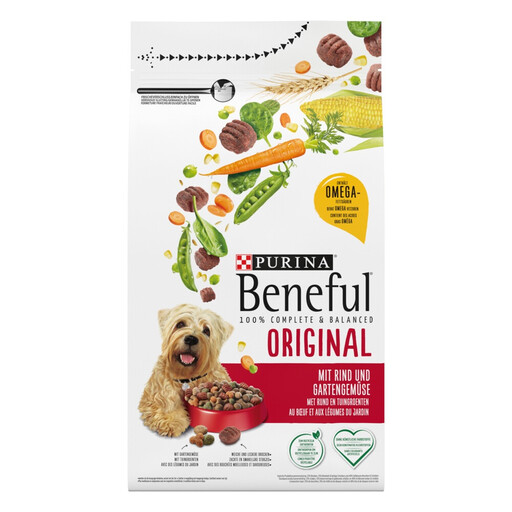
Why it suits this profile: A 1.4 kg bag is manageable when you are trying dry dog food for the first time with an adult dog.
The product information states that it is for adult dogs of all weights and includes a feeding table and a gradual ten-day transition.
Complete and balanced according to the product description; 15% protein and 8% fat according to the stated analytical constituents.
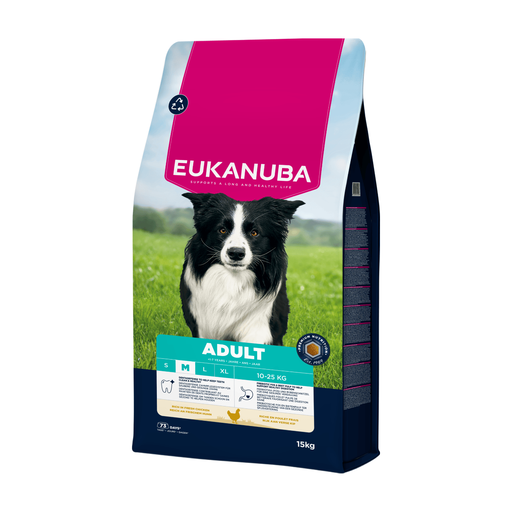
Why it suits this profile: The large pack is well suited to households with a medium-sized adult dog that eats dry food every day.
The target audience, age range and kibble type are clearly specified. This helps you avoid buying a general formula for a dog with different needs.
15 kg contents; according to the product description, 100% complete nutrition with chicken, fibre and omega 3 and 6 fatty acids.
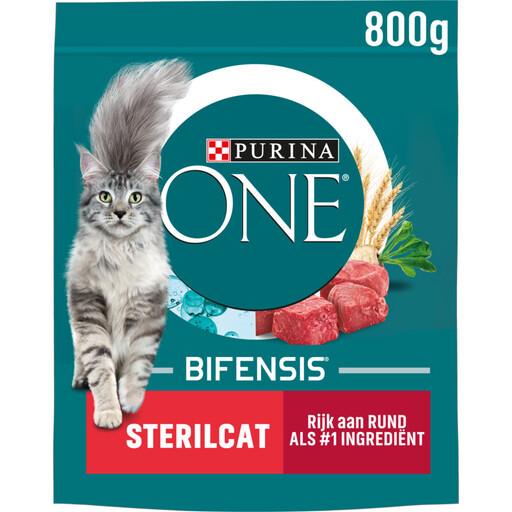
Why it suits this profile: Designed for owners of adult sterilised or neutered cats who want to manage portions and daily nutrition precisely.
The packaging identifies the specific target group and provides portions based on body weight. This is more precise than a general claim for all cats.
800 g of dry food; according to the product information, 37% protein, 13% fat and feeding guidance for sterilised adult cats.

Why it suits this profile: According to the product description, it is suitable for kittens from weaning to 12 months, as well as pregnant or nursing cats.
The life stage is clearly stated, reducing the risk of choosing adult cat food for an animal that is still growing.
800 g contents; complete nutrition for kittens with chicken, grains and feeding guidance based on age and weight.
We have put together a complete, up-to-date list of products that fully meet these strict selection criteria and the applicable European safety regulations.
Dry cat food and dry dog food are convenient to store and easy to measure. Wet food generally contains more moisture and is often supplied in portions. You can combine dry and wet food, provided you adjust the total daily amount and check that the product is complete food.
Unopened food remains suitable for use until the date shown on the packaging. Once opened, dry food should be sealed properly and stored in a cool, dry place. Opened wet food should usually be kept in the fridge. Always follow the specific instructions on the label, as storage times vary by product.
Compare the price per kilogram or per meal, not just the price of the bag. A large pack may offer better value, but only if your pet accepts the food well and you use it before its best-before date. Snacks and treats count towards the daily amount. This helps you keep both the feeding schedule and costs under better control.
