
Vandaag of morgen in huis

Kwaliteit gegarandeerd

Welkomstaanbiedingen ontgrendelen: GRATIS bezorging | Tot 80% korting | Gratis 30 dagen JoyPlus-proefperiode
Download de app
A dog or cat carrier may seem simple to choose at first. However, many models are not a good fit for your pet’s weight, build or intended use. A bag that works well for a quick trip to the vet may not be suitable for a car journey or a long walk.
The three most common pitfalls are:
Looking only at the maximum weight
A carrier may support a certain weight but still not offer enough room to move. Your pet should be able to stand, turn around and lie down without the carrier fitting tightly around their body.
Mistaking a small viewing window for good ventilation
Mesh panels are useful, but check how many sides actually let air through. A cat carrier with just one small mesh panel may feel stuffy, especially in warmer weather.
Assuming a foldable design is safe for every situation
A foldable pet carrier is handy for storage, but its stability depends on the frame, base and fastenings. For car journeys, you should also check how the carrier is secured. Don’t use a model as a car safety system unless the manufacturer specifies a suitable fastening.
Measure your dog or cat before you buy. Make a note of at least:
A soft carrier or pet bag should offer enough space for your pet to move comfortably. For larger dogs, it’s often recommended that you allow for some extra room. For example, the product descriptions for Ochama models recommend adding 10 cm to your dog’s length and height measurements. Always check that this advice suits your dog’s build.
For small pets, carriers and backpacks are practical options. A dog backpack can be useful for walking or cycling, but don’t forget your own comfort. Adjustable shoulder straps, a chest strap and a waist strap distribute the weight better than thin, fixed straps.
A metal or steel frame can help a carrier keep its shape. For a dog carrier or cat carrier, the base is particularly important: it shouldn’t sag when your pet lies down. A removable mat makes cleaning easier, but check that it won’t slide around.
Also look out for the difference between load capacity and recommended pet weight. A product’s stated maximum load may not be the same as a comfortable weight for everyday use.
Where possible, choose a carrier with several mesh windows or panels. Check that the zips close fully and that there’s an internal safety lead. It’s no substitute for supervision, but it can help prevent your pet from escaping when you open the carrier.
For a breathable pet carrier, the position of the panels and the size of the interior also matter. Keep the carrier out of direct sunlight and don’t leave your pet enclosed and unsupervised for long periods.
A compact pet carrier may be enough for a short trip to the vet. For car journeys, holidays or hotel stays, a sturdier model with a stable base is a better choice. A pet carrier for the car should fit securely on the back seat and must not obstruct your view or interfere with the seat belts.
Airline rules apply to air travel, and there may also be additional requirements for dimensions, fastenings and materials. A product description that says “suitable for flying” doesn’t guarantee that every airline will accept the model. Check with the airline in advance.
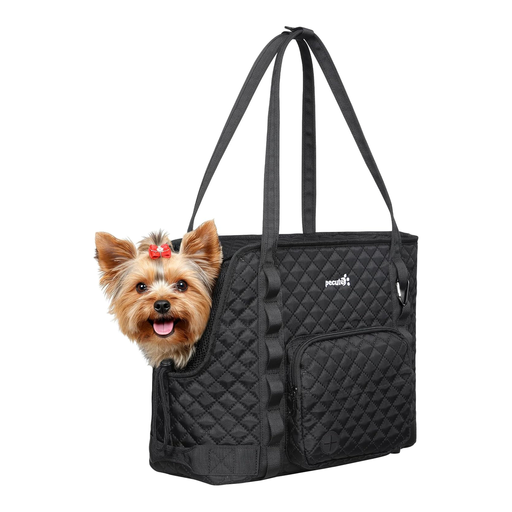
Why it suits this need: This compact bag is designed for small dogs and cats weighing 2.5 to 5 kg. Weighing 0.7 kg, it’s suited to short outings, vet visits and everyday use.
The recommended weight is clearly stated. The bag has a firm, removable base and an internal safety lead; don’t exceed the 5 kg limit.
Weighs just 0.7 kg, with two storage pockets, a zip fastening and a soft-lined base.
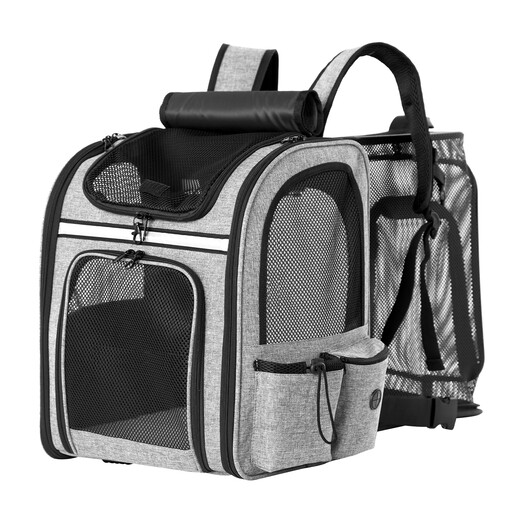
Why it suits this need: The backpack has room for cats and small dogs weighing up to 8 kg, and its height can be extended from 41 to 60 cm. It’s a good fit for longer walks, travel and days out.
The steel frame helps it keep its shape, while four mesh windows reduce the risk of poor air circulation. Be sure to check the fit before buying.
Expandable interior, adjustable shoulder straps, chest and waist buckles, safety lead and reflective strips.
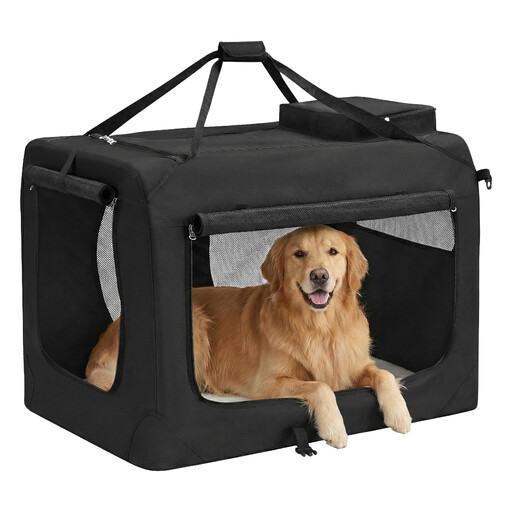
Why it suits this need: This spacious soft carrier is designed for large dogs and can be used in the car, when travelling or camping, or as a temporary place to rest.
Both the external and folded dimensions are listed: 122 x 79 x 79 cm and 122 x 79 x 8 cm. This lets you check in advance whether the carrier will fit in your car and storage space.
Steel frame, 600D Oxford fabric, mesh door and windows, side pocket and removable, washable mat.
We’ve put together a complete, up-to-date list of products that meet these strict selection criteria and the applicable European safety regulations.
Check both the weight limit and the internal dimensions. A model for pets weighing 2.5 to 5 kg may suit small dogs, kittens and cats, as long as your pet can stand, turn around and lie down. A carrier for small dogs and cats with a firm base will generally offer more stability than one with a completely soft base.
Only if it’s designed for that purpose and can be secured safely. Check whether it has an attachment point or a seat belt loop. A regular carrier isn’t automatically a tested car safety system. Position it securely, keep the zips closed and don’t leave your pet unattended.
Follow the care instructions on the product page. Many models can be wiped clean with a damp cloth; on some, only the removable mat is machine washable. Let all parts dry completely before storing the carrier. After cleaning, check the seams, zips, mesh panels and frame for signs of wear.
