
Vandaag of morgen in huis

Kwaliteit gegarandeerd

Welkomstaanbiedingen ontgrendelen: GRATIS bezorging | Tot 80% korting | Gratis 30 dagen JoyPlus-proefperiode
Download de app
A dog and cat bowl might seem like a straightforward purchase – until you’re dealing with bowls that tip over, pets that wolf down their food, fiddly parts to clean, or an automatic feeder that doesn’t suit your pet’s size. Marketing copy often focuses on smart features, but day-to-day usability depends on something else entirely.
Pay particular attention to these common pitfalls:
Don’t just look at the volume in litres – consider how the food is dispensed. An automatic pet feeder with adjustable meals is handy when your pet eats at set times or is regularly left home alone.
Check:
The Oneisall PFD-001, according to the product description, works with a manually adjustable control panel. You can schedule 1 to 10 meals per day and set 1 to 30 portions per meal. One portion is approximately 7 grams, depending on the size of the kibble. The capacity is 1.2 kg of dry food.
A stainless steel bowl is generally practical for daily use because the surface is easy to wipe clean. Do check which grade of stainless steel is specified. The Blinkit combination uses a stainless steel bowl; the HomerunPET specifically mentions grade 304 stainless steel.
Also look out for:
For products with a plastic, silicone or metal combination, it’s wise to follow the care instructions. According to the product information from Pecute, the bowls are dishwasher-safe. Check the surface regularly for damage and replace a bowl when it shows visible wear.
An elevated bowl can be practical for larger dogs, but height isn’t an end in itself. Measure your pet’s shoulder height and look at the actual stand positions. An adjustable bowl is more flexible when a puppy is growing, or when the same setup is used for different animals.
The Blinkit 0159-3 has four height settings: 10, 23, 27 and 31 cm. The combination includes a slow-feeding bowl and a stainless steel bowl. The stand is foldable and measures 42 × 27 × 10 cm according to the product information.
Stability matters too. A non-slip mat, wide base or sturdy stand helps to reduce sliding and tipping. Always place the bowl on a flat, dry surface.
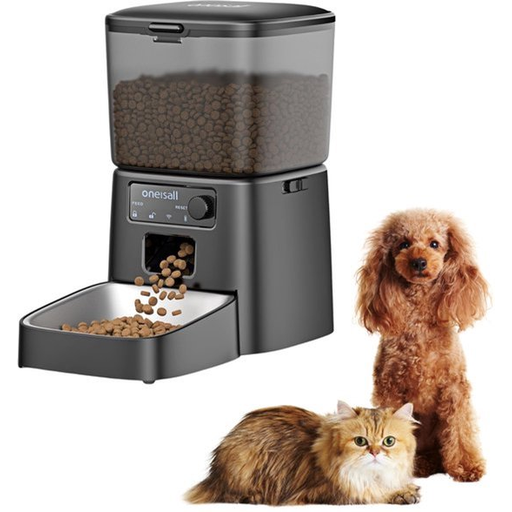
Why this fits the profile: This automatic feeder for cats or dogs focuses on set feeding times without Wi-Fi or an app. That makes operation straightforward for anyone looking for simple scheduling.
Portions and feeding times are adjustable via the control panel. The sealed lid, rotor and desiccant are used, according to the product description, to keep the dry food better sealed.
1.2 kg capacity, 1 to 10 meals per day and power via a 5V adapter or batteries. Batteries are not included.
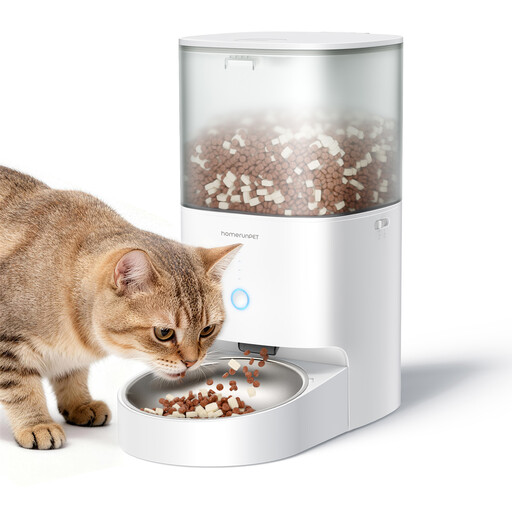
Why this fits the profile: This model is aimed at users who value remote control, a larger storage capacity and a metal bowl.
The app, according to the product description, offers settings for time, amount, reminders and feeding logs. Check beforehand that your smartphone and network are compatible.
4 litre capacity, grade 304 stainless steel and a stated battery life of up to six months according to the manufacturer. Suitable for cats and small to medium-sized dogs.
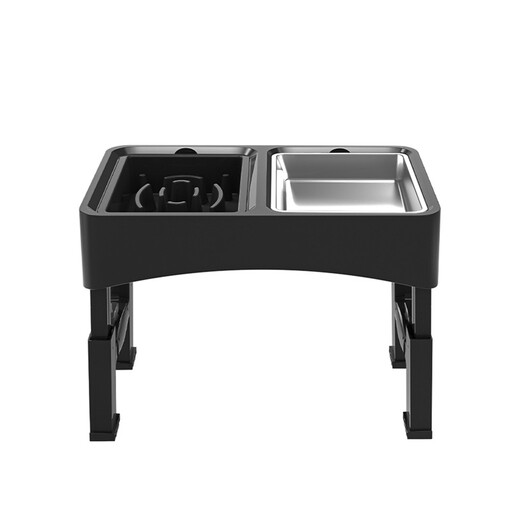
Why this fits the profile: A practical choice for households with a dog that gulps its food, multiple pets, or a pet that’s still growing.
The slow-feeding bowl is combined with a standard stainless steel bowl. This means you can use the appropriate bowl for each mealtime, rather than a one-size-fits-all design.
Four heights from 10 to 31 cm, foldable stand and two interchangeable bowls. The obstacles are designed to slow down eating speed.
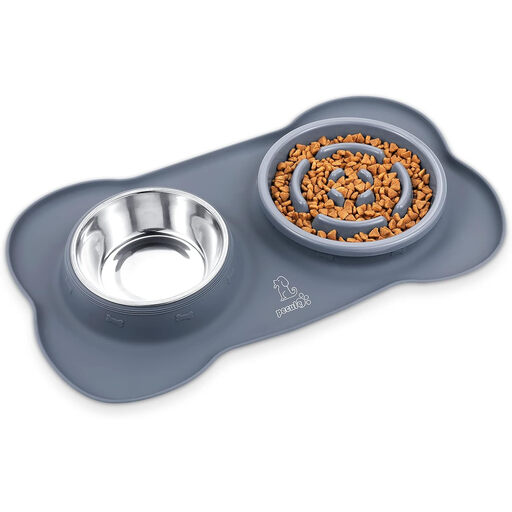
Why this fits the profile: This set is designed for small dogs and cats that need a fixed feeding and drinking spot, whether at home or on the go.
The non-slip mat reduces movement and catches any spilled food or water. The slow feeder and water bowl are separate, so you can use them as needed.
Two bowls of approximately 400 ml, silicone mat, 201 stainless steel and a foldable design. According to the product information, the bowls are dishwasher-safe.
We’ve put together a full, up-to-date list of products that fully meet these strict selection criteria and comply with current European safety regulations.
The models mentioned are primarily designed for dry food. Wet food can dry out or spoil more quickly and therefore requires a device with a specific cooled or sealed system. Always check the product description before using wet food.
Remove any visible food residue after each meal. A drinking and feeding bowl used daily can be cleaned regularly with warm water and a suitable washing-up liquid. Dry all parts thoroughly before adding fresh food. With an automatic feeder, the electronic base must not be submerged in water if the manufacturer prohibits it.
In addition to the purchase price, batteries, replacement desiccants and extra parts can add to the cost. A mains-powered model can reduce battery usage, while a battery option is handy during a temporary power cut. Also check whether the portions suit the food you already use; a different kibble size can affect the dispensing.
