
Vandaag of morgen in huis

Kwaliteit gegarandeerd

Welkomstaanbiedingen ontgrendelen: GRATIS bezorging | Tot 80% korting | Gratis 30 dagen JoyPlus-proefperiode
Download de app
A dog carrier might seem simple at first: choose a size, check the colour and place your order. In practice, the dimensions, carrying design and ventilation are what determine whether a carrier is comfortable and practical to use. The same applies to a dog bag, dog sling or dog transport crate.
If you only look at the exterior or an attractive offer, you could run into a few common problems. The carrier might be too small, offer too little support or be awkward to store. Use these checks to choose the right option for car journeys, vet visits, walks, holidays and everyday use.
A carrying capacity of, say, 7 or 11 kg doesn’t tell you everything. Your dog also needs enough room to sit comfortably, turn around and change position. What’s more, a carrier’s external dimensions aren’t always the same as its usable internal dimensions.
Measure your pet before ordering:
A carrier for small dogs might suit a compact dog, but it can become impractical if your pet has little room to move. The same considerations apply to cats.
A product might be described as a breathable carrier, even if it has just one small mesh panel. Check how many sides have mesh, whether the openings could easily be covered and whether you can keep an eye on your pet while travelling.
Mesh windows help with airflow and visibility, but they don’t guarantee a comfortable temperature. Never leave an animal alone for long periods in a closed carrier or transport crate, especially in a parked car.
A dog carrier isn’t automatically a certified dog car crate or a crash-tested safety system. Product details such as a metal frame, sturdy base or zip closure describe its construction, but don’t prove that it will protect your pet in a collision.
When driving, use a solution that can be secured correctly according to the vehicle and product instructions. Also check that the carrier can’t slide around and that your pet can’t reach the fastener. For longer car journeys, a sturdy transport crate is often more practical than a soft carrier.
Look for three separate details:
A foldable transport crate is handy if you have limited storage space at home. Check how thick it is when folded, though. A model that folds from around 42 to 8 cm thick is easier to store behind a cupboard or in the boot than a rigid crate.
A fabric-only carrier can be lightweight, but it may lose its shape more quickly if the base isn’t properly supported. A steel frame, reinforced base or sturdy baseboard can help it hold its shape. That doesn’t automatically mean the product is suitable as a crash-tested dog crate.
Also check whether the base is removable and easy to clean. A washable mat is handy after muddy walks, when dealing with pet hair or in case of an accident on the way.
For everyday use, several mesh panels, a secure zip and an internal safety tether are useful features. Also consider how you’ll carry the bag:
If you’re considering a backpack, check its total weight too. A 1.25 kg backpack carrying a 7 kg pet will put more strain on your back than a lightweight carrier with the same pet.
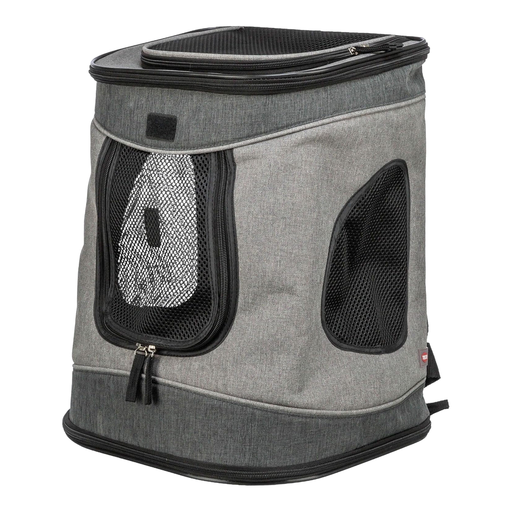
Why it suits this profile: This compact carrier for cats and dogs is designed for small dogs and other pets. It’s ideal for a vet visit or a short trip.
The product description lists dimensions of 34 x 30 x 44 cm, mesh panels and a zip fastening. Check that these dimensions are right for your pet.
Reinforced base, handles, adjustable shoulder strap and a surface that can be wiped clean with a damp cloth.
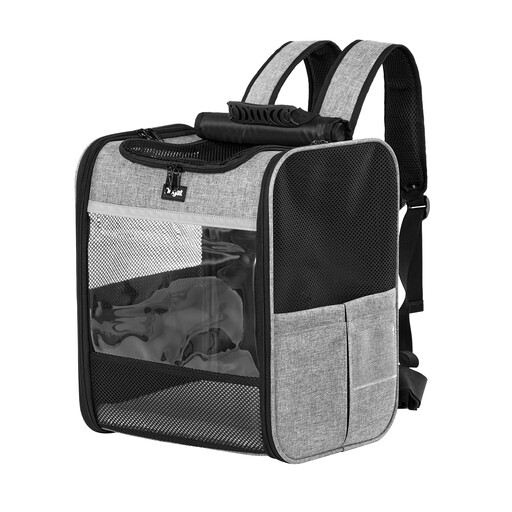
Why it suits this profile: This dog backpack is designed for small dogs and cats weighing up to 7 kg, whether you’re going walking, travelling, camping or visiting the vet.
Four mesh windows, an integrated steel frame and a safety tether address key considerations around ventilation, shape retention and secure closure.
Folds down to around 5 cm thick, with padded shoulder straps, chest and waist buckles, side pockets and a reversible mat.
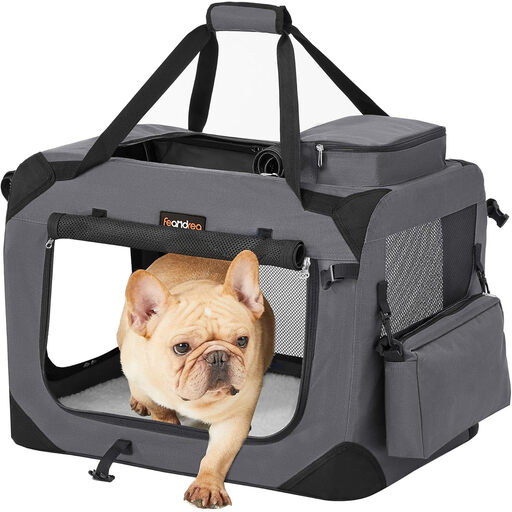
Why it suits this profile: This dog transport crate is suitable for pets weighing 7 to 11 kg. It’s a good choice for use at home, car journeys, camping and longer stays away from home.
The stated internal dimensions are 60 x 42 x 42 cm, and the maximum load is 11 kg. Several mesh windows aid ventilation; check the frame and zips before use.
Powder-coated steel frame, 600D Oxford fabric, removable fleece mat and folds down to 60 x 42 x 8 cm, with a handle.
We’ve put together a complete, up-to-date list of products that meet these strict selection criteria and the applicable European safety regulations.
First, measure your dog’s length and height, then compare these measurements with the carrier’s internal dimensions. Your pet needs enough room to sit upright, turn around and lie down comfortably. Use the maximum carrying capacity as an additional check, not your only guide.
That depends on its design and how it can be secured. A standard dog carrier isn’t automatically a safe dog car crate or a crash-tested safety device. Secure it only as instructed and make sure it can’t slide around. For longer journeys, check whether a sturdy transport crate would be more suitable.
First, remove the mat and any loose hair. Oxford fabric can usually be wiped clean with a damp cloth. Follow the care label when washing mats. Let everything dry completely before folding the crate away. Check the zips, seams, mesh panels and frame connections regularly, and stop using the product if you notice any visible damage.
